What is under St. Pierre Cathedral, and how do you visit the archaeological site?
What the archaeological site under St. Pierre Cathedral reveals, from an Allobrogian grave to the first cathedrals of Geneva.
Read on
A hill with more than one church
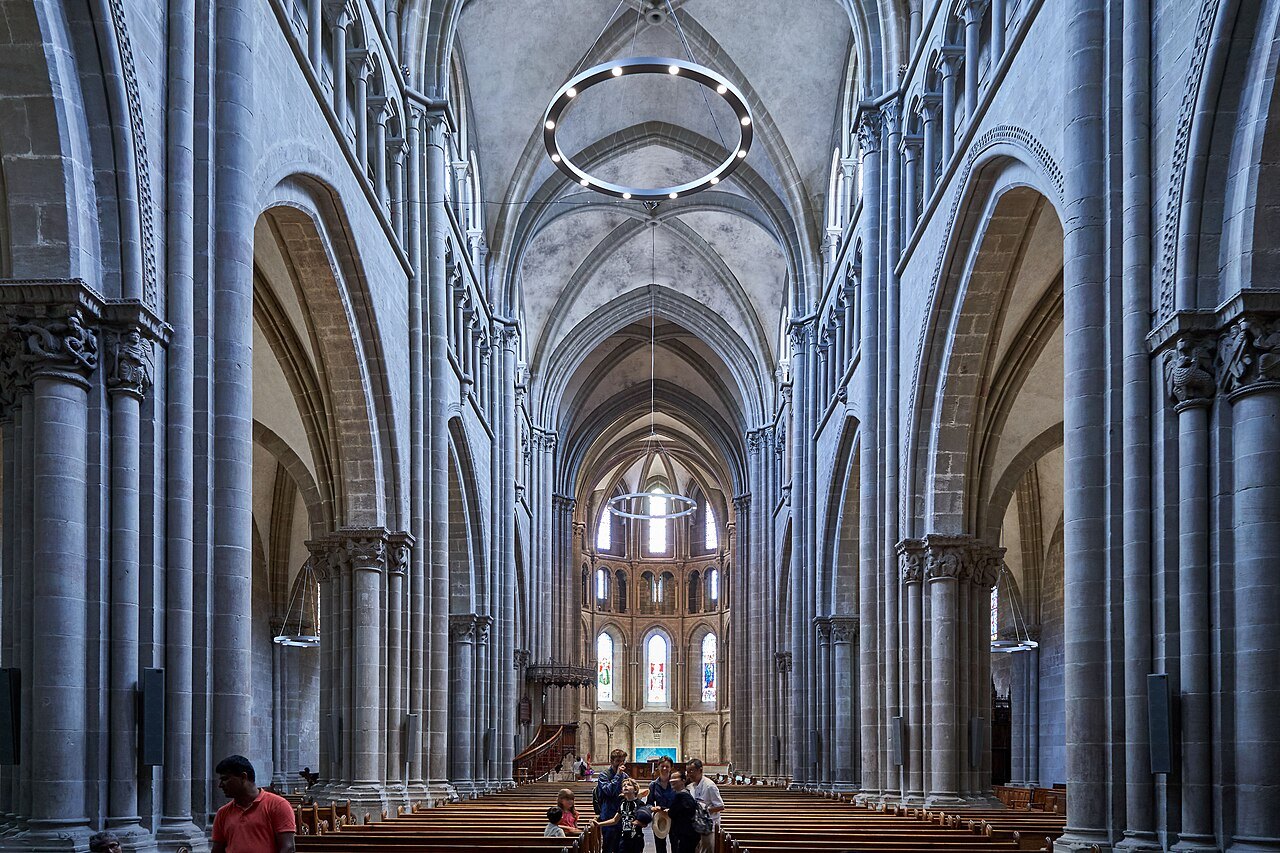
The cathedral that stands on the old town hill today is only the last of several buildings on this spot. Underneath the floor of Saint-Pierre lies an archaeological site that was excavated systematically from the 1970s and opened to visitors in 1976. It is one of the largest sites of its kind north of the Alps, and walking through it is the clearest way to understand why a religious building has stood on this summit for so long.
The site is not a single ruin but a sequence of them, laid one on top of another. Each generation that built here reused or built over what came before, so the visit moves through layers rather than through one structure. The route covers an enormous span of time, from the third century BC up to the start of the present cathedral in the twelfth century, and it sits directly under the nave and choir visitors walk through above ground.
The grave on the summit
At the center of the site is the grave of an Allobrogian chieftain, buried around the first century BC on the summit of the hill. The Allobroges were the Gallic people who held this part of the Rhone valley before Roman rule, and the placement of their chieftain's burial on the highest point of the hill suggests the summit was already treated as a place of some importance well before any church stood on it.
That significance did not fade with Roman Geneva or with the arrival of Christianity. The ground around the grave went on being honored for centuries afterward, and when the first churches were raised here in late antiquity, they were built over and around it rather than elsewhere on the hill. The archaeological route makes this continuity visible underfoot: a pre-Christian burial sitting directly beneath Christian foundations, each respecting the position of the one before it.
The churches of late antiquity
The remains beneath the cathedral include not one early church but several. A first cathedral dating to the late fourth century stood here, followed by a second church built beside it. Visitors can also see the remains of baptisteries from this period, along with a reception hall that still has a mosaic floor, evidence of a substantial episcopal complex rather than a single modest chapel on an otherwise bare hilltop.
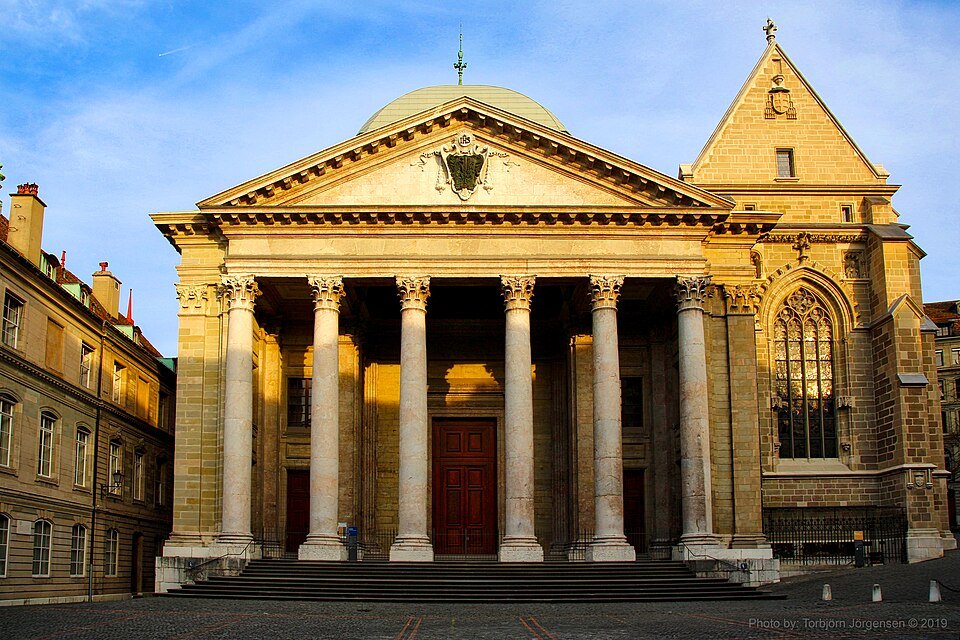
This cluster of buildings explains a detail that can otherwise seem puzzling: why a Swiss Protestant cathedral occupies a site with a Christian history reaching back to the end of the Roman era. For roughly a thousand years before the Reformation, Saint-Pierre's predecessors on this hill served as the cathedral of the bishops of Geneva, and the excavation shows what that bishopric's seat looked like in its earliest centuries, long before the present twelfth-century church was begun under Bishop Arducius de Faucigny around 1160.
Nothing in the layers below hints yet at the building that would eventually rise above them: the Gothic choir and nave, the neoclassical portico added centuries later, or the events of 8 August 1535, when Guillaume Farel's Reformation sermon and the vespers riot that followed stripped the cathedral above of its statues and altars. The site underground belongs to a much older chapter of the hill's history, closed off centuries before Calvin ever preached a few steps above it.
How to visit
The archaeological site keeps its own arrangements, separate from the cathedral nave above and from the towers, so it is worth checking the cathedral's own site before building a visit around it. Set aside roughly an hour; the layout rewards unhurried walking, since the interest lies in comparing one layer against the next rather than in any single dramatic object or view.
Because the cathedral above is an active place of worship, services there take priority over sightseeing on any given day. The towers, reached separately from the nave, keep their own schedule too. Anyone planning to see the church, the towers, and the underground site in one visit should treat them as three separate appointments rather than assume one ticket or one set of hours covers all three automatically.
Combining it with the rest of the hill
The archaeological site works well as one stop in a longer visit to this corner of the old town. The International Museum of the Reformation, housed in the Maison Mallet on the site of the old cloister next to the cathedral, and Calvin's own lecture hall nearby both deal with the centuries that followed the ancient churches found underground, making it possible to trace the hill's history from the Allobroges to the Reformation across a single morning.
From the cathedral it is a short walk down to Place du Bourg-de-Four, the Hôtel de Ville, and the Treille terrace, and further on to the Reformation Wall in the Parc des Bastions below the old walls. Any of these make a natural pause after the archaeological route, which asks for more attention than most old-town stops and rewards a slower pace rather than a quick pass-through.
What the site does not include
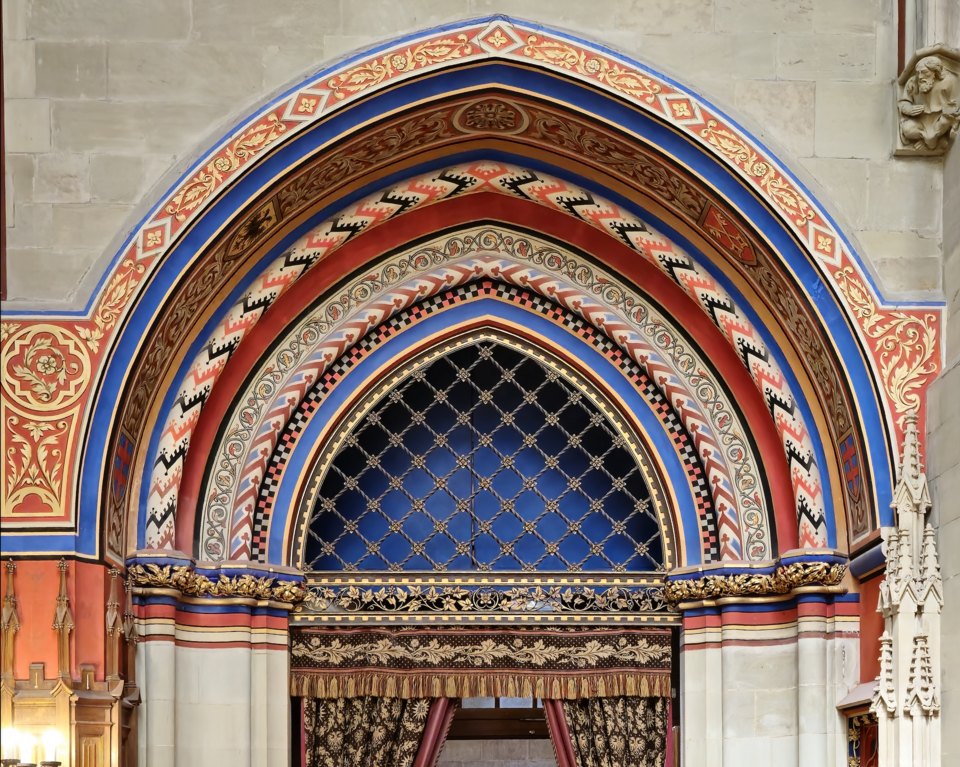
The archaeological route is about structure and layout rather than about paintings or furnishings, so visitors expecting the kind of decorative color found in the Maccabees Chapel upstairs will find the underground rooms plainer and more focused on foundations, floors, and the mosaic in the old reception hall. The chapel's painted vaults, in any case, date largely from an 1880s restoration rather than from Cardinal de Brogny's original chapel of around 1405, so neither the chapel above nor the rooms below should be mistaken for an unbroken survival from their first centuries.
Visitors wanting a fuller picture of Geneva's medieval and early modern religious art should plan a stop at the Musée d'Art et d'Histoire, which holds the altarpiece originally painted for this cathedral by Konrad Witz in 1444, its Miraculous Draught of Fishes set on the shore of Lake Geneva. It never returned to the building it was made for, and seeing it there completes a story that the archaeological site, by its nature, can only begin.
Before setting out
As with the towers above, nothing about the archaeological site's access or hours should be assumed from one visit to the next. Checking directly with the cathedral before setting out saves a wasted trip, particularly for visitors building a tight old-town morning around the church, the towers, and the ground beneath them in sequence.
Comfortable shoes are worth bringing regardless of the rest of the day's plans, since the old town's streets and the archaeological route itself both reward unhurried footing rather than a rushed pace. Visitors who want the wider context of this part of the city before arriving can read the general overview of sights in the old town, which places the cathedral and its buried predecessors within the rest of a morning on the hill.
More from the journal
- Saint-Pierre CathedralIs it worth climbing the towers of St. Pierre Cathedral?What the north and south towers of St. Pierre Cathedral offer, and whether the stairs are worth the effort.Read the piece
- The Red Cross and Red Crescent MuseumHow long do you need at the Red Cross and Red Crescent Museum?What to expect inside Geneva's Red Cross museum and how long the permanent exhibition actually takes.Read the piece