Home · The Lake
The harbor, from jetty to jetty
- The harborThe rade between the Pont du Mont-Blanc and the two jetties, the city's front room on the water
- The Eaux-Vives jettyThe left-bank breakwater, with the Jet d'Eau at its end and the Mouettes landing nearby
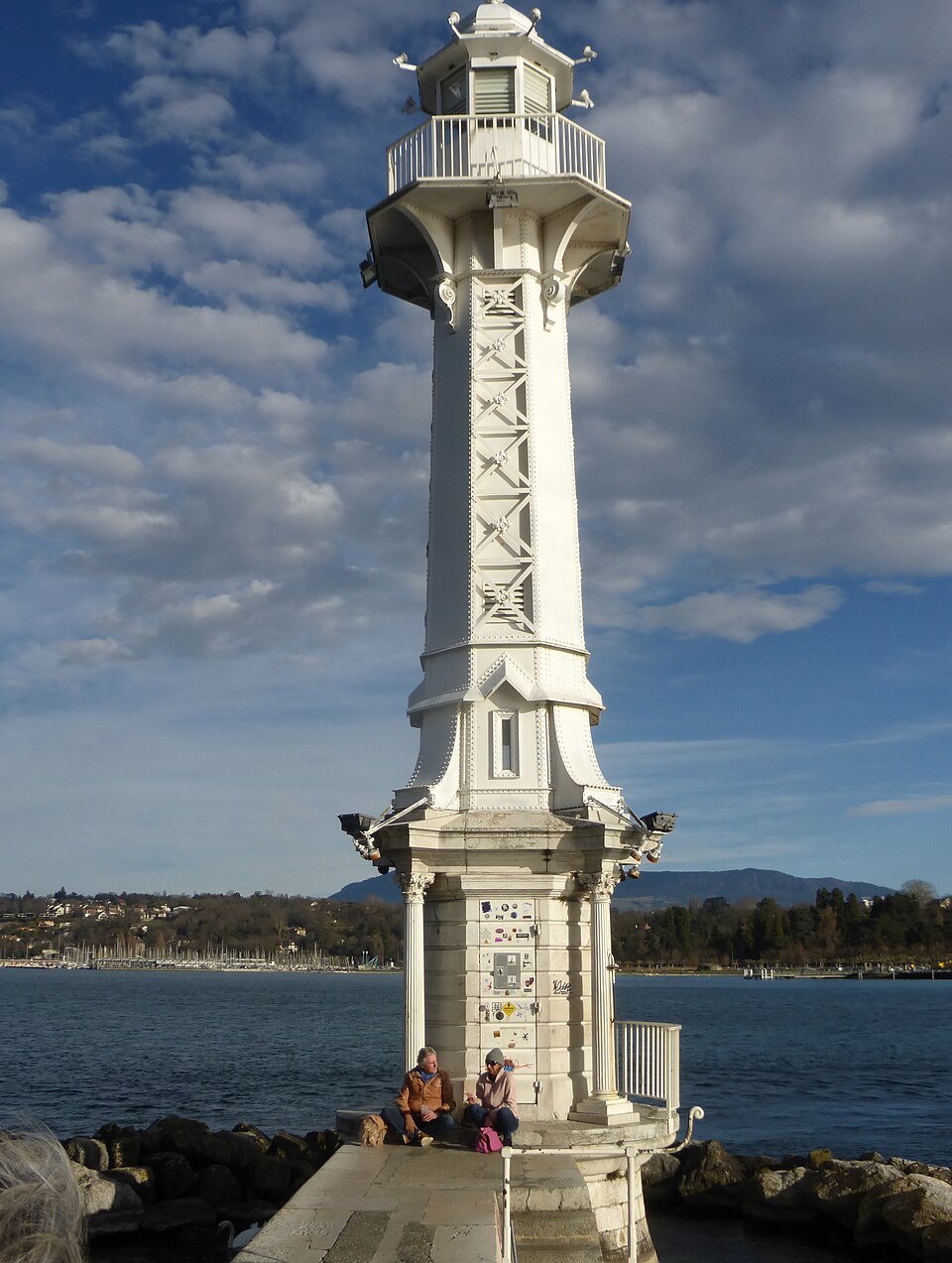
- The Pâquis jettyThe right-bank breakwater, with the public baths and the harbor lighthouse
- The Pierres du NitonTwo granite boulders left by the Rhône glacier, the reference point for Swiss altitudes
- The Plage des Eaux-VivesA public beach of about four hundred meters on the left bank, opened in 2019
- Genève-PlageA lakeside park and pool complex of 1932 at the far end of the Quai Gustave-Ador
- The Seujet damThe dam of 1995 where the lake leaves as the Rhône, which sets the level of the whole lake
Lake Geneva at the City's Door
A lake with two names
The lake that Geneva looks out on is one of the largest in Western Europe and the largest on the course of the Rhône. About sixty percent of it belongs to Switzerland and forty percent to France. The river enters at its eastern end, between Villeneuve and Le Bouveret, and flows slowly west to leave it at Geneva.
English speakers call it Lake Geneva, a name that followed the rise of the city. In French it is usually Le Léman, from the Latin lacus Lemannus of Caesar's time. Strictly, the Swiss federal topography office uses Lac de Genève only for the narrow western end that lies inside the canton, roughly from Versoix and Hermance to the outflow.
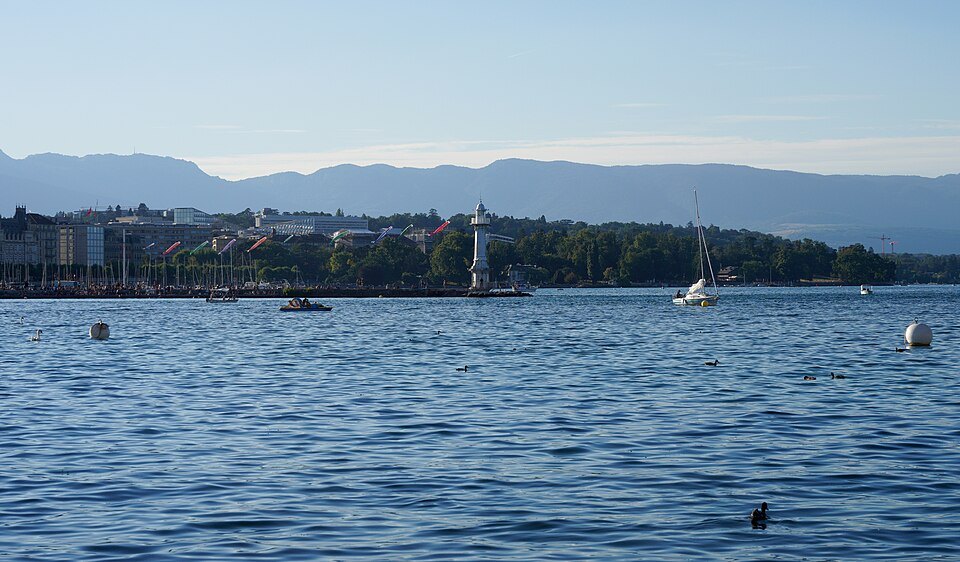
That western end, the Petit Lac, is narrower and shallower than the great basin beyond. From the city you do not see the whole lake, only its tapering end, which is why the view from Geneva is of shores and hills and, on clear days, Mont Blanc rather than open water.
The harbor
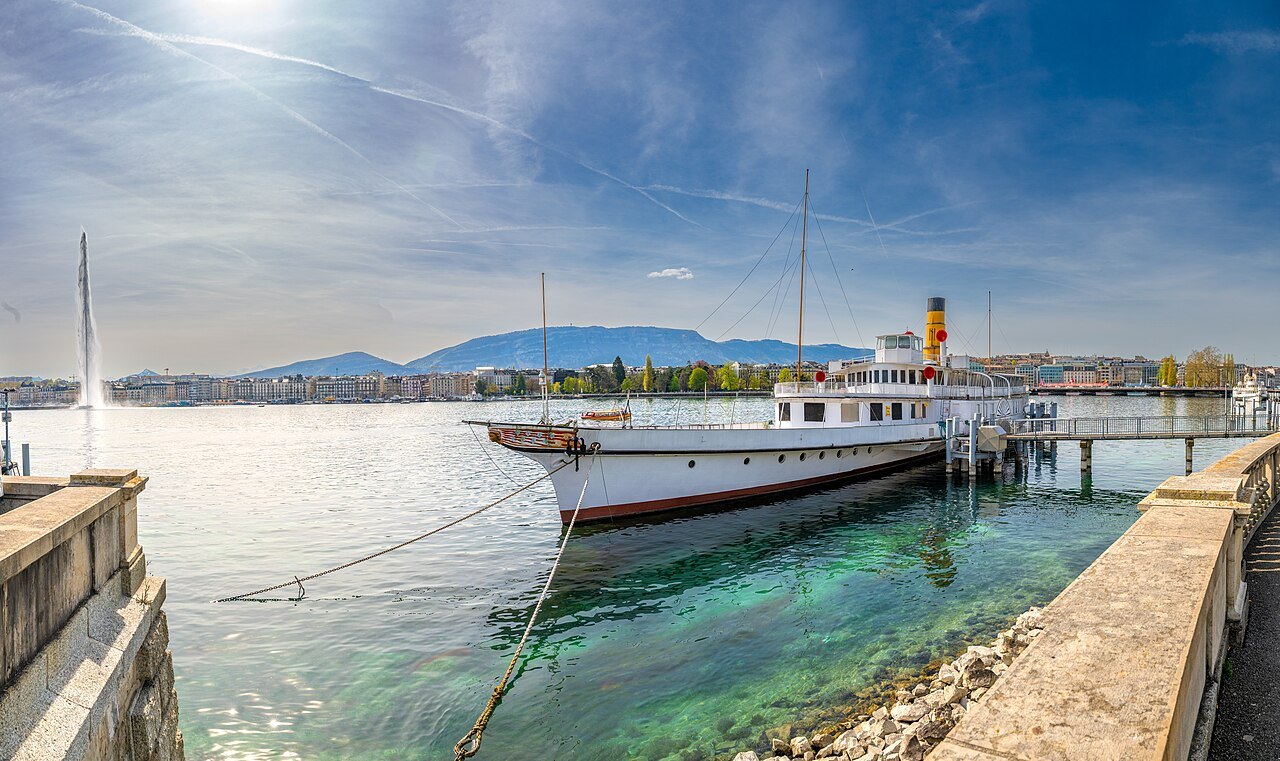
Everything in the city's relationship with the lake happens in the harbor, the rade. Two stone jetties close it off from the open lake: the Pâquis jetty on the right bank, with its public baths and a lighthouse, and the Eaux-Vives jetty on the left bank, with the Jet d'Eau at its tip.
Between them lie the quays of the nineteenth-century city, the Quai du Mont-Blanc with its grand hotels on one side and the Jardin Anglais and the Quai Gustave-Ador on the other, and the Pont du Mont-Blanc, which marks the point where the lake becomes the Rhône.
Just off the Quai Gustave-Ador, two granite boulders stand out of the water: the Pierres du Niton, erratic blocks carried here by the Rhône glacier as it retreated after the last glaciation. Bronze Age axes found there in 1660 suggest they had a ritual role.
The stone that measures Switzerland
In 1820 the engineer Guillaume-Henri Dufour fixed a graduated plate to the Pierre du Niton, trusting its stability, to monitor the level of the lake at a time when shoreline owners in Vaud and Valais accused Geneva of causing damaging floods.
The stone later became something more. Its altitude was fixed in 1879, and since a new measurement in 1902 the Pierre du Niton has been the reference point for the Swiss system of altitudes, at a little under 374 meters. It was listed as a geotope of national importance in 2012.
The level of the lake itself is now held by the Seujet dam, built in 1995 a little downstream on the Rhône, under an agreement signed in 1984 with the cantons of Vaud and Valais. It also regulates the flow of the river and produces electricity, and it has a fish ladder and a lock for the Rhône boats.
Boats on the lake
There are two kinds of boat to know about. The small yellow Mouettes are water buses that cross the harbor on four short lines and take ordinary public transport tickets; the Getting Around page covers them.
The large boats belong to the Compagnie Générale de Navigation, founded in 1873, whose fleet of nineteen includes eight Belle Époque paddle steamers built between 1904 and 1927, the largest such fleet in the world by passenger capacity. They are listed as historic monuments, and four still run on their original steam engines.
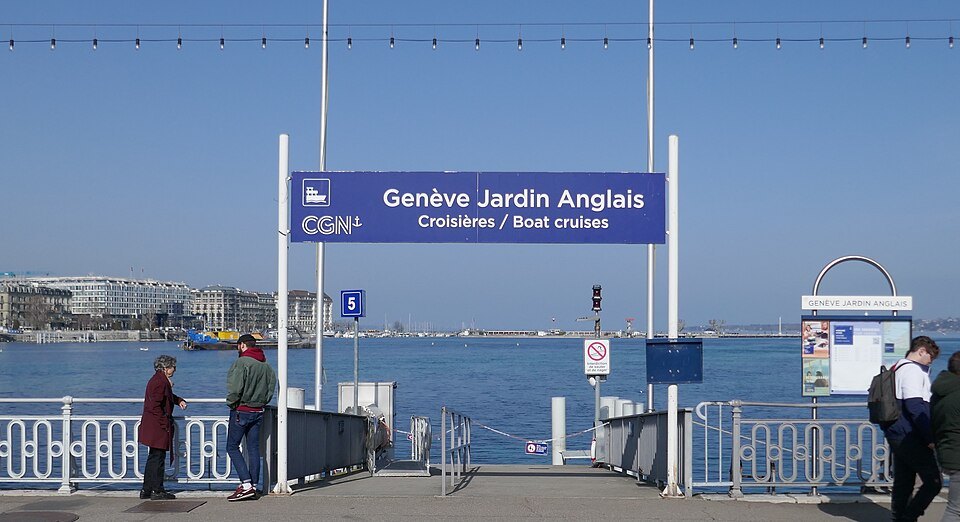
In Geneva they call at the Mont-Blanc landing on the right bank and at the Jardin Anglais landing on the left, for cruises along the Petit Lac to Versoix, Coppet and Nyon, to Yvoire, and the full length of the lake to Lausanne. The timetable is seasonal and fuller in summer; the CGN's own site gives the routes and dates.
Moored at the Quai Gustave-Ador is an older survivor, the paddle steamer Genève, built in 1896 by Sulzer for the national exhibition held in Geneva that year. It was withdrawn in 1973 and saved in 1974 by an association that uses it as a day shelter for people in hardship and a bar and restaurant in the summer months.
Swimming
In the late 1960s pollution made swimming dangerous at some of the lake's beaches, and by the 1980s eutrophication had almost wiped out its fish. Pollution has since been dramatically reduced, and the lake is again considered safe to swim in.
Geneva has three classic places to do it. The Bains des Pâquis, on the right-bank jetty, are the city's public baths, open to bathers all year and described on their own page. On the left bank, the Plage des Eaux-Vives, opened in 2019, is a public beach about four hundred meters long, with a park, a nature area, showers and a ramp into the water for people with reduced mobility.
Further along the Quai Gustave-Ador, Genève-Plage is a park of 42,000 square meters with lake bathing, an Olympic pool added in 1972, a water slide and a windsurfing center. It was built in 1932 on land reclaimed from the lake with rubble from the demolition of the old Cornavin station. Swim only in marked areas; the lake is deep and, for much of the year, cold.
The lake through the year
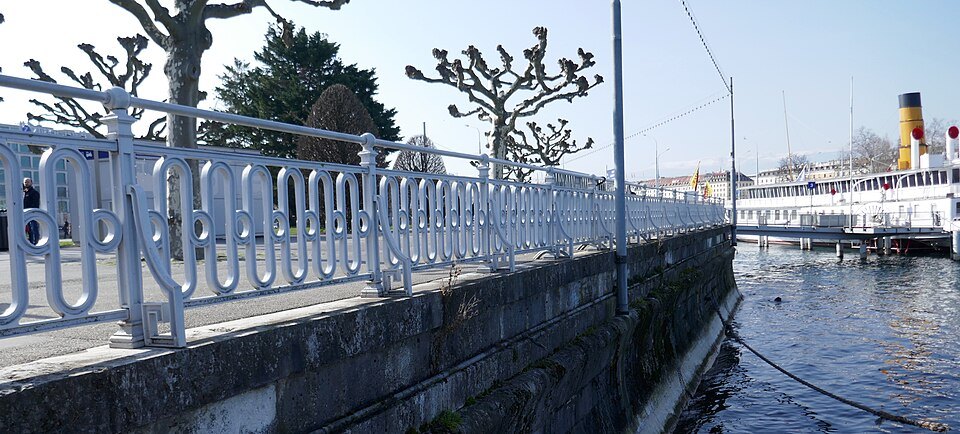
The lake shapes the weather. The bise, a cold northeasterly wind, can sweep the lakeside parts of the city, and in hard winters it coats the quays, railings and trees along the harbor in ice.
In June the Société Nautique de Genève runs the Bol d'Or, first held in 1939: a race of some 125 kilometers from Geneva to the far end of the lake and back, with close to six hundred sailboats on the start line, described as the largest regatta on enclosed water in the world. In December, swimmers plunge into the harbor for the Coupe de Noël.
In summer the water becomes the city's playground, crowded with swimmers, sailboats and paddle steamers; in autumn and winter the harbor belongs to walkers and the Mouettes.
More photographs
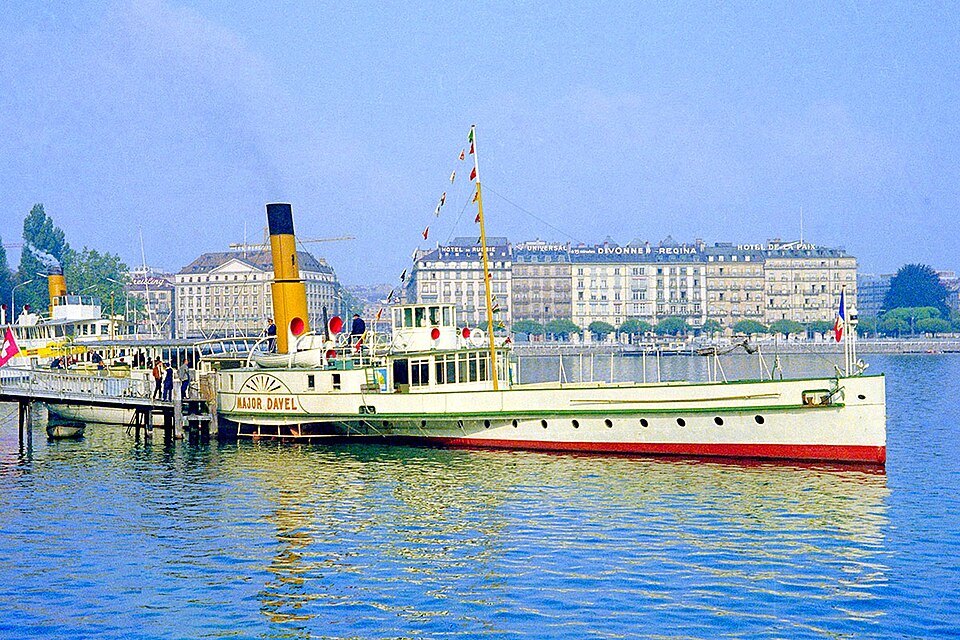
The paddle steamer Major Davel moored in the harbor below the right-bank hotelsStéphane Golay, Wikimedia Commons, CC0 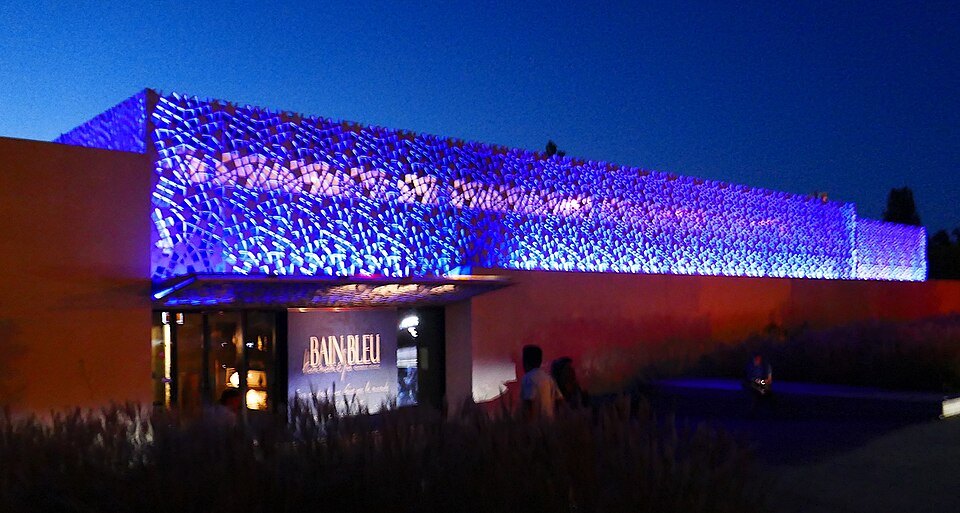
The Bain Bleu spa at Genève-Plage lit blue at nightMHM55, Wikimedia Commons, CC BY-SA 4.0