Home · International Geneva
Who is here, and what you can see
- Palace of NationsThe United Nations Office at GenevaThe UN's second great seat after New York, in the palace built for the League of Nations; guided tours only
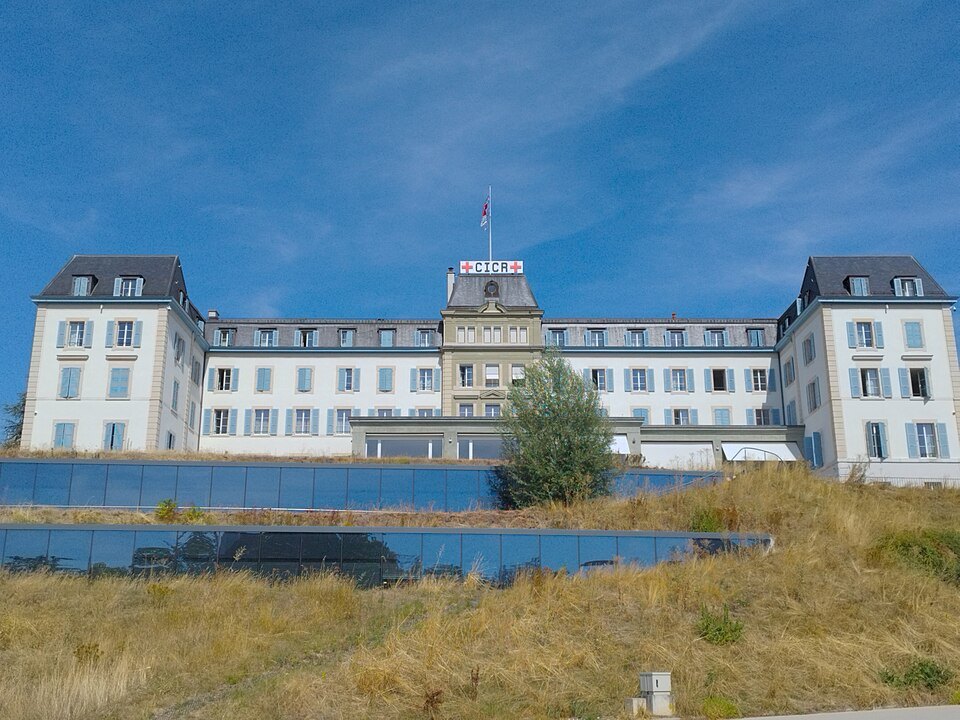
- Avenue de la PaixThe International Committee of the Red CrossFounded in Geneva in 1863; visitors go to the museum next door, not the headquarters
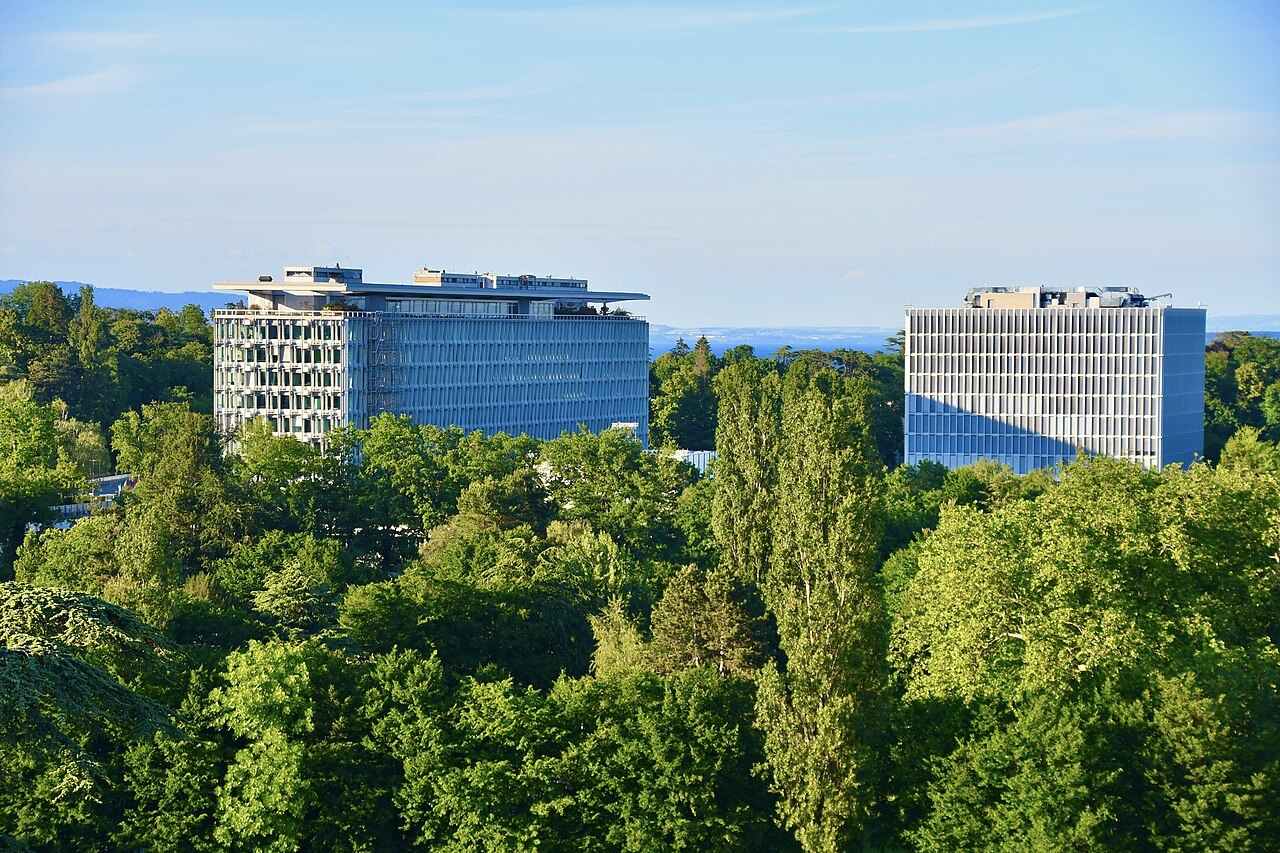
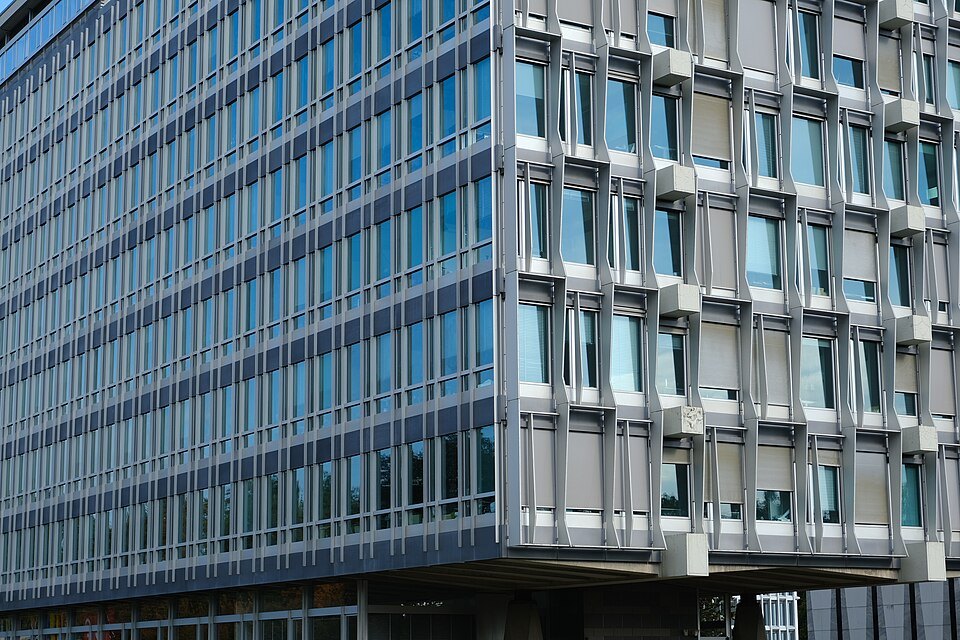
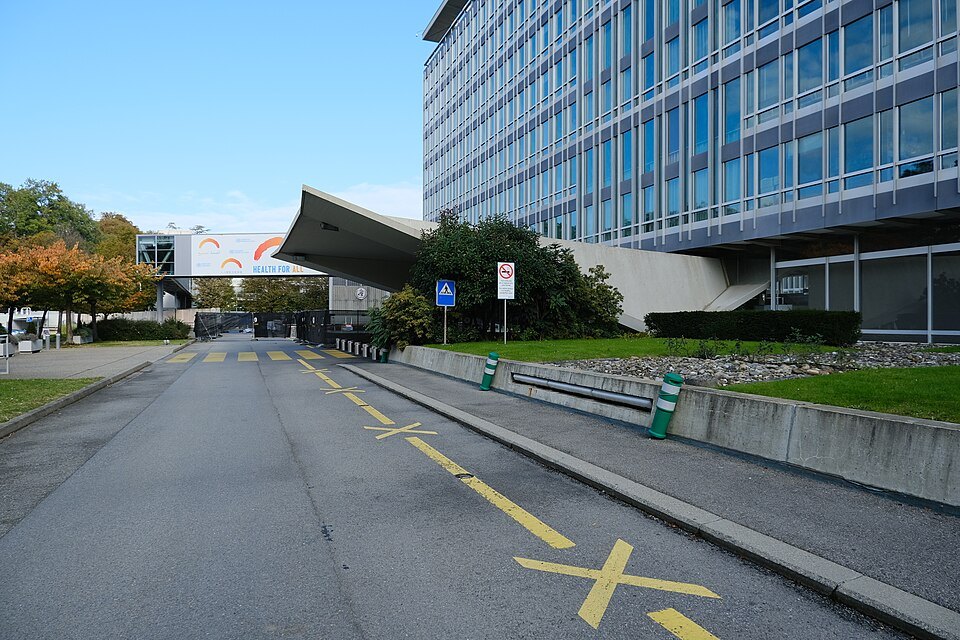
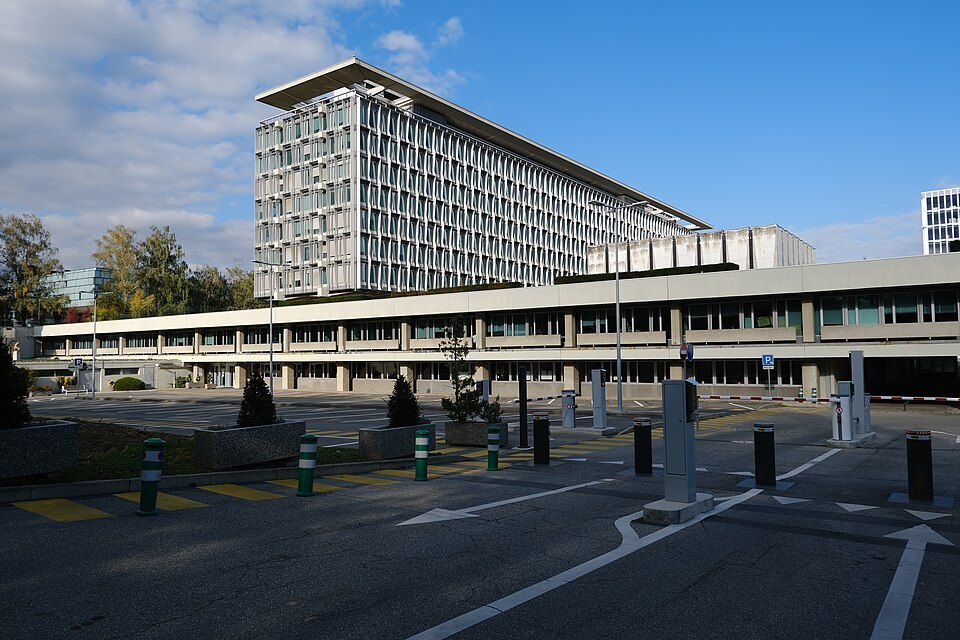
- The international quarterThe World Health OrganizationThe UN's health agency, one of the specialized agencies with headquarters in Geneva
- The international quarterThe International Labour OrganizationThe UN agency for work and workers' rights, headquartered in Geneva
- The international quarterThe UN Refugee AgencyUNHCR, the agency that protects refugees and displaced people, headquartered in Geneva
- Palace of Nations, Room XXThe Human Rights CouncilMeets under Miquel Barceló's dome; supported by the UN human rights office in Geneva
- The international quarterThe World Trade OrganizationNot part of the United Nations, but one of the major organizations based in the city
International Geneva
Why Geneva
Geneva is not a capital, yet it hosts the highest number of international organizations of any city in the world. It shares with a handful of places, such as New York, Basel and Strasbourg, the distinction of being the seat of at least one major international body without being the capital of a country, and it is often called the capital of peace.
The figures are those of a diplomatic city. According to the Swiss government's platform for International Geneva, 186 states have a permanent mission here, alongside 42 international organizations and nearly five hundred non-governmental organizations, and together they employ more than thirty-six thousand people. That is about one job in ten in the canton.
For a visitor, international Geneva is less a skyline than a district: a quarter of offices, parks, flags and security gates on the hill of the right bank, between the Place des Nations and the lake, reached from Cornavin in a few minutes by tram.
How it began
The story starts with humanitarian law. In 1863 a committee of five Geneva citizens, inspired by Henry Dunant's account of the battlefield of Solferino, founded what became the International Committee of the Red Cross. In August 1864 a diplomatic conference in Geneva adopted the first Geneva Convention, for the care of wounded soldiers in the field, revised in 1906, 1929 and 1949.
Arbitration followed. In 1872 an international tribunal sat in a reception room of the town hall to settle the Alabama Claims, the dispute between the United States and Britain over Confederate warships built in British yards. The ruling, in favor of the United States, set a precedent for resolving disputes between states by law; the room is still called the Alabama room.
After the First World War, Geneva was chosen as the seat of the League of Nations, for its diplomatic traditions and neutrality, and the city gave the land for its palace. When the United Nations replaced the League, it took over the building, and the agencies that gathered around it made the city what it is today.
The organizations
The United Nations Office at Geneva is one of the UN's major hubs, and around eight thousand meetings were held at the Palace of Nations in 2022, on subjects from disarmament and human rights to health and trade. The Human Rights Council meets in Room XX, under the dome remade by Miquel Barceló.
Specialized agencies of the UN system with headquarters in Geneva include the World Health Organization, the International Labour Organization, the International Telecommunication Union, the World Intellectual Property Organization and the World Meteorological Organization. Alongside them are UN bodies such as the refugee agency UNHCR, the human rights office, UNCTAD for trade and development, UNAIDS, and the Economic Commission for Europe. The World Trade Organization, outside the UN system, is also based here.
The Red Cross movement has two headquarters in the city: the International Committee of the Red Cross, which works in armed conflicts, and the International Federation of Red Cross and Red Crescent Societies. The World Council of Churches and the Lutheran World Federation share the Ecumenical Centre in Grand-Saconnex.
What a visitor can see
Most of international Geneva is working space, closed to the public. The places a visitor can go are few, but they are good.
The Place des Nations is public at any time. The Broken Chair, a twelve-meter wooden chair with a leg torn off, stands on it as a protest against landmines and cluster munitions, and beyond the gates the flags of the member states line the approach to the palace.
The Palace of Nations can be visited on guided tours of about an hour, booked ahead through the UN Geneva visitor service. Every visitor needs a valid passport or Schengen-area identity card, and should arrive about half an hour early for security. The Booking Ahead page explains how to fit it into a trip.
Across the Avenue de la Paix, the Red Cross and Red Crescent Museum tells the story of humanitarian action through the voices of twelve witnesses and three spaces by three architects. It is the best single introduction to what the organizations up the hill actually do. The Musée Ariana next door, and the botanical garden below, make a full day of the quarter.
In the old town
Some of the story is on the left bank. The town hall's Alabama room, where the 1872 arbitration sat, is in the town hall at the top of the old town, a short walk from the Place du Bourg-de-Four; the Town Hall page tells its story.
The Reformation Wall in the Parc des Bastions recalls an older international Geneva: the city of Calvin, Farel and Beza, known as the Protestant Rome, whose ideas shaped the Reformed tradition far beyond Switzerland. The university began in 1559 as Calvin's Geneva Academy.
The humanist and diplomatic traditions that brought the League of Nations to Geneva grew out of that past. Seeing both banks gives a fuller picture than the flags of the Place des Nations alone.
Practical notes
Take the tram from Cornavin to the Place des Nations, about eight or nine minutes. The quarter is spread out and partly uphill, and its organizations sit behind security fences, so walk with a plan: the square and the chair, the palace tour if you have booked one, the Red Cross museum and the Ariana.
Demonstrations and gatherings are common on the Place des Nations, which faces the United Nations. They are part of what the square is for.
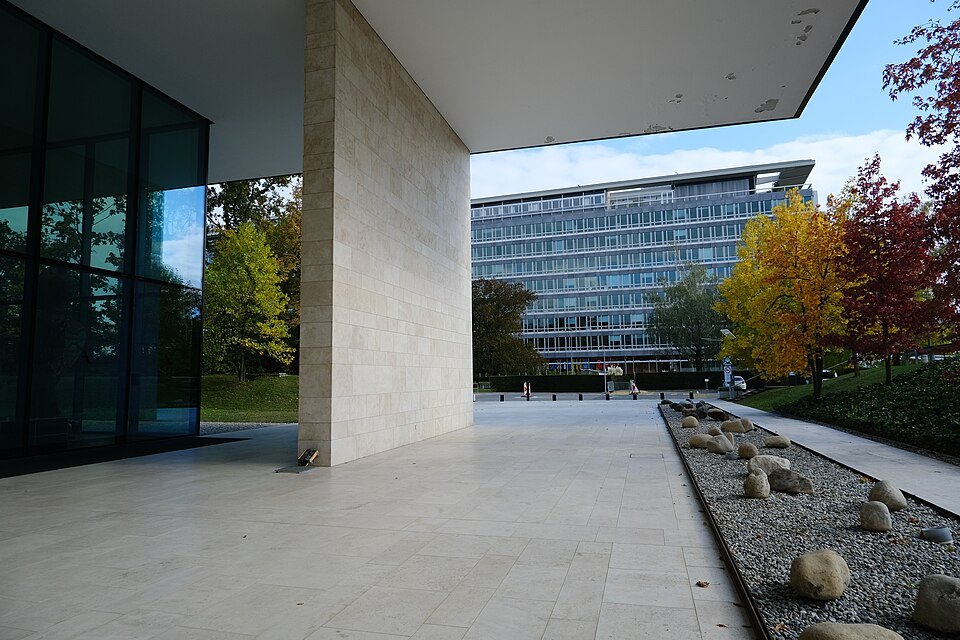
Give the quarter at least half a day, and a full day if you add the Ariana and a walk down through the botanical garden to the lake, where the lakeside path leads back toward the Pâquis and the center.
More photographs
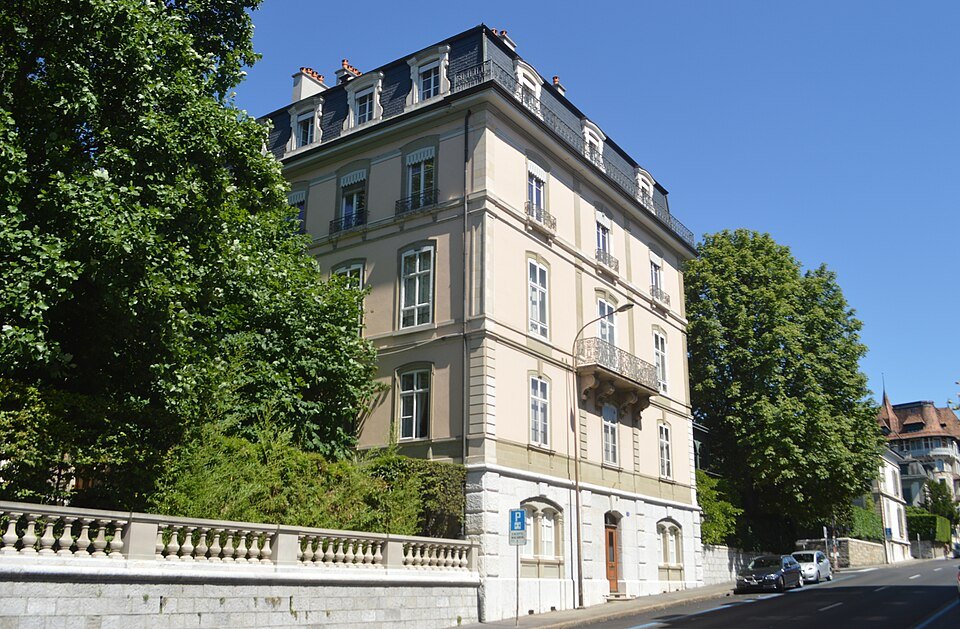
The former Red Cross headquarters, a stone town house on the Rue de l'AthénéeRomanDeckert, Wikimedia Commons, CC BY-SA 4.0 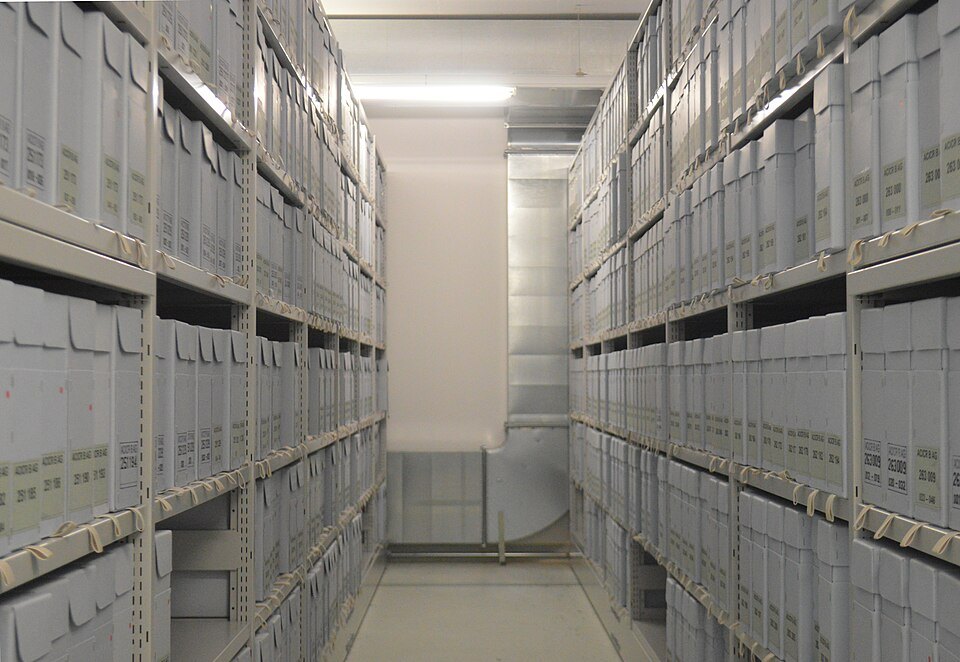
Rows of archive boxes on shelves in the Red Cross public archivesRomanDeckert, Wikimedia Commons, CC BY-SA 4.0