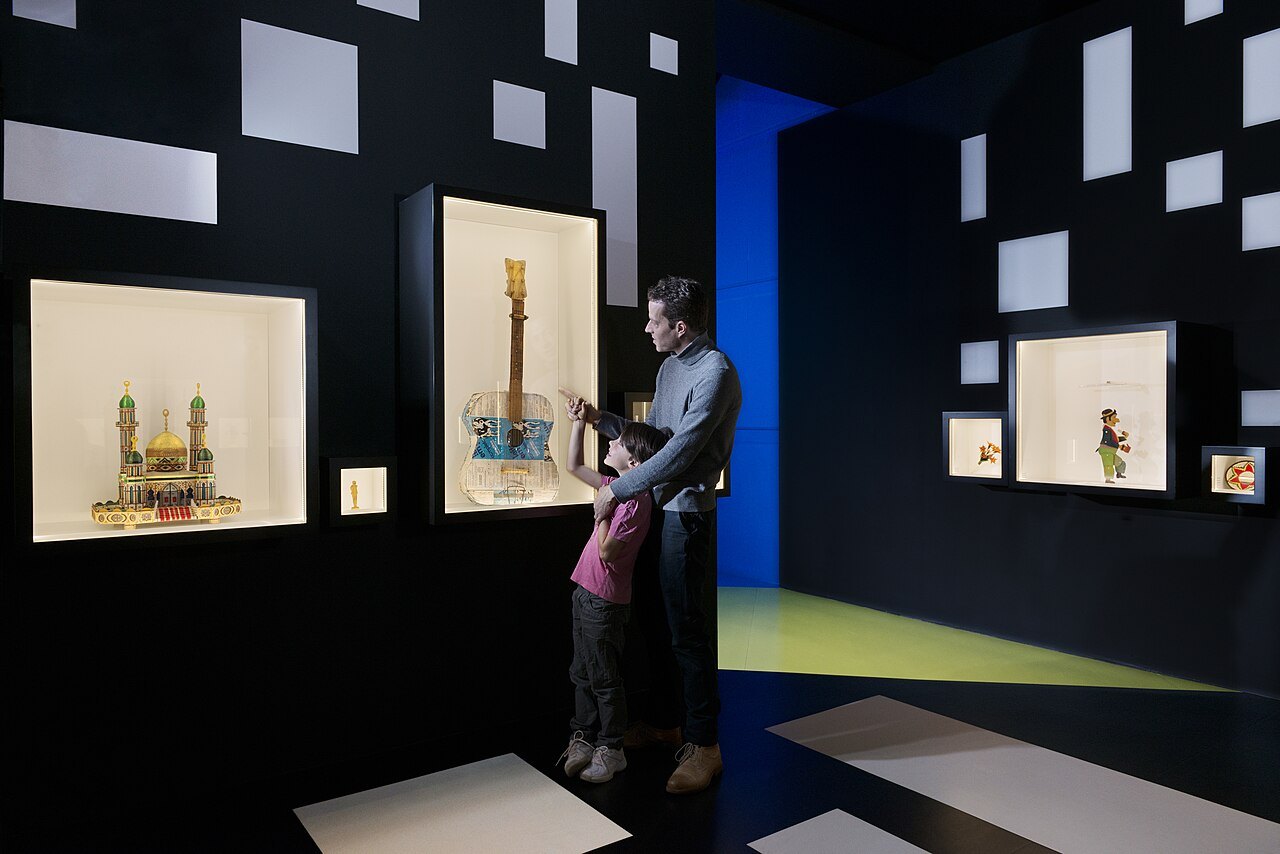
How long do you need at the Red Cross and Red Crescent Museum?
What to expect inside Geneva's Red Cross museum and how long the permanent exhibition actually takes.
Read on
How much time to set aside
A visit to the Red Cross and Red Crescent Museum runs comfortably to an hour and a half to two hours. That covers the permanent exhibition, The Humanitarian Adventure, at a pace that allows for reading labels, watching the short films woven into each space, and sitting with the material rather than moving past it.
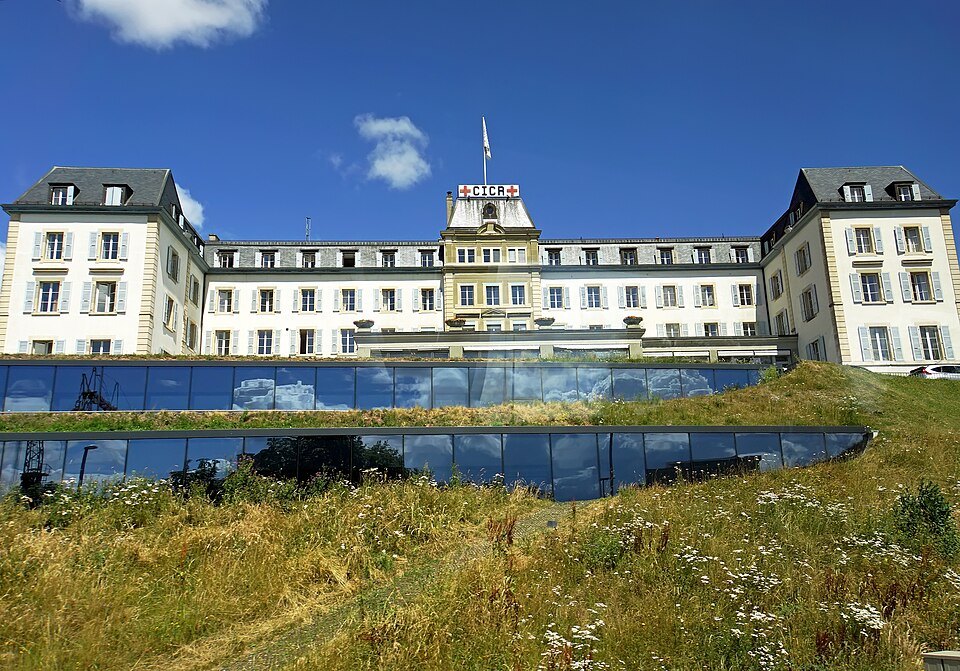
The route is built to be taken slowly. Parts of it deal directly with war, captivity and disaster, and the design leaves room to pause between sections rather than pushing visitors through on a fixed schedule. Anyone visiting with children, or simply wanting to absorb rather than skim, should allow toward the longer end of that range.
The museum does not organize the visit around a single narrative that can be grasped quickly from a distance. Its three main spaces each stand on their own, which is part of why a visit that feels rushed after less than an hour tends to leave out two of the three themes entirely.
Why the story takes time to tell
The museum exists because of a single evening in June 1859, when the Geneva businessman Henry Dunant arrived at Solferino in Italy just after one of the era's great battles and found wounded soldiers left on the field with almost no medical care. His account of that experience, A Memory of Solferino, published at his own expense in 1862, called for national volunteer societies to help the wounded in war.
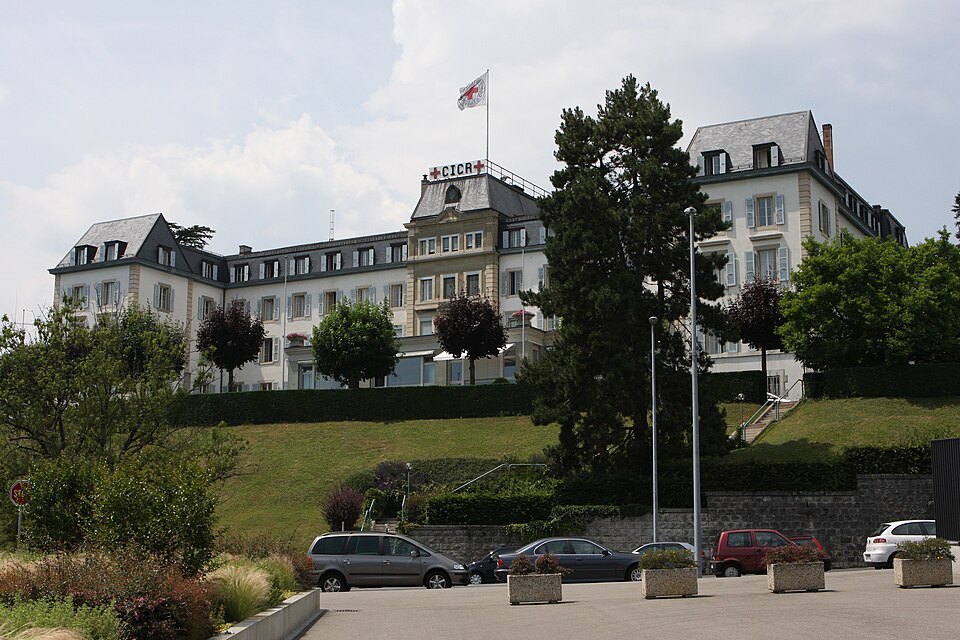
The Geneva Society for Public Welfare took up the idea in February 1863, appointing a committee that soon declared itself permanent and international, the origin of the ICRC. An international conference followed in October 1863, and on 22 August 1864 a diplomatic conference in Geneva adopted the first Geneva Convention. The museum's exhibitions are set against that beginning and against everything that has followed from it, which is one reason the visit is not a quick one.
What fills that time
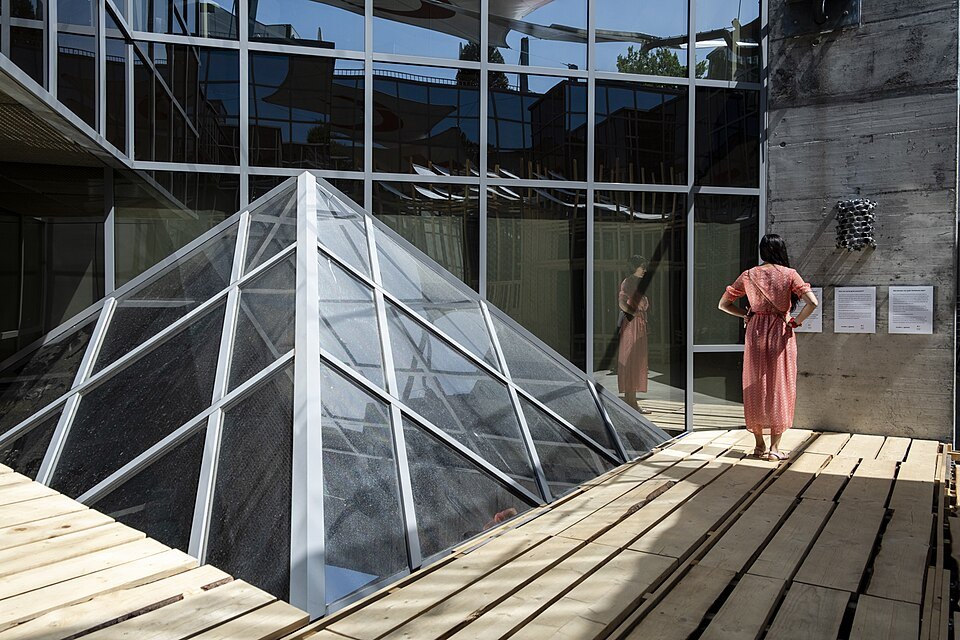
The permanent exhibition is organized around three present-day themes, each given its own architecturally distinct space. Defending Human Dignity, designed by the Brazilian architect Gringo Cardia, confronts the realities of detention and violence. Restoring Family Links, by Diébédo Francis Kéré of Burkina Faso, deals with the search for people separated by conflict and disaster. Reducing Natural Risks, designed by the Japanese architect Shigeru Ban, addresses the humanitarian response to earthquakes, floods and other emergencies.
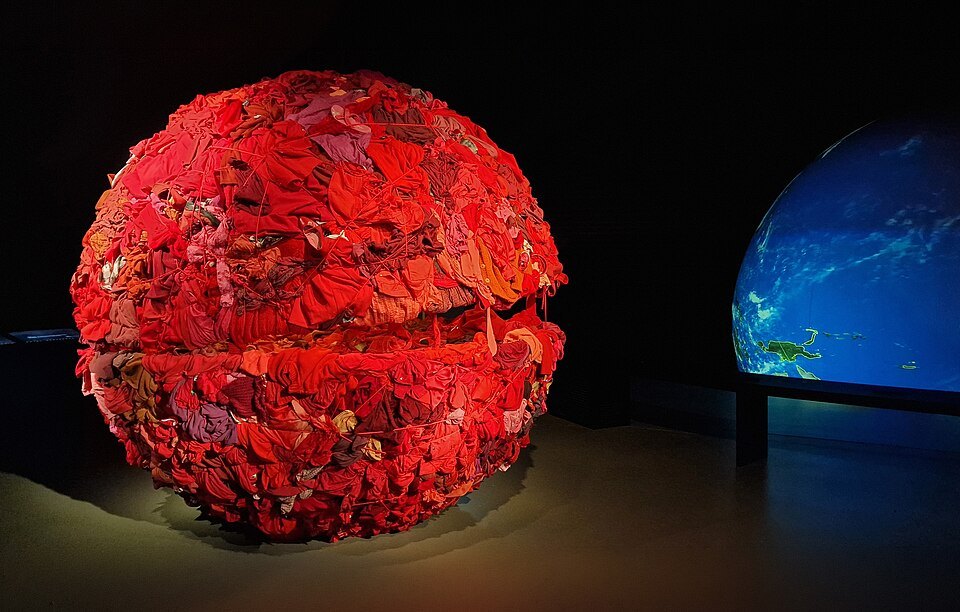
Each space opens with an experience meant to engage the senses before any explanatory text appears, which is part of why the visit takes the time it does. The sequence is not a simple timeline of Red Cross history but three separate confrontations with present-day humanitarian work, and each is built to be absorbed on its own terms rather than hurried through to reach the next.
The witnesses who guide the visit
Twelve witnesses, presented through an immersive setting at the start of the exhibition, accompany visitors through the rest of the route. Their presence is meant to keep the focus on human relationships rather than on institutions or dates, and their testimony recurs throughout the three main spaces rather than being confined to a single introductory room.
This structure is part of why a rushed visit misses the point of the place. The witnesses are introduced early and referred back to later, so moving too quickly through the opening section can mean losing track of voices that matter again further into the exhibition. Visitors who want to follow their stories properly should plan to linger at the start rather than treat it as a preamble to skip.
Objects worth slowing down for
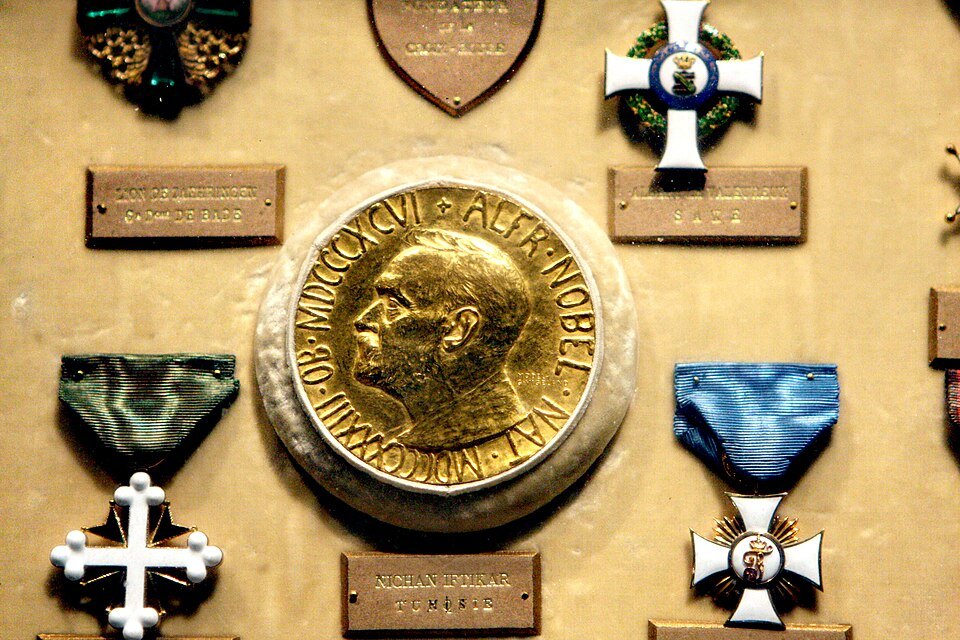
The museum holds about thirty thousand items, and a few reward extra time. The first Nobel Peace Prize medal, awarded in 1901 jointly to Red Cross founder Henry Dunant and the French pacifist Frédéric Passy, sits among the collection's most significant pieces. An armband that belonged to Louis Appia, one of the first two independent and neutral delegates to work under the red cross emblem in a war, alongside the Dutch army captain Charles van de Velde in 1864, is another.
The archives of the International Prisoners of War Agency, set up during the First World War to trace prisoners and reunite families, are among the most affecting parts of the collection; UNESCO has placed them in its Memory of the World register for their role in reconnecting people separated by that war. Outside, before the entrance, stand Les Pétrifiés, a group of hooded stone figures by the Swiss artist Carl Bucher, worth a minute of attention before going in rather than a glance on the way out.
Temporary exhibitions and a reason to return
Beyond the permanent galleries, the museum presents around three temporary exhibitions a year and has followed an annual theme since 2021, the first being gender and diversity. These themes shape debates and events as well as exhibitions, so a museum visited once for the permanent collection can look genuinely different on a later trip built around a different theme.
Because temporary exhibitions have their own arrangements and the museum's funding and programming have shifted in recent years, anyone timing a visit around a specific show should check current details directly with the museum before setting out rather than relying on an earlier visit for what to expect.
Fitting it into a visit to international Geneva
The museum sits on the Avenue de la Paix, a short uphill walk from Place des Nations, itself a short tram ride from Cornavin station; see getting around for how the trams and buses connect. The Broken Chair sculpture stands nearby, and a guided tour of the Palace of Nations next door needs booking well ahead of a visit.
The Musée Ariana is a few minutes further on and pairs naturally with the museum in the same afternoon, making a fuller itinerary out of the hill above the lake. The International Committee of the Red Cross headquarters beside the museum is a working humanitarian organization and not part of the visitor route, so any interest in seeing it should be raised with the museum itself rather than assumed to come with the ticket.
More from the journal
- Booking AheadHow do you visit the Palace of Nations, and what do you need to bring?The guided tour is the only way inside the UN's palace in Geneva: how booking works, the passport rule, the security check, the luggage limit, and what you see if you cannot get a place.Read the piece
- International GenevaWhat can you see of international Geneva without a guided tour?A guide to what visitors can see of international Geneva's flags, museums and parks without booking a tour.Read the piece
- International GenevaWhy did the League of Nations choose Geneva?The reasons Geneva, not a capital, became home to the League of Nations and then the United Nations.Read the piece