Home · Sights · The Musée Ariana
The Musée Ariana
- IThe domed hallA great central hall ringed by two stories of columns under an elliptical dome
- IIThe starry vaultA vault painted with stars, and two sphinxes guarding the old lakeside entrance
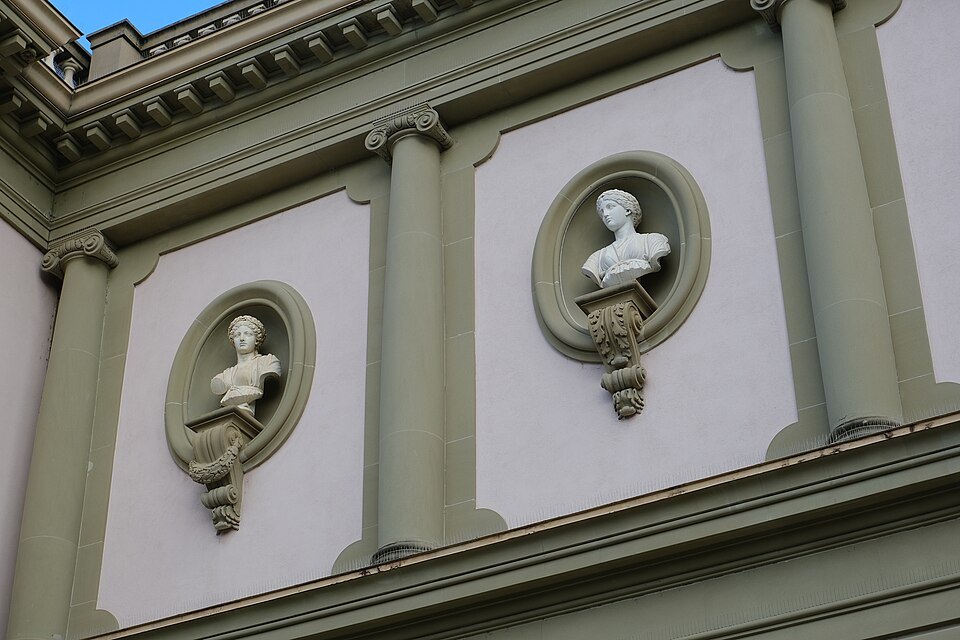
- IIIThe busts of great menRaphael, Michelangelo, Dante, Shakespeare and Rousseau in niches along the facades
- IVThe ceramicsEarthenware, stoneware and porcelain from the collector's founding rooms to contemporary work
- VThe glassThe glass collections moved from the city's art museum, with stained glass added in 2000
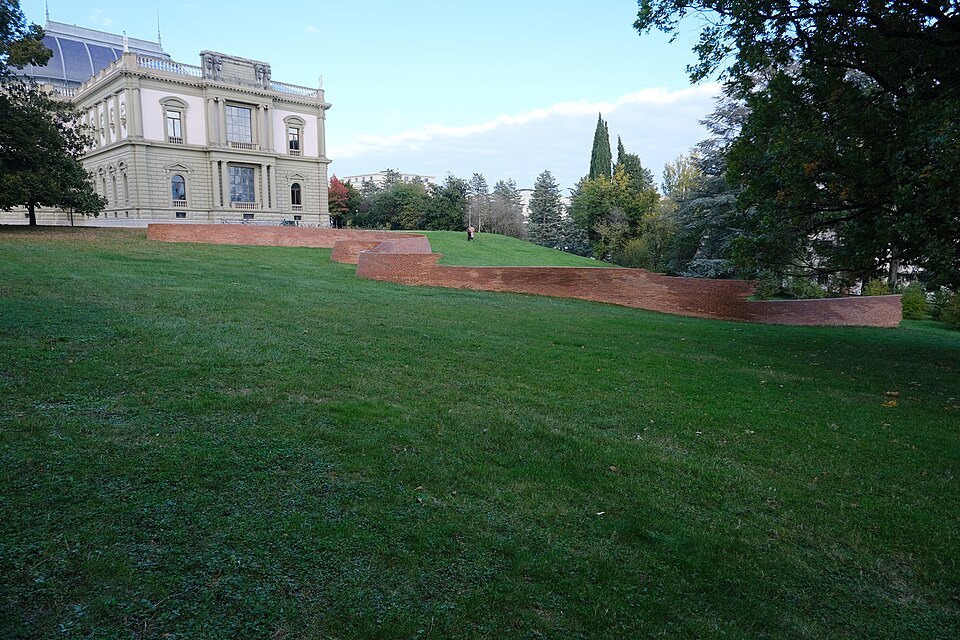
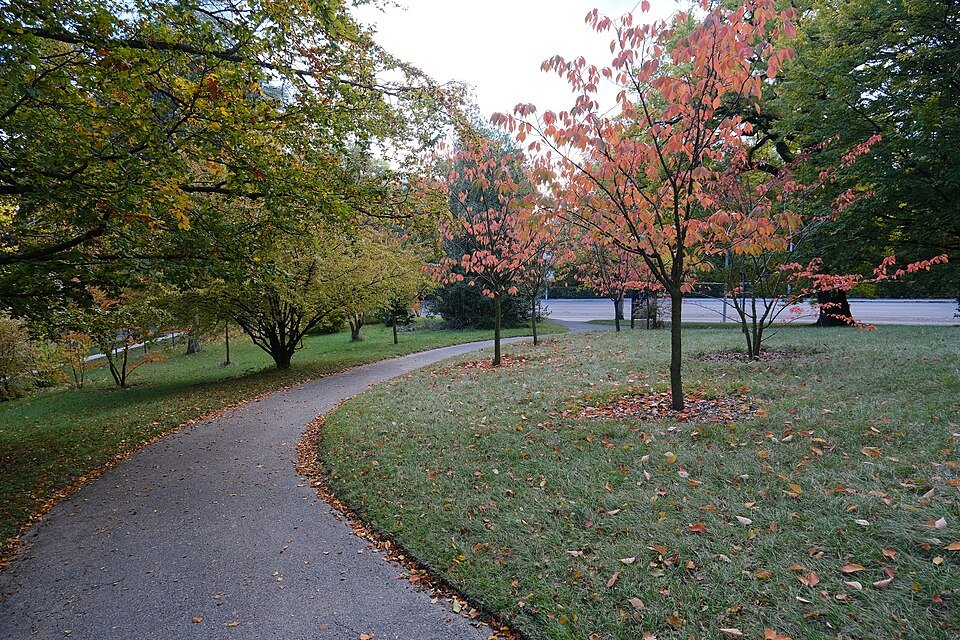
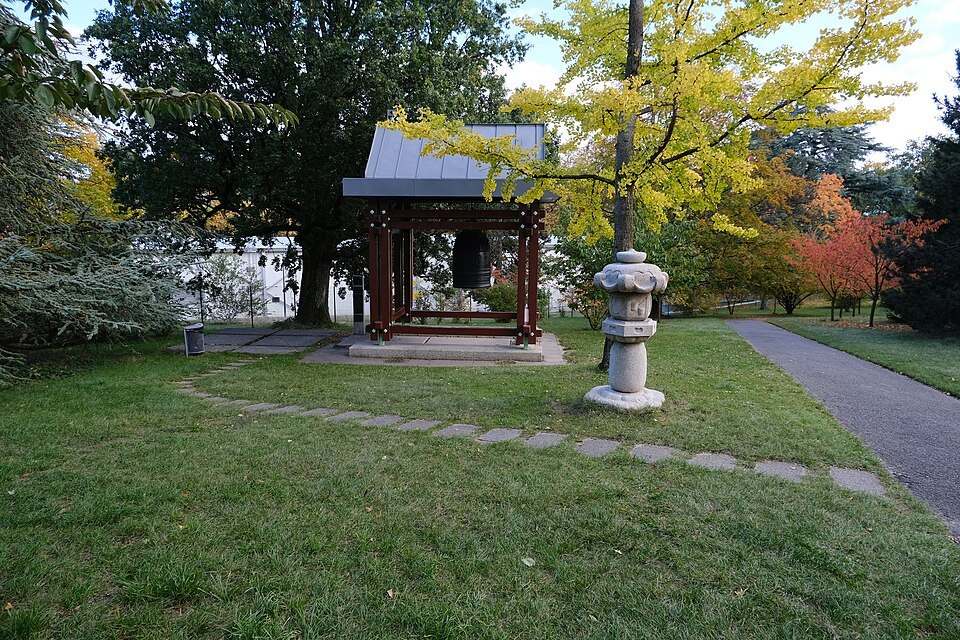
- VIThe parkThe small park around the museum, with the Palace of Nations rising just beyond
From darkness to light
Why it matters
Next door to the Palace of Nations, on the Avenue de la Paix, stands a building that looks as if it had wandered in from eighteenth-century Italy: a palace with a dome, two wings of niches filled with busts, and a pair of sphinxes at its door. This is the Musée Ariana, the Swiss museum of ceramics and glass, and the only collection of its kind in the country.
It holds around twenty thousand objects in glass and ceramics made over the last twelve hundred years, and since 2018 it has been one of the few Swiss institutions supported financially by the Federal Office of Culture.
For a visitor it is also a quiet counterweight to the diplomatic quarter around it: a nineteenth-century collector's dream of a museum, full of light, with the flags of the United Nations just over the hedge.
A collector and his mother
The museum was built between 1877 and 1884 by the architects Émile Grobéty and Jacques-Élysée Goss for Gustave Revilliod, a Geneva collector and patron, as a private museum for his own collections of ceramics, paintings, sculpture and coins. Its first room, the Salle des Étrusques, opened in 1883, and the whole museum opened to the public on 8 March 1884, the birthday of his mother, Ariane de la Rive, whose name it carries.
In his will of 1890 Revilliod left the museum and the estate around it to the city of Geneva and its inhabitants, and the city accepted the bequest with gratitude. His steward, adviser and friend Godefroy Sidler became the first curator, from 1891 until his death in 1910, and made the first inventory of the collections.
The original displays followed the taste of the time, which feared an empty wall: everything on show at once, arranged by country and by center of production.
Revilliod's rooms
In the vestibule, visitors were met by Japanese Imari vases made at Arita in the eighteenth century and by monumental lanterns two meters tall. The European room showed Meissen tableware, Viennese and Hungarian pieces, porcelain from two Swiss manufactories, paintings on porcelain from a Geneva workshop, Sèvres porcelain and Wedgwood stoneware.
The Etruscan and faience room held a monumental planter by Théodore Deck made for the Vienna World's Fair of 1873, along with Swiss and Dutch earthenware and Persian, Arabian and Indian wares, probably brought back from Revilliod's journey around the world.
The Japan room had a monumental vase from the Fukagawa manufactory at Arita that won a prize of honor at the Paris exhibition of 1878, with Imari, porcelain carried by the East India Companies and Chinese export pieces of the Qing period. An oriental room, a Chinese and Japanese gallery and a gallery of pewter completed the route.
Losing the view
The museum's setting changed completely in 1929. To anchor the League of Nations in Geneva, the city granted it building rights over about eighty-eight percent of the Ariana park to build the Palace of Nations, despite the terms of Revilliod's will, and kept only the museum and a small part of the park around it.
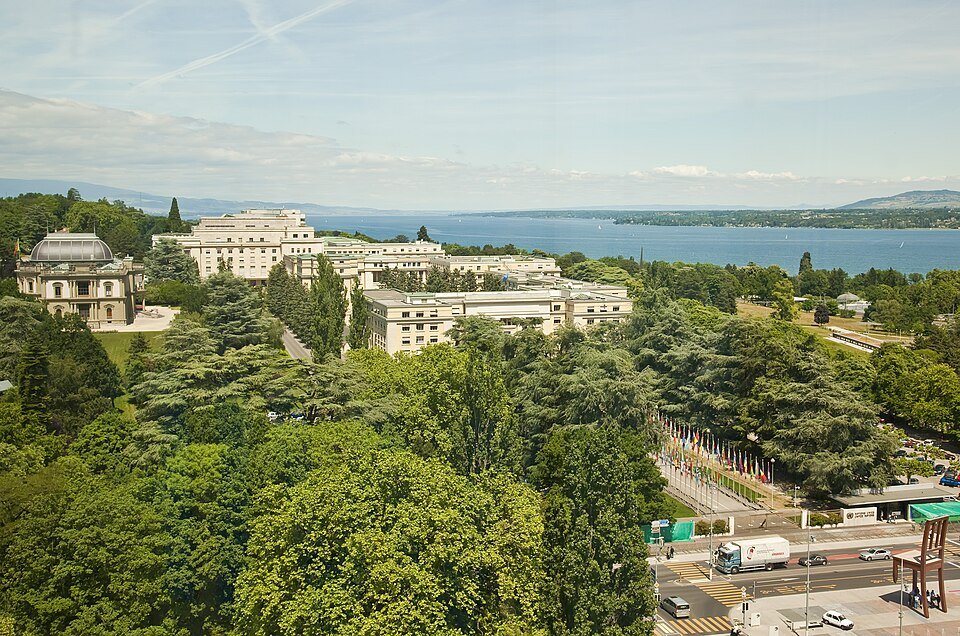
The new buildings blocked the museum's view of the lake and Mont Blanc, and its main entrance, which had faced the water, was moved to the back of the building, on the side of the road to Pregny.
In 1934 the Ariana was attached to the Musée d'Art et d'Histoire and began to specialize in ceramics. The International Academy of Ceramics made its home here from 1952, which turned the museum toward modern studio ceramics. The glass collections of the art museum were transferred to the Ariana in 1986, and its stained glass followed in 2000.
What you actually see
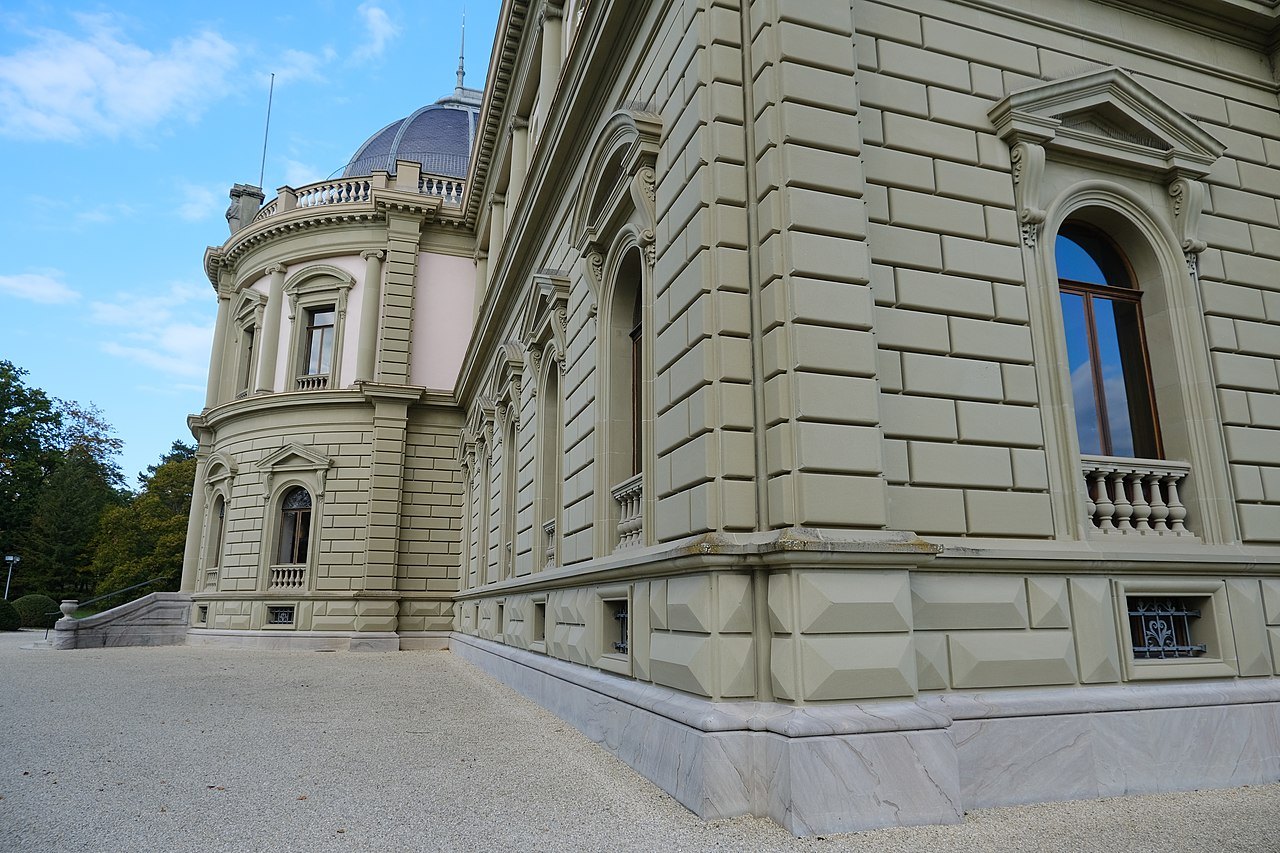
The building is laid out as two symmetrical wings on either side of a great central hall, ringed by colonnades on two floors and crowned by an elliptical dome. The wings rise in two levels, windows below and niches above, with busts of famous men such as Raphael, Michelangelo, Sophocles, Plato, Homer, Dante, Cervantes, Shakespeare, Gutenberg and Rousseau.
Its architecture draws on the Renaissance and Baroque palaces of Italy, such as the royal palace of Caserta and the hunting lodge of Stupinigi. The starry vault and the two sphinxes guarding the old lakeside entrance are the work of Émile-Dominique Fasanino, and the painted ceilings are by Frédéric Dufaux.
The statues and busts are by Luigi Guglielmi and Émile Leysalle. Over the decades, parts of Revilliod's collection went to other city museums and the Ariana acquired glass and ceramics in exchange, so that what you see today is focused on those two arts, historic and contemporary. The central hall is the building's great space.
How to visit
Give it an hour, or longer if the temporary exhibition interests you. The museum is on the Avenue de la Paix near the Place des Nations, a short tram ride from Cornavin station, and combines easily with the Broken Chair, the Red Cross and Red Crescent Museum and the botanical garden down the hill.
The museum closed for twelve years of renovation and reopened in 1993 with a new store for cultural property, and since 2010 it has been an independent city museum again. Its own site gives the current exhibitions and visiting arrangements.
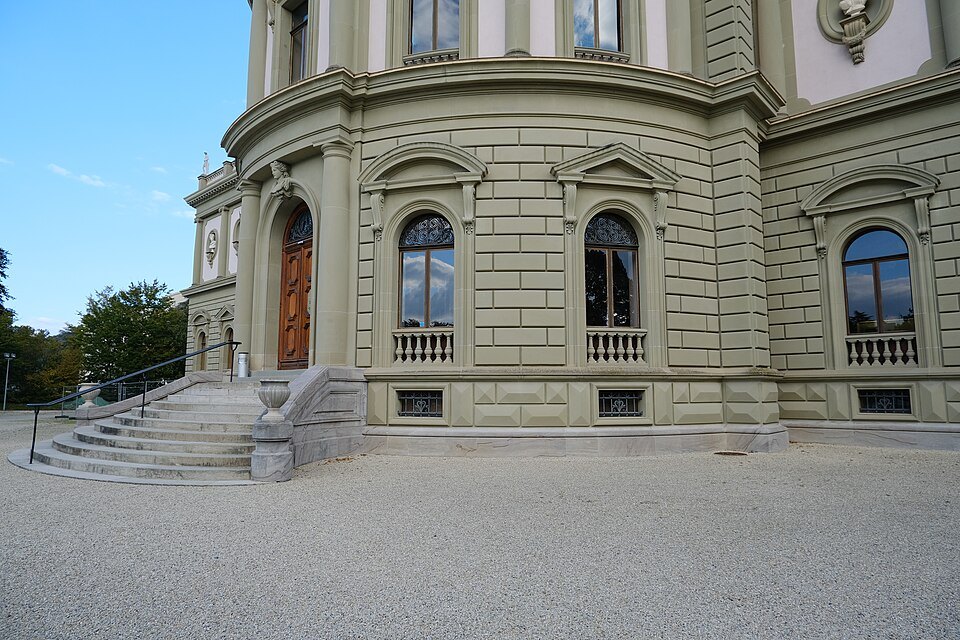
Walk around the outside before you go in. The facade toward the lake, with its sphinxes, is the one Revilliod intended visitors to see first.
Nearby
- A few steps awayThe Palace of Nations and the Broken ChairThe palace built between 1929 and 1938 for the League of Nations and home to the United Nations since 1946, with the Place des Nations, its twelve-meter Broken Chair, and the long avenue of flags in front.Read the page
- A few steps awayThe Red Cross and Red Crescent MuseumA museum opened in 1988 beside the headquarters of the International Committee of the Red Cross, telling the story of humanitarian action through three spaces by three architects and the voices of twelve witnesses.Read the page
- A few steps awayThe Botanical Garden and the Lakeside ParksTwenty-eight hectares of gardens, glasshouses and rock gardens between the lake and the UN park, founded in 1817 and among the great botanical institutions of the world, with a chain of lakeside parks running back toward the city.Read the page