Home · Sights · The Palace of Nations and the Broken Chair
The Palace of Nations and the Broken Chair
- IThe Broken ChairDaniel Berset's twelve-meter wooden chair with one leg torn off, a protest against landmines
- IIThe Place des NationsThe open square in front of the gates, with its fountains and the chair
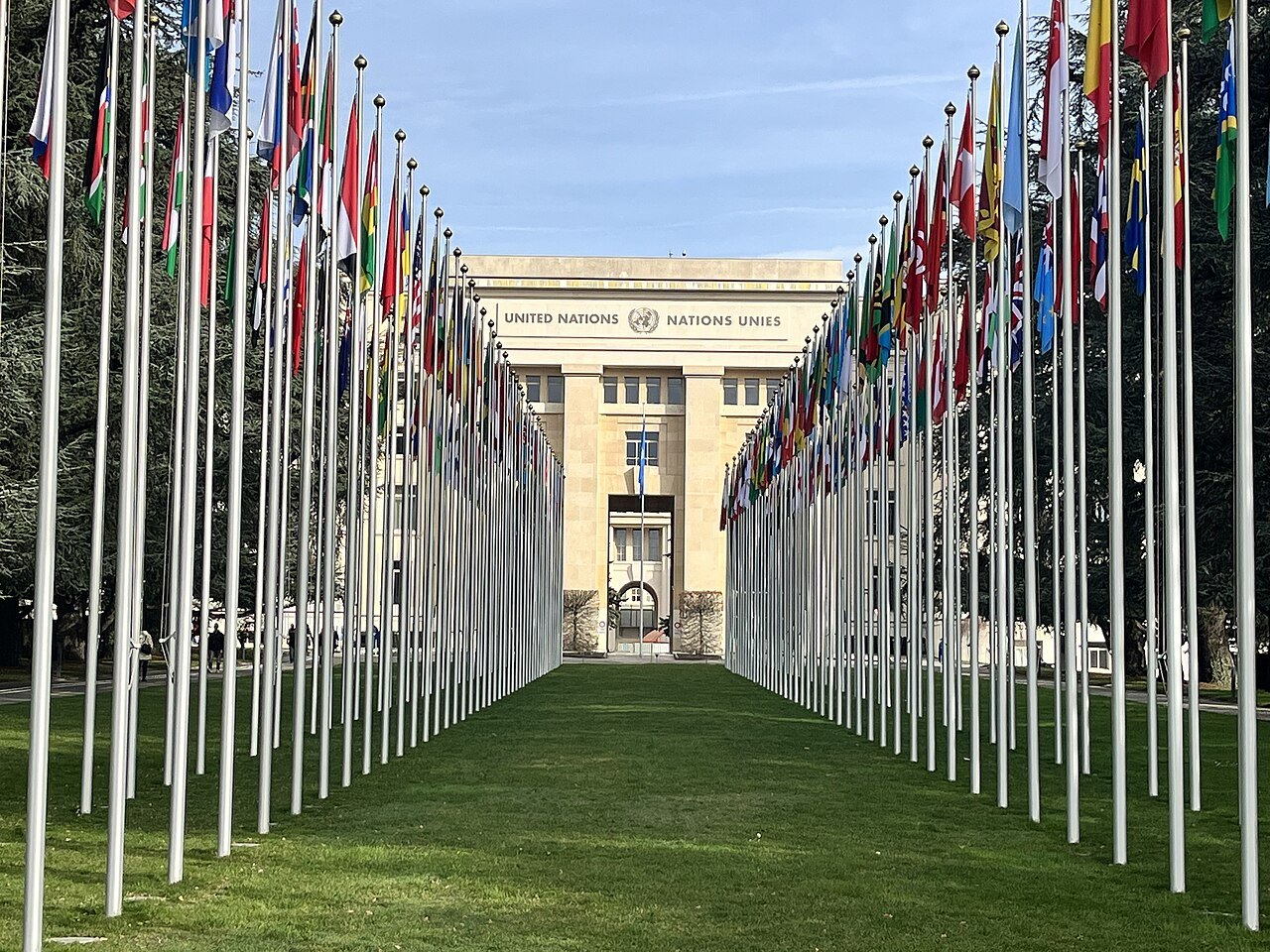
- IIIThe avenue of flagsThe flags of the member states in two long rows leading up to the palace
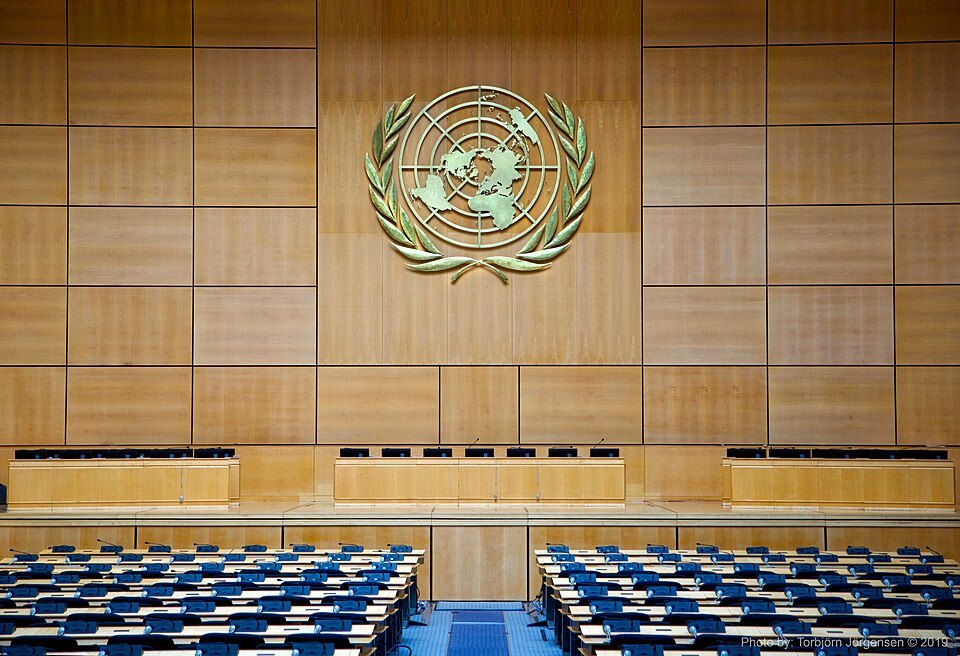
- IVThe Assembly HallThe great hall of the League of Nations, still used for major meetings
- VRoom XXThe Human Rights Council room, its dome remade in 2008 by the Spanish artist Miquel Barceló
- VIThe Celestial SpherePaul Manship's armillary sphere of 1939, four meters across, in the court of honor
From darkness to light
Why it matters
Geneva calls itself the capital of peace, and this is the building that earned it the name. The Palace of Nations was built between 1929 and 1938 as the headquarters of the League of Nations, and since 1946 it has been the home of the United Nations Office at Geneva, the second most important seat of the organization after New York.
The numbers are those of a small town. Once its later extensions were added, the complex stretched about six hundred meters and held thirty-four conference rooms and some 2,800 offices. The United Nations holds around eight thousand meetings a year here, including hundreds of major conferences, and parts of the palace receive about a hundred thousand visitors a year.
For a visitor the palace is the place to understand what international Geneva is: not a skyline of towers but a campus of meeting rooms, flags and delegates on the edge of a park overlooking the lake.
From the League to the United Nations
After the League of Nations was founded in January 1920, Geneva was chosen as its seat for the city's diplomatic traditions, and the city gave the land. An architectural competition in 1926 drew 377 entries, but the jury could not choose, and asked five of the leading architects, from Italy, Switzerland, France and Hungary, to produce a joint design.
The first stone of the neoclassical building was laid on 7 September 1929, over a time capsule holding the list of the League's member states, a copy of its Covenant and coins from every member country. The secretariat moved into the finished parts in 1933, and most of the staff moved in from the Palais Wilson in 1936. Much of the interior was furnished with materials given by member states.
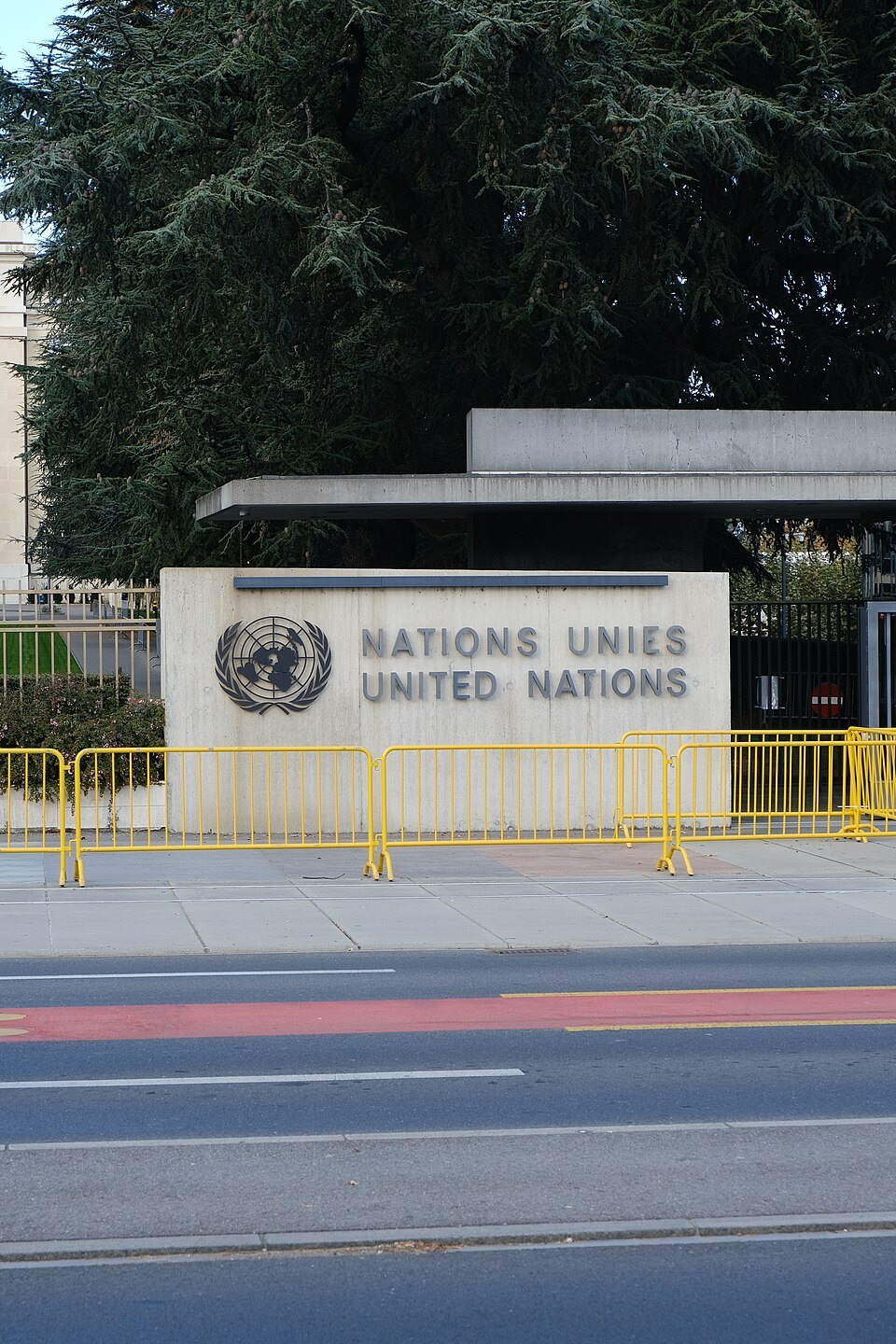
By then the League was politically paralyzed, and it never recovered before it was wound up after the Second World War. The United Nations took over the building and enlarged it several times: extra floors in the early 1950s, a building for the World Health Organization, and between 1968 and 1973 Building E, a new conference center. In 1966 the palace became the United Nations' European headquarters.
What you actually see
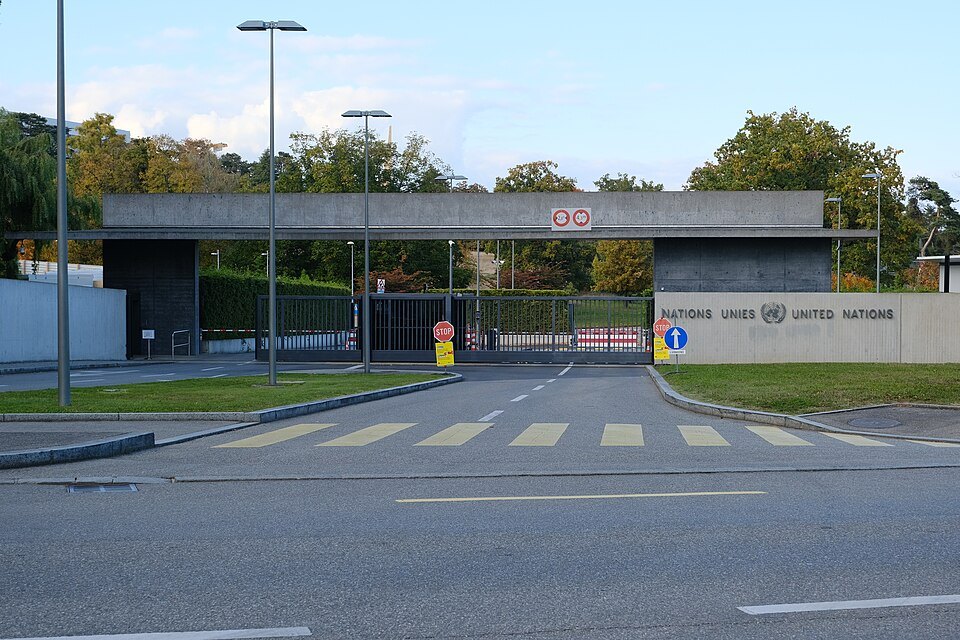
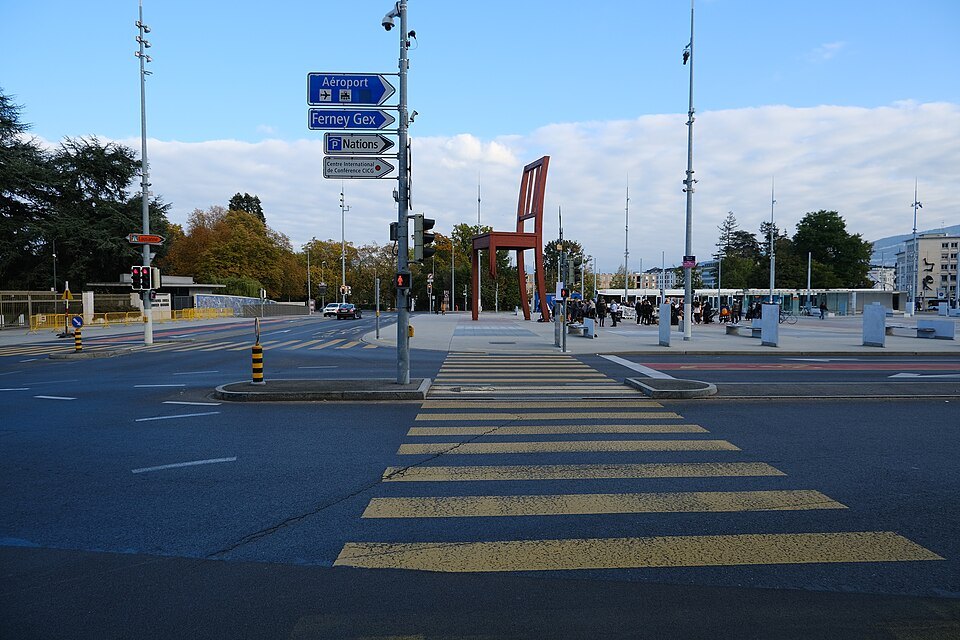
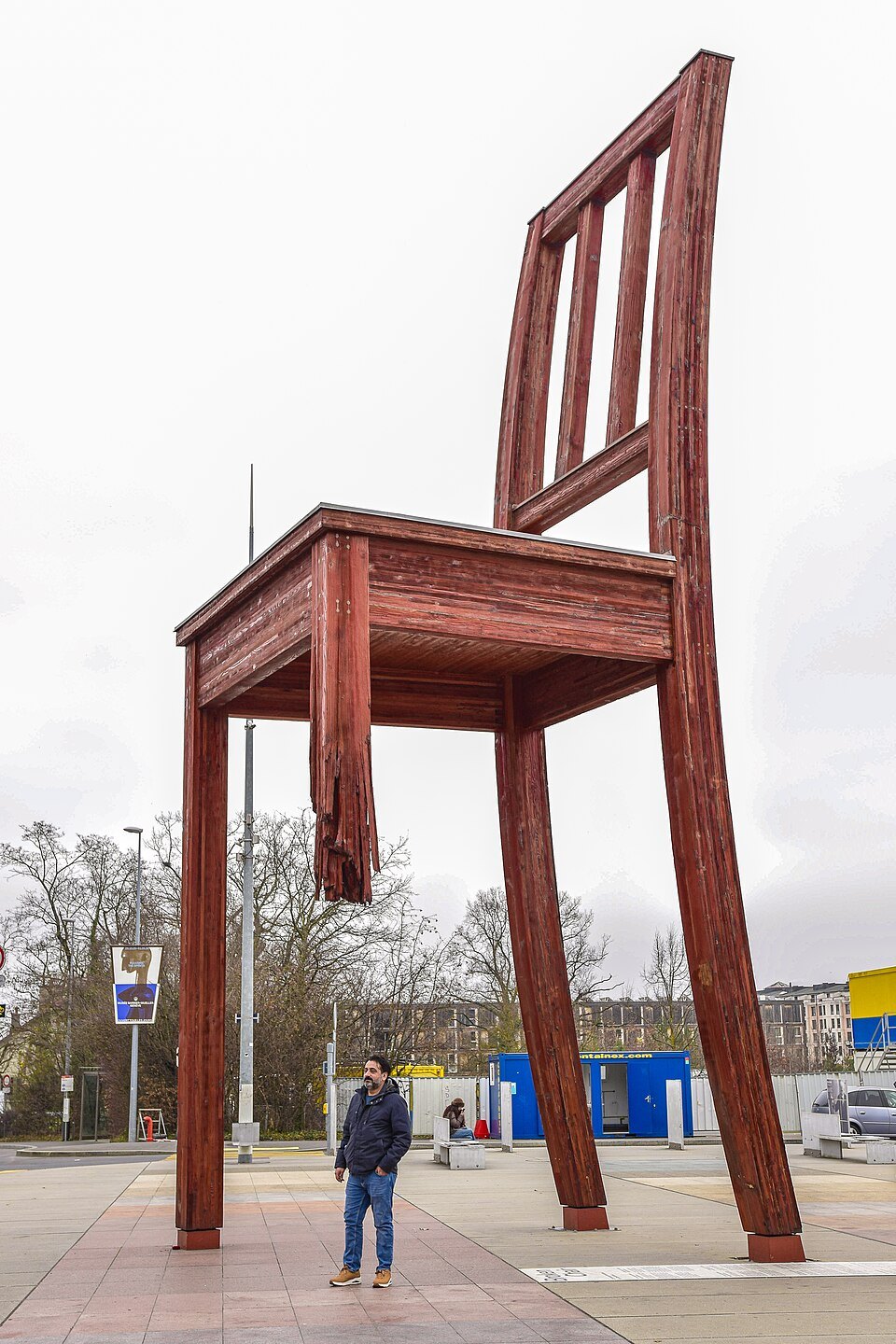
Most visitors start on the Place des Nations, the open square at the end of the Avenue de la Paix. On it stands the Broken Chair, a monumental wooden chair about twelve meters high, made of five and a half tonnes of Douglas fir, with one of its legs torn off. It was conceived by Paul Vermeulen of Handicap International, designed by the Swiss artist Daniel Berset and built by the carpenter Louis Genève.
The chair was put up on 18 August 1997 to press states to sign the Ottawa Treaty banning antipersonnel landmines, and it was meant to stay for three months. Public support kept it there. It was removed in 2005 during work on the square, reinstalled on 26 February 2007, and rededicated to the campaign against cluster munitions that led to a treaty in 2008.
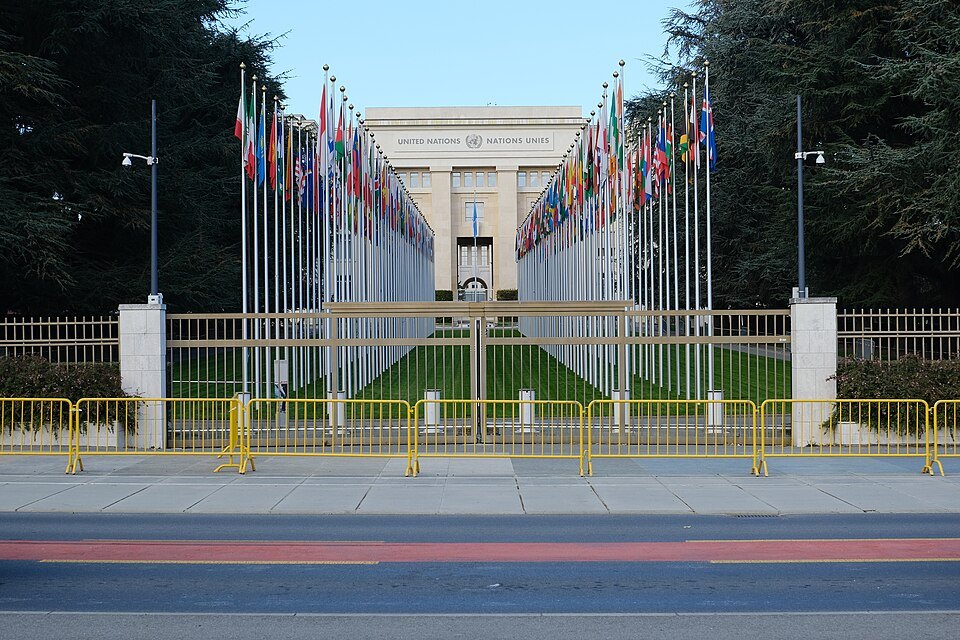
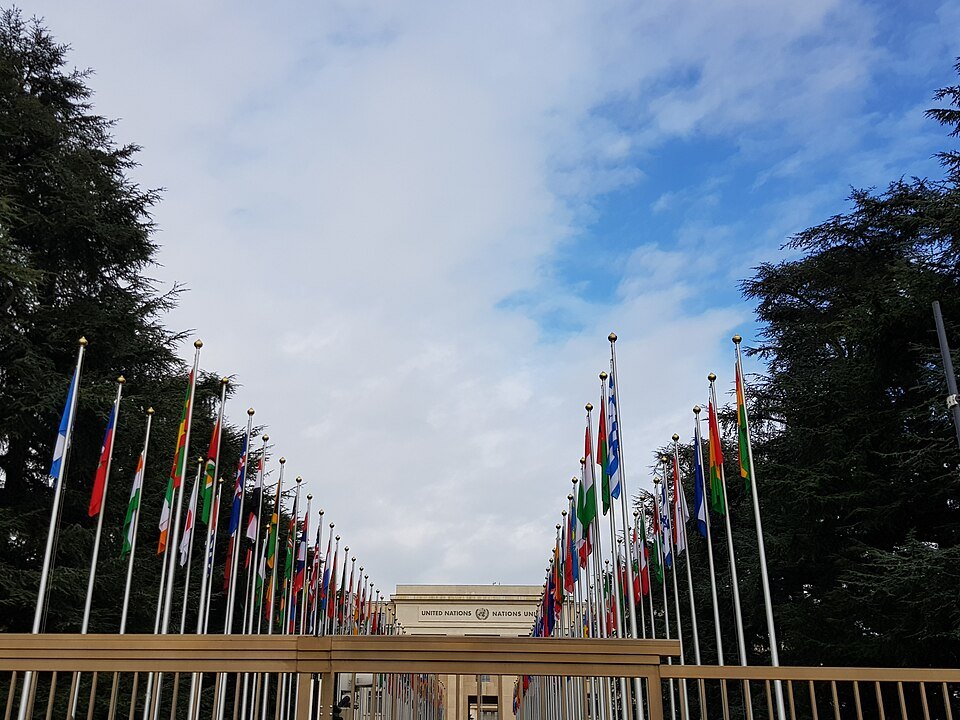
Beyond the gates, the flags of the member states line the approach to the palace in two long rows. Inside, on a guided visit, the rooms shown may include the Assembly Hall of the League of Nations and Room XX, the Human Rights and Alliance of Civilizations Room, whose dome was remade in 2008 by the Spanish artist Miquel Barceló, a gift of Spain; the Human Rights Council meets beneath it.
In front of the court of honor stands the Celestial Sphere by Paul Manship, an armillary sphere four meters across and weighing about six tonnes, with 840 silver stars and bronze figures of the constellations. A gift of the Woodrow Wilson Foundation, it has stood there since 30 August 1939.
The park
The palace stands in the Ariana park, about forty-five hectares running down toward the lake. The Revilliod de la Rive family gave it to the city on two conditions: that Gustave Revilliod be buried in it and that it stay open to the public. For security reasons, the park is no longer open to the public.
Peacocks, gifts to the United Nations, roam the lawns and are fed by the gardeners. The park also holds three villas built as private houses in 1820, 1823 and 1853, one of them now the residence of the Director-General, and a small chalet. Across the Avenue de la Paix stands the headquarters of the International Committee of the Red Cross.
How to visit
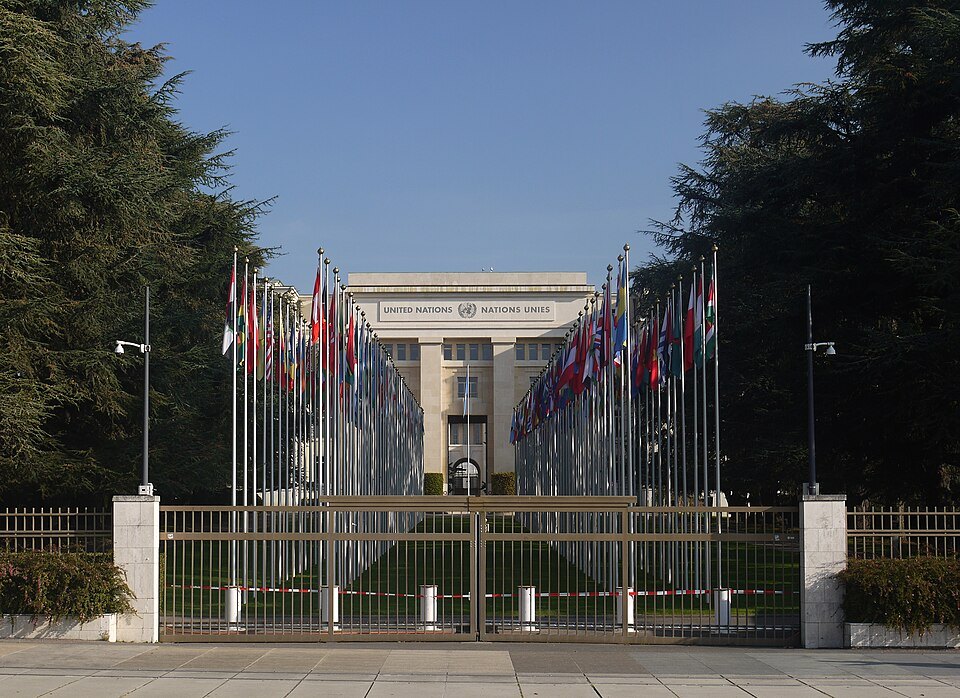
The Place des Nations and the Broken Chair are public and can be seen at any time; the square takes a quarter of an hour. The palace itself is a working diplomatic site, visited only on guided tours of about an hour, booked ahead through the official UN Geneva visitor service. Every visitor needs a valid passport or a Schengen-area identity card, checked at the gate; large luggage cannot be brought in; and the route can change while the palace is being renovated. See the Booking Ahead page for how this fits a trip.
Arrive about half an hour early for the security screening, and allow an hour and a half in all. The square is a short tram ride from Cornavin station, and the palace pairs naturally with the Red Cross and Red Crescent Museum across the avenue and the Musée Ariana next door.
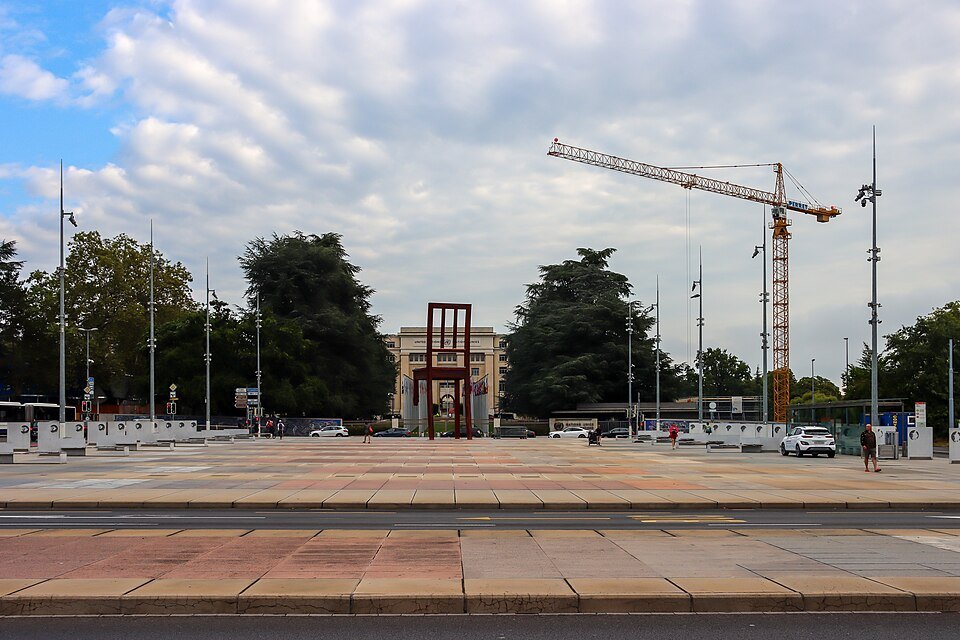
Demonstrations and gatherings are often held on the Place des Nations, since it faces the United Nations; they are part of what the square is for.
Nearby
- A few steps awayThe Red Cross and Red Crescent MuseumA museum opened in 1988 beside the headquarters of the International Committee of the Red Cross, telling the story of humanitarian action through three spaces by three architects and the voices of twelve witnesses.Read the page
- A few steps awayThe Musée ArianaA collector's palace of 1877–1884, named for his mother and left to the city, that now holds Switzerland's museum of ceramics and glass beside the Palace of Nations.Read the page
- A few steps awayThe Botanical Garden and the Lakeside ParksTwenty-eight hectares of gardens, glasshouses and rock gardens between the lake and the UN park, founded in 1817 and among the great botanical institutions of the world, with a chain of lakeside parks running back toward the city.Read the page