How do you visit the Palace of Nations, and what do you need to bring?
The guided tour is the only way inside the UN's palace in Geneva: how booking works, the passport rule, the security check, the luggage limit, and what you see if you cannot get a place.
Read on
The short answer
You visit on a guided tour of about an hour, booked in advance through the official UN Geneva visitor service, which describes itself as the only website for guided tours of the palace. Every visitor needs a valid passport, and you should be at the meeting point half an hour before the tour for the security screening.
Places for individual visitors go quickly. The visitor service releases new tour dates on its booking platform on the twentieth of every month, so if your trip is fixed, that is the day to look. If the tour is full, the square in front of the palace, the Broken Chair and the avenue of flags are public at any time, and the Red Cross and Red Crescent Museum across the road can be visited without joining a tour.
Some links on this page are affiliate links. If you book through one we may earn a commission, at no extra cost to you. It does not affect what is recommended here, and no sight page on this site carries one.
Somewhere to leave a suitcase before the palace tour, and mobile data for the confirmation.
What the palace is
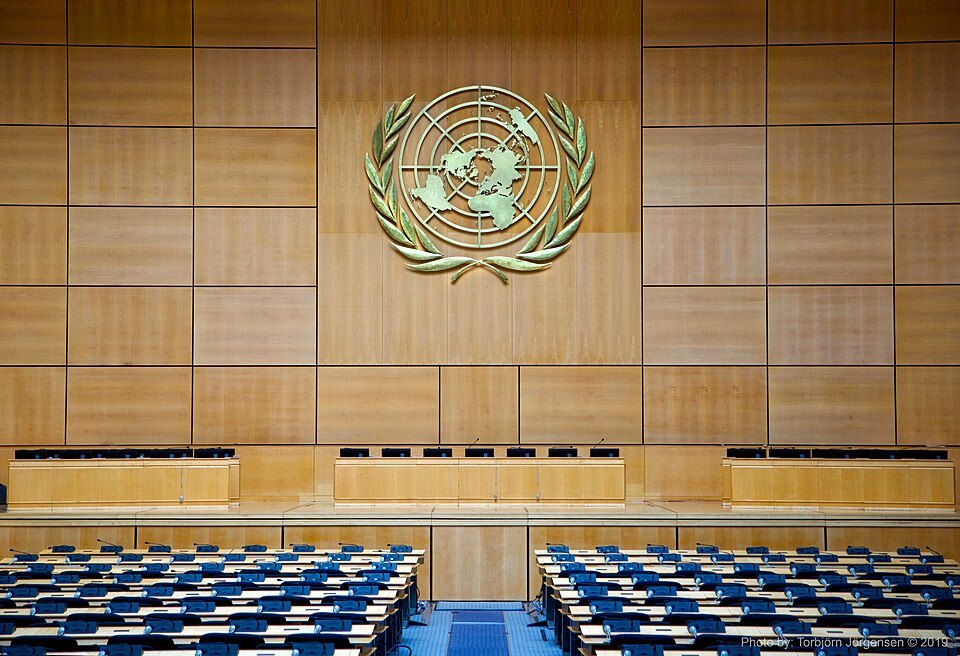
The Palace of Nations was built between 1929 and 1938 as the headquarters of the League of Nations. Since 1946 it has been the United Nations Office at Geneva, the organization's second great seat after New York, and it is a working building: around eight thousand meetings a year are held there, from disarmament talks to sessions of the Human Rights Council.
That is why a visit is controlled. You are not touring a museum but a diplomatic site where delegates are at work, and the tour goes where the day's meetings allow. The palace is also being completely renovated; guided tours continue, but the visitor service warns that the route may change and that some areas are harder to reach while the work goes on.
Booking the tour
Book only through the UN Geneva visitor service. Tours for individuals sell out very quickly, and new dates appear on the twentieth of each month. Groups can reserve tours in a range of languages, including English, French, German, Italian, Spanish and Russian, among others.
When you book, note the meeting point given in your confirmation; that is where you need to be. Plan the rest of the day around the tour rather than the reverse. The Place des Nations is a short tram ride from Cornavin station, about eight or nine minutes, and the Red Cross and Red Crescent Museum and the Musée Ariana are both within a few minutes' walk, so the quarter fills a day on its own.
What to bring, and what to leave behind
Bring a valid passport. The visitor service asks every visitor to carry a passport from a UN member or observer state; identity cards from the Schengen area are also accepted. Without one of those documents you will not get through the gate, however far ahead you booked.
Leave large luggage behind. Bags larger than cabin size, fifty-five by forty by twenty centimeters, are not allowed into the palace, so a traveler on the way to or from the airport needs to leave a suitcase somewhere first. There are luggage services near Cornavin station, and the planning pages of this guide list one.
Wear comfortable shoes. The visitor service says the tour covers about two kilometers on foot and can be difficult for young children or for anyone with reduced mobility, and that during the renovation some areas are harder to reach.
Arriving and the security check
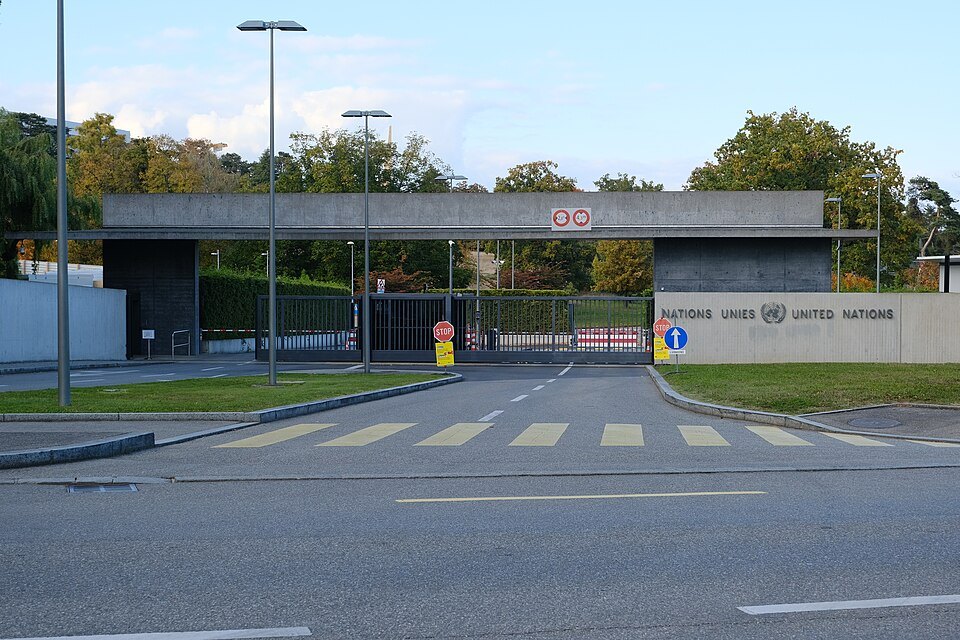
The visitors' entrance is the Pregny Gate at 14 Avenue de la Paix, opposite the headquarters of the International Committee of the Red Cross, not the main gates at the end of the avenue of flags. Take the tram to the Place des Nations and walk up the Avenue de la Paix.
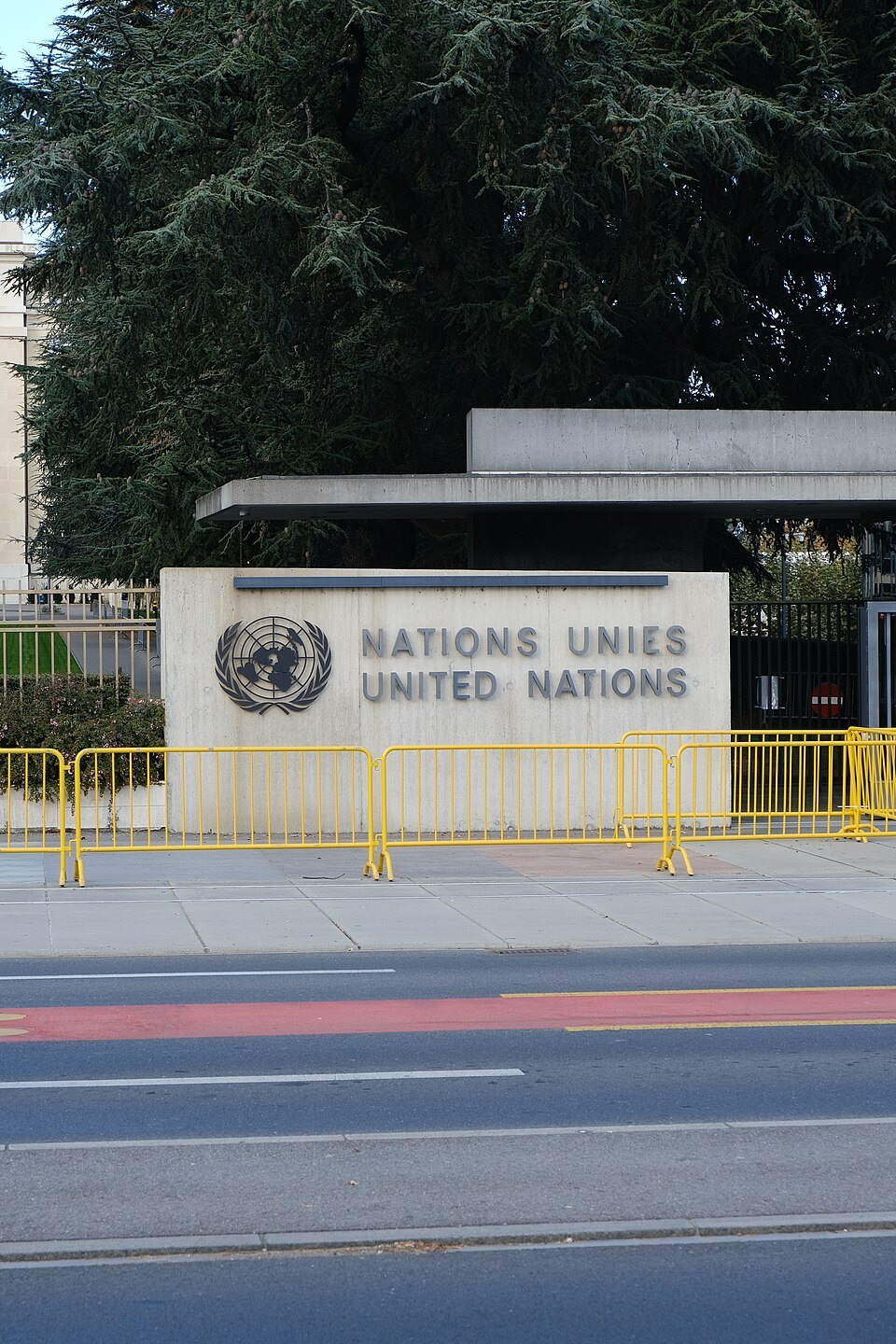
Arrive thirty minutes before your tour. That half hour is for the airport-style security screening, and the visitor service plans on it. Coming late risks missing the group, since the tour moves through a building where visitors cannot wander on their own.
A little history for the tour
The building has its own story, and knowing it makes the tour richer. After an architectural competition in 1926 drew 377 entries, the jury could not choose, and five of the leading architects were asked to produce a joint design. The first stone was laid on 7 September 1929 over a time capsule holding a list of the League's member states, a copy of its Covenant and coins from every member country.
Much of the interior was furnished with materials given by member states, and the United Nations later enlarged the complex several times, adding Building E, a conference center, between 1968 and 1973. Once finished, it stretched about six hundred meters, with thirty-four conference rooms and some 2,800 offices.
What you may see inside
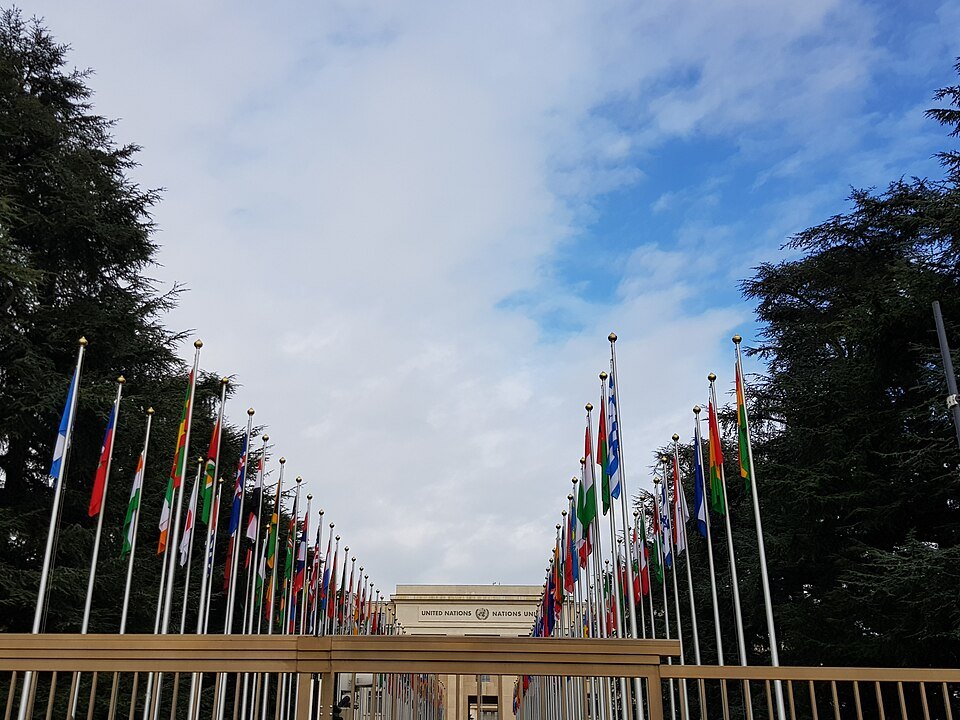
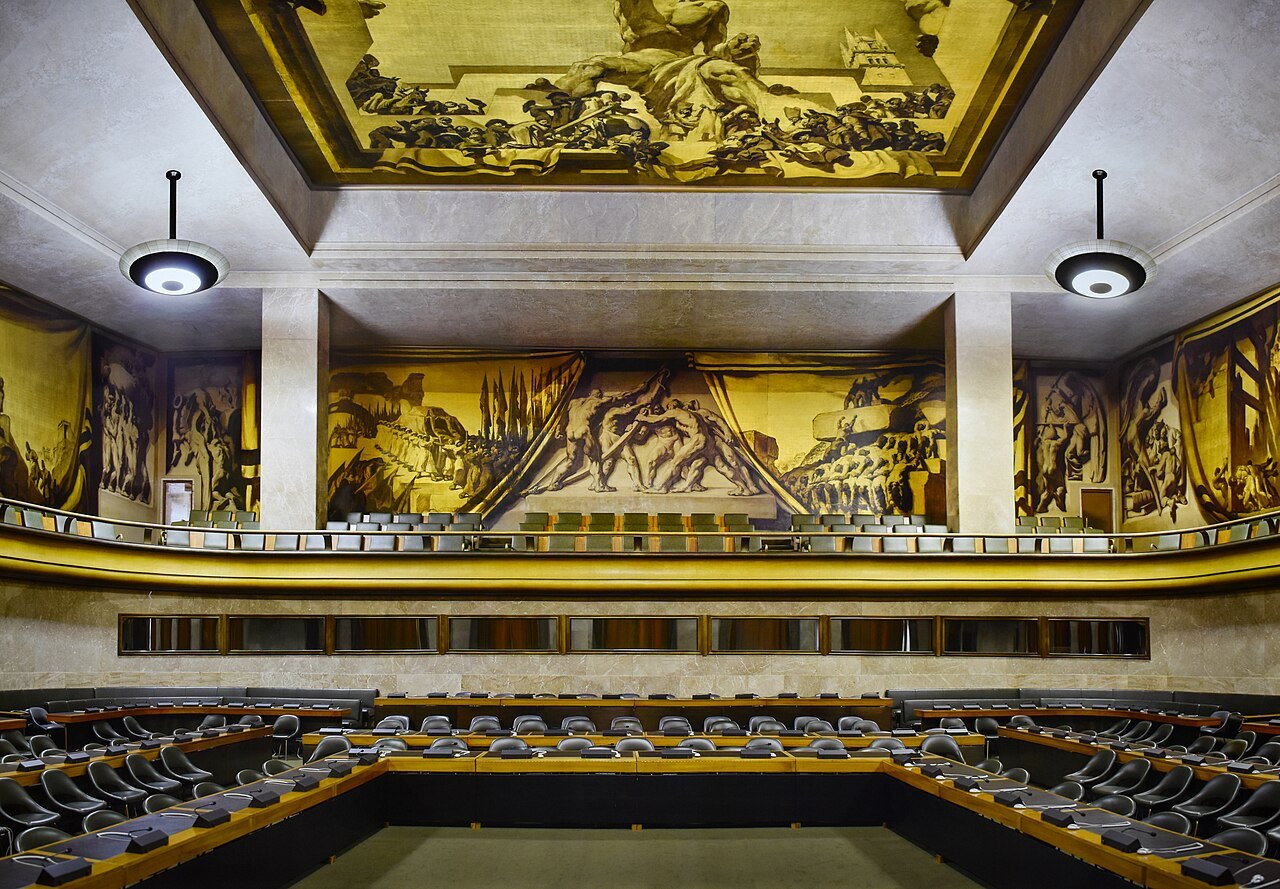
The rooms on a tour depend on the meetings of the day. The ones a visitor hopes to see are the Assembly Hall, the great hall of the League of Nations, and Room XX, the Human Rights and Alliance of Civilizations Room, where the Spanish artist Miquel Barceló remade the dome in 2008 as a gift of Spain. The Human Rights Council meets beneath it.
In front of the court of honor stands the Celestial Sphere by Paul Manship, a bronze armillary sphere four meters across, a gift of the Woodrow Wilson Foundation that has stood there since 1939. The palace park, about forty-five hectares running down toward the lake, is no longer open to the public for security reasons, and peacocks given to the UN walk its lawns.
If you cannot get a place
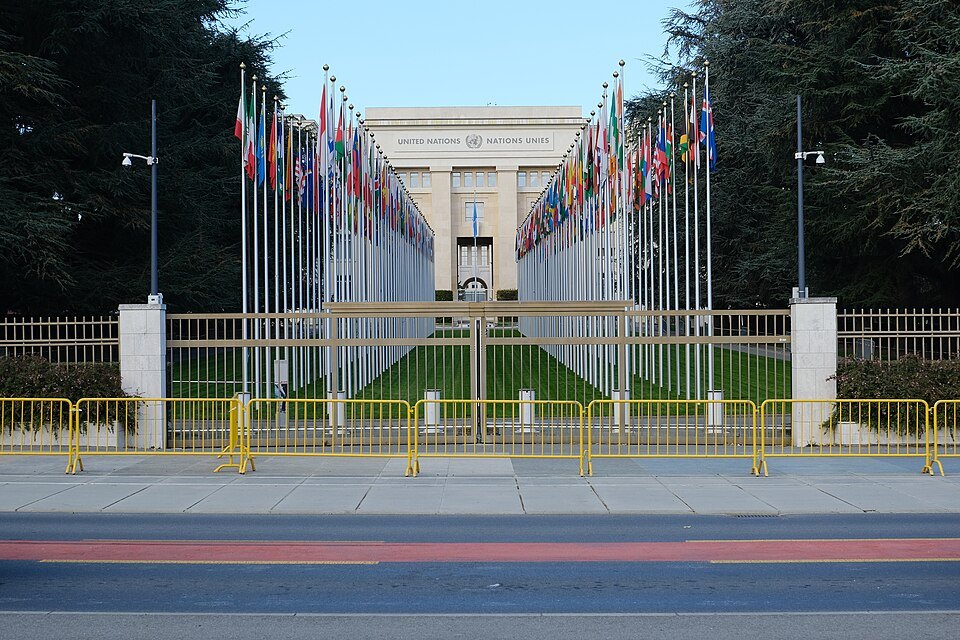
Stand on the Place des Nations. The Broken Chair, about twelve meters of Douglas fir with one leg torn off, was put up in 1997 as a protest against landmines and later rededicated to the campaign against cluster munitions. Beyond the gates, the flags of the member states line the approach to the palace.
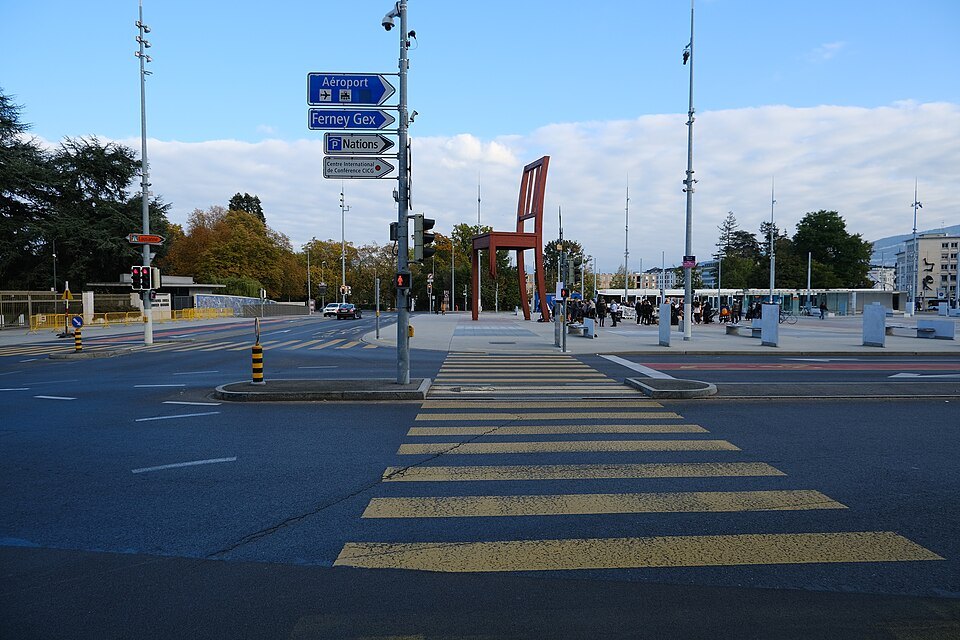
Then cross the Avenue de la Paix to the Red Cross and Red Crescent Museum, opened in 1988, which tells the story of humanitarian action through three spaces by three architects and the voices of twelve witnesses. It is the best way to understand what the organizations on the hill actually do. The Musée Ariana, Switzerland's museum of ceramics and glass, is next door, and the botanical garden lies below toward the lake.
More from the journal
- The Jet d'EauWhy is the Jet d'Eau sometimes switched off?Geneva's fountain runs every day except when it cannot: why wind and cold stop it, when the annual maintenance happens, who decides, and what to do if you arrive to find only the jetty.Read the piece
- Getting AroundWhat does the Geneva Transport Card cover, and how do you get one?Guests of registered accommodation in Geneva travel free on the trams, buses, local trains and water buses of the whole canton. What the card covers, what it does not, how it arrives, and what to do without one.Read the piece
- Day TripsWhere can you see Mont Blanc from Geneva?The highest summit of the Alps is visible from much of Geneva on a clear day. The best places in the city to look for it, the viewpoints above it, and how to pick your day.Read the piece