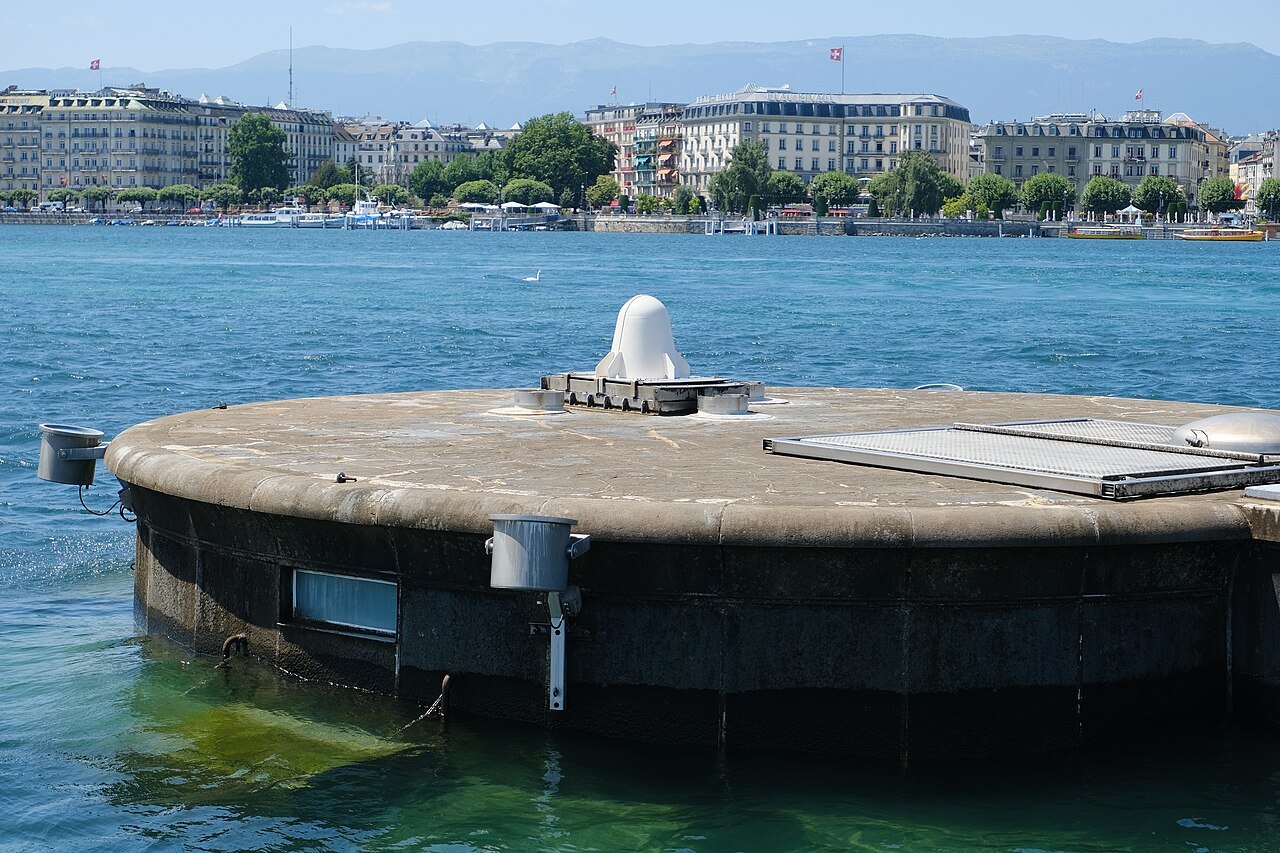
Why is the Jet d'Eau sometimes switched off?
Geneva's fountain runs every day except when it cannot: why wind and cold stop it, when the annual maintenance happens, who decides, and what to do if you arrive to find only the jetty.
Read on
The short answer
Because it is a column of water about 140 meters high standing in the middle of a city harbor. The Services Industriels de Genève, which own and run it, say the fountain has worked every day since 1891 except in gusts of wind or in great cold. When the wind would blow the spray over the quay and the jetty, or when the water would freeze where it falls, it is stopped.
It also stops once a year, in autumn, for a few weeks of maintenance, and occasionally for other reasons. If you arrive and find the harbor without its plume, it is almost always the weather, and it usually comes back when the weather does.
A fountain that began as a safety valve
The Jet d'Eau was never meant to be a monument. In 1886 the city opened a hydraulic plant at the Coulouvrenière to deliver the power of the Rhône to Geneva's craftsmen. In the evening, when they stopped their machines, the pressure in the network rose, and a safety valve was fitted to release the excess water into the air. That first jet, about thirty meters high, stood at the plant.
Once a reservoir took over the job of relieving the pressure, the city recognized what it had. In 1891, for the six hundredth anniversary of the Swiss Confederation, it rebuilt the jet at the end of the Eaux-Vives jetty, in the heart of the harbor, where it reached about ninety meters and at first ran only on Sundays.
How it works today
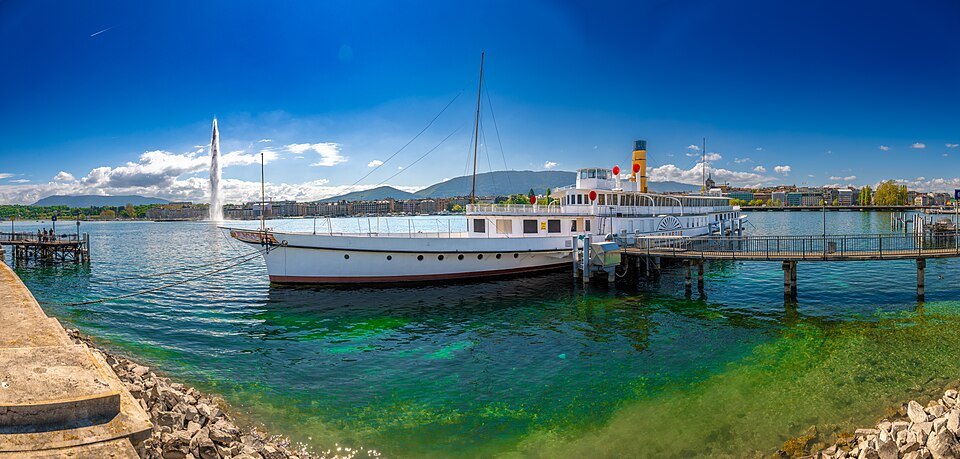
The present fountain dates from 1951, when an independent pumping station, partly submerged and drawing water from the lake itself, was built so the jet no longer depended on the city's drinking-water network. It was tested on 28 April and inaugurated on 3 May that year.
Its figures explain its fragility. The water leaves the nozzle at about 200 kilometers an hour, at a rate of some 500 liters a second, and about eight tonnes of water are in the air at any moment; a drop takes some sixteen seconds to leave the nozzle and fall back into the lake. The white color comes from air bubbles forced into the water at the nozzle. A new nozzle installed in 2025 allows the flow to be adjusted, which is one reason the height quoted varies between sources.
Why wind and cold stop it
A plume that tall does not fall straight back into the lake. In wind it leans, and the drift of spray can soak the jetty where visitors walk and carry across the quays. Geneva's winds are strong and sudden; the bise, the cold northeasterly that funnels down the lake, is the best known, and in winter it can bring severe icing to the lakeside.
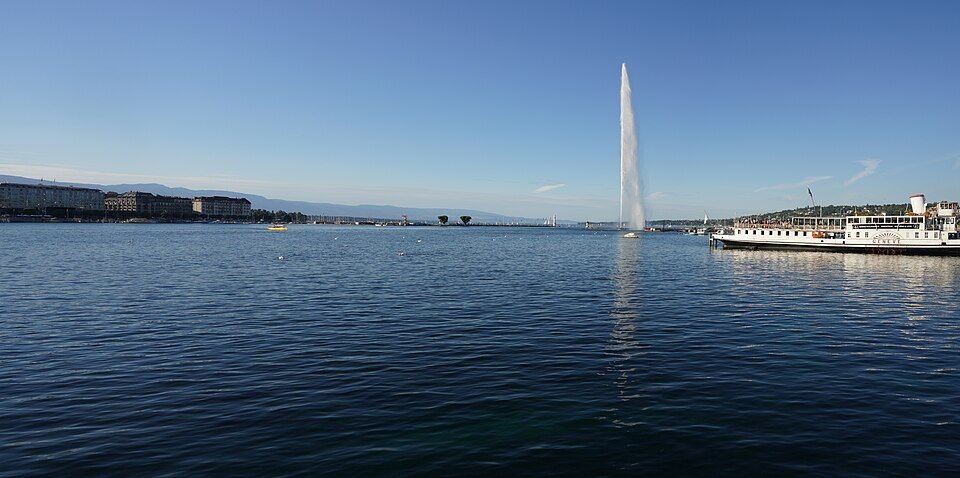
Cold is the other enemy. Near freezing, the falling water would coat the jetty, the lighthouse and the rocks with ice. The operator's own site lists temperatures around zero and wind that is too strong among the reasons the fountain is shut down.
The decision is made on the spot. The fountain is switched on by hand, and SIG says five of its retired staff volunteer to watch over it, keeping it in working order and stopping it when the weather requires.
The pumps and the plume
Two motor-pump units drive the fountain, each delivering half the flow, and they are named after the mountains that frame the city: Salève for the first pump and Jura for the second. The water is forced through a nozzle sixteen centimeters across, and the engineer who designed the present installation was Oscar Herzog, grandfather of the mountaineer Maurice Herzog.
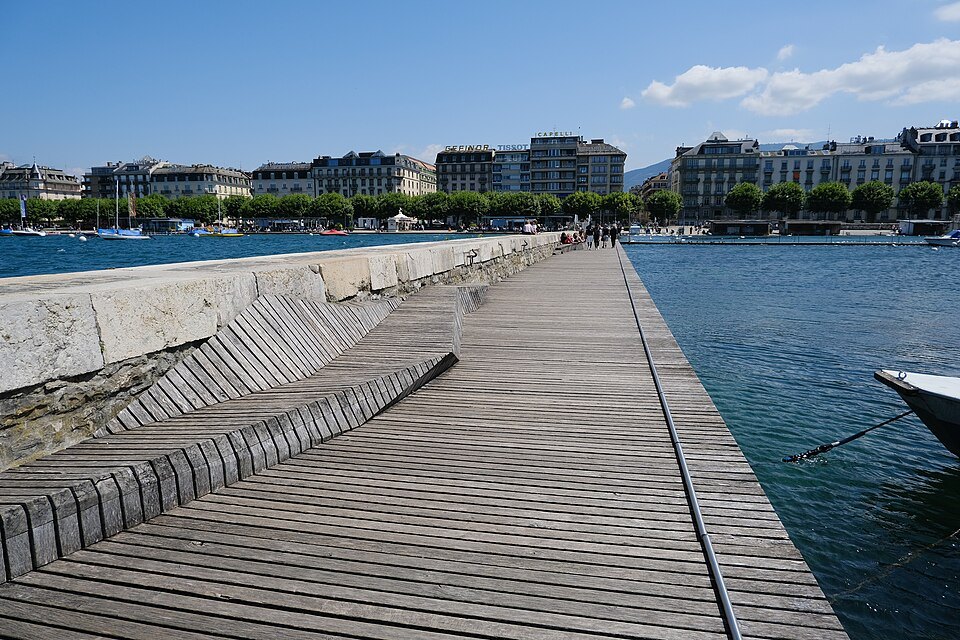
The fountain cannot be made taller, because of where it stands in the city. That has not stopped other cities from competing: the tallest fountain ever built, in Jeddah, reaches 312 meters. Geneva's is not the tallest, but it is the one that stands in the middle of a harbor, a short walk from the old town.
The annual maintenance
Each year, in autumn, the fountain stops for maintenance of its valves, pumps and motors and its lighting, a job that SIG describes as lasting from two to four weeks. The dates are announced by the operator in advance, so check its site if a visit falls in late autumn.
The history of this stop has changed over the years. For a long time the fountain was switched off from October until the following spring; since 2003 it has worked through the year apart from the maintenance and the weather. The lighthouse at the end of the jetty was taken away for restoration during the maintenance stop of November 2024.
Other reasons, and other colors
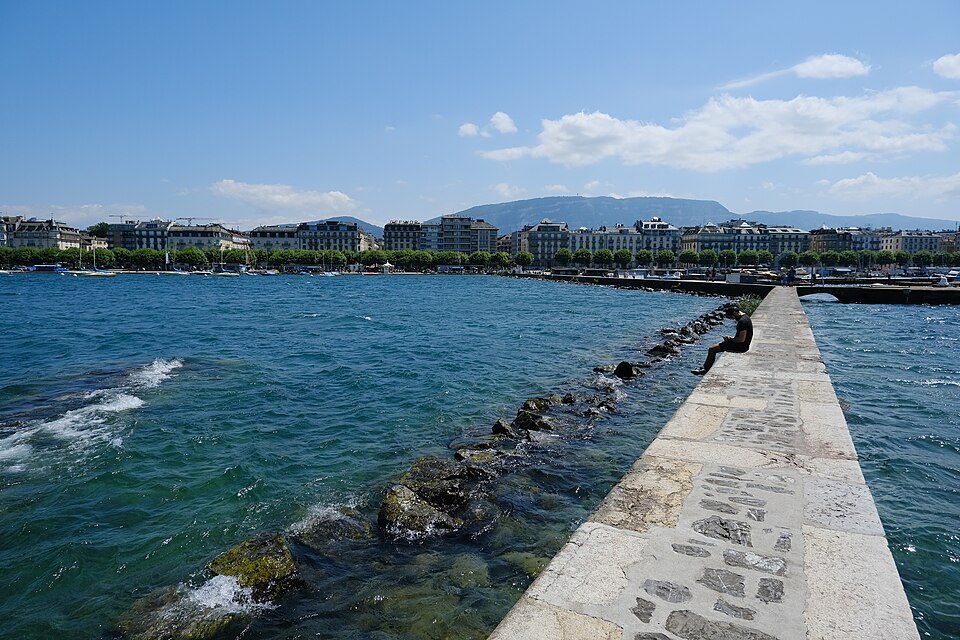
The Jet d'Eau is also a way for the city to mark an occasion. It was switched on specially in 1985 for the first meeting between Ronald Reagan and Mikhail Gorbachev in Geneva, and after the Paris attacks of November 2015 it was lit in the French tricolor. In 2020 it was stopped from March to June to mark the partial lockdown during the pandemic.
Its lighting today comes from LED projectors in an enclosure and on the rotunda at its base, so on a calm evening the plume stands lit above the dark harbor.
If you find it switched off
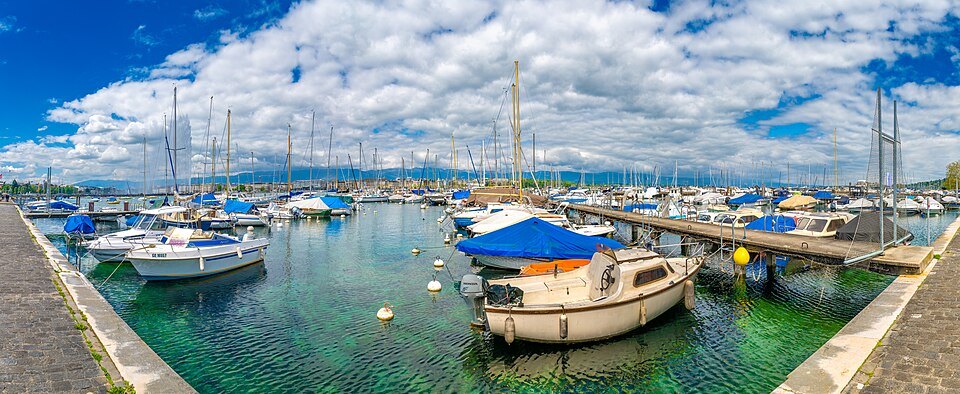
Walk out along the Eaux-Vives jetty anyway. It is a public walkway with the harbor on both sides, the little lighthouse at its end, and the Pierres du Niton, the two granite boulders from which Switzerland measures its altitudes, just off the Quai Gustave-Ador nearby.
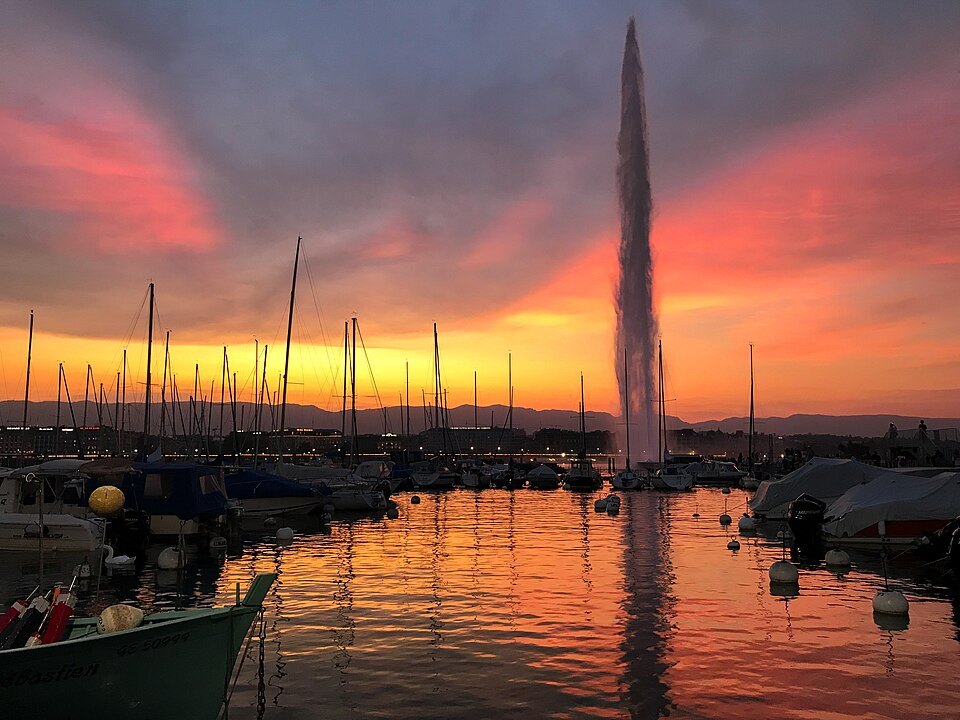
Then look again later, since the decision is made in real time as the weather changes. For the best chance of seeing it at full height, choose a calm day in the warmer months, and watch it first from the Quai du Mont-Blanc across the water, where you can see which way the plume is leaning before you walk out beneath it.
More from the journal
- The LakeCan you swim in Lake Geneva right in the city?Yes, and Genevans do, all year: the public baths on the Pâquis jetty, the new Eaux-Vives beach, the pools of Genève-Plage, how clean the water is, and what to know before you get in.Read the piece
- Day TripsWhere can you see Mont Blanc from Geneva?The highest summit of the Alps is visible from much of Geneva on a clear day. The best places in the city to look for it, the viewpoints above it, and how to pick your day.Read the piece
- When to ComeWhat happens at the Escalade, Geneva's festival in December?Every December Geneva remembers the night in 1602 when it beat back a surprise attack by Savoy: the story, the costumed procession, the run through the old town, the chocolate cauldron, and how a visitor joins in.Read the piece