What happens at the Escalade, Geneva's festival in December?
Every December Geneva remembers the night in 1602 when it beat back a surprise attack by Savoy: the story, the costumed procession, the run through the old town, the chocolate cauldron, and how a visitor joins in.
Read on
The short answer
The Escalade is Geneva's great popular festival. It commemorates the night of 11 to 12 December 1602, when troops of the Catholic Duke of Savoy tried to take Protestant Geneva by surprise, scaling its walls with ladders, and were driven off by the citizens. The celebrations are held around 12 December or on the nearest weekend.
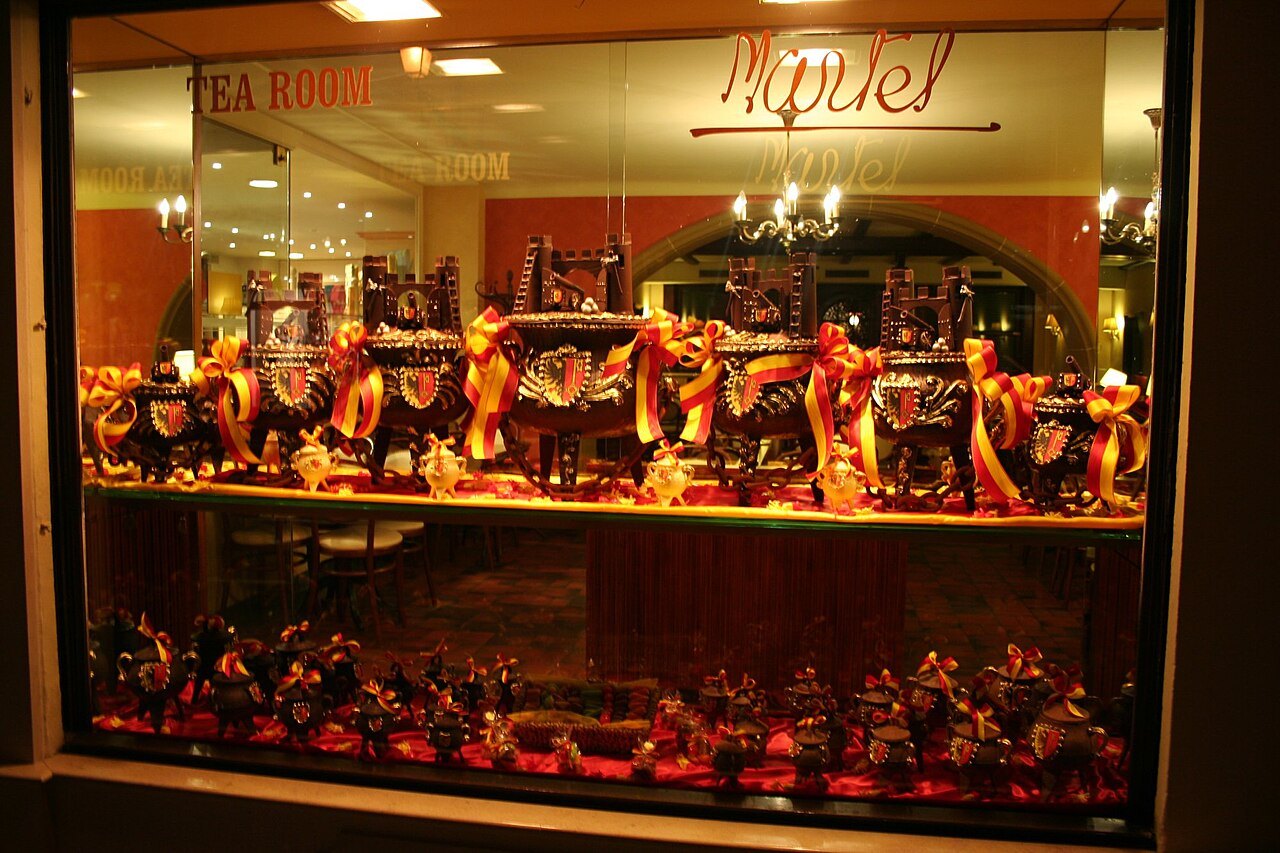
For a visitor it means a Friday-evening parade, a Sunday procession of some eight hundred people in historical costume through the old town, a mass running race, chocolate cauldrons in every confectioner's window, and a city in a festive mood. The street events are public and free to watch.
Some links on this page are affiliate links. If you book through one we may earn a commission, at no extra cost to you. It does not affect what is recommended here, and no sight page on this site carries one.
Mobile data for festival programs and live timetables through a busy weekend.
What happened in 1602
For years the dukes of Savoy had coveted Geneva. Charles Emmanuel I, who came to the throne in 1580, wanted to make the city his capital north of the Alps and crush its Protestantism. On the night of 11 to 12 December 1602, the darkest night of the year, his troops, more than two thousand of them, marched along the Arve and gathered at Plainpalais, just outside the walls.
The plan was to send a group of commandos over the walls to open the city gate for the rest. It failed. The alarm was raised, church bells rang, the night guard Isaac Mercier cut the rope holding up the portcullis so the gate could not be opened, and the citizens fought alongside the militia, using cannon fire against the ladders and fighting in the streets against those who had climbed over.
Where the fighting was
The attack fell on the southern side of the city. The original plan was to blow open the Porte Neuve, the gate that stood where the Place Neuve now opens beside the Grand Théâtre, so that the main body of troops could march in. The fighting raged along the whole southern front, from the Monnaie gate to the Porte Neuve and along the Corraterie, and toward the gates of the Tertasse and the Treille in the inner wall.
Much of that ground is now among the most visited in Geneva: the Place Neuve, the Parc des Bastions below the old ramparts, and the Promenade de la Treille above them. Walking from the Bastions up to the Treille follows the line the defenders held.
The toll, and the peace
Eighteen Genevans died in the fighting, and fifty-four Savoyards. Thirteen Savoyard prisoners, several of them well born, were hanged the next day as brigands, because peace had been sworn repeatedly on Savoy's side and they could not be treated as prisoners of war.

After the defeat the duke accepted a lasting peace, sealed by the Treaty of Saint-Julien on 12 July 1603. The victory became part of Geneva's identity, and the song of the Escalade, Cé qu'è l'ainô, written around 1603 in the Franco-Provençal dialect by an unknown author, became the city's anthem. Of its sixty-eight stanzas, four are usually sung.
The Mère Royaume and the marmite
The best-loved part of the story is a legend. Catherine Cheynel, known as the Mère Royaume, a cook originally from Lyon who lived above the Monnaie gate, is said to have seized a large cauldron of boiling vegetable soup and poured it over the attackers climbing the walls, killing one and rousing the townsfolk.
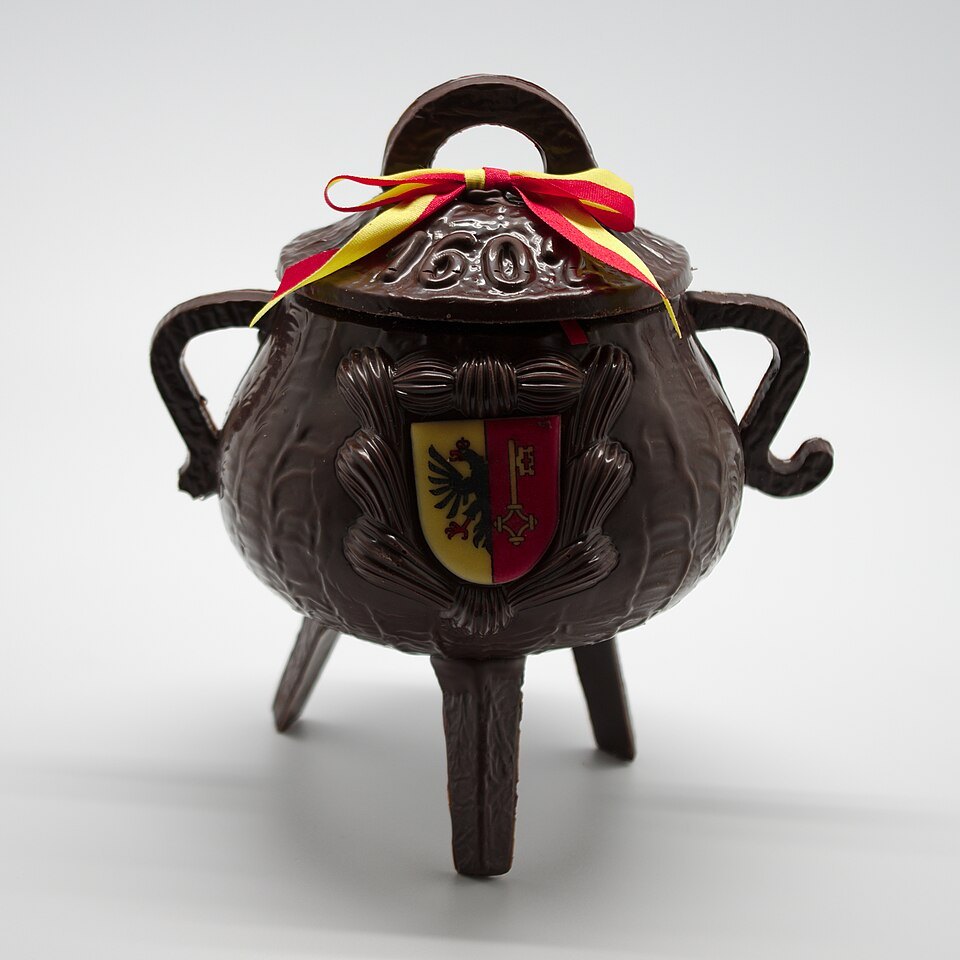
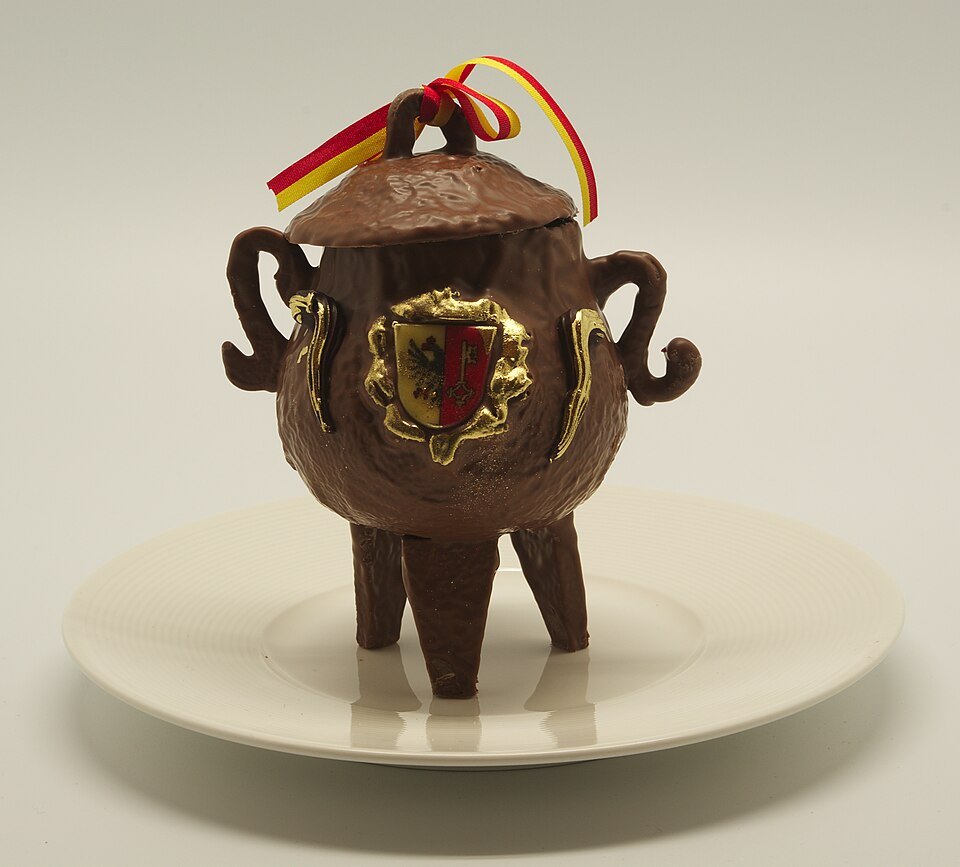
That cauldron is why Geneva's confectioners sell chocolate marmites in December, decorated in the red and gold of Geneva and filled with marzipan vegetables and sweets. The custom is for the youngest and the eldest in the room to smash the marmite together, reciting a line wishing the same end to the enemies of the Republic. Buying one is the simplest way to take part.
The procession and the parade
On the Friday evening there is a parade, during which the names of the eighteen Genevans who died are read out one by one; one of them, Jacques Billon, died of his wounds a year later.
The main spectacle is the historical procession on the Sunday. Organized since 1926 by the Compagnie de 1602, it brings out around eight hundred people from old Genevan families in historical costume, some on horseback and some carrying the surviving fragments of the Savoyards' ladders. It draws tens of thousands of spectators every year, so arrive early along the old town streets to find a place.
The Course de l'Escalade
Since 1978 the celebrations have included a running race, the Course de l'Escalade, held on the weekend of or before 11 December. It traditionally starts in the Parc des Bastions and runs through the old town before circling back, and it has been considered the largest running event of its kind in Switzerland since 1990.
There are races for every age group, and over the years the organizers have added a Marmite race, a Duc race, and walking and Nordic walking categories. Runners enter in advance; spectators simply line the streets of the old town and cheer, which is half the fun of the weekend.
How to plan a December visit
Check the dates before you book, since the celebrations move with the weekend nearest 12 December and bring large crowds to the old town. Stay somewhere within walking distance of the old town hill, or near a tram line, and dress for winter: Geneva's winters are cool, with light frosts at night, and the bise can make the quays bitter.
Combine the festival with the museums, many of which are well suited to a winter day. At the Musée d'Art et d'Histoire the armor of the Escalade hangs in its own hall, a direct link to the night the city remembers. And on the lake, the Coupe de Noël sends swimmers into the cold water of the harbor each December, for anyone who wants to see Genevans at their most determined.
More from the journal
- The LakeCan you swim in Lake Geneva right in the city?Yes, and Genevans do, all year: the public baths on the Pâquis jetty, the new Eaux-Vives beach, the pools of Genève-Plage, how clean the water is, and what to know before you get in.Read the piece
- The Jet d'EauWhy is the Jet d'Eau sometimes switched off?Geneva's fountain runs every day except when it cannot: why wind and cold stop it, when the annual maintenance happens, who decides, and what to do if you arrive to find only the jetty.Read the piece
- Getting AroundWhat does the Geneva Transport Card cover, and how do you get one?Guests of registered accommodation in Geneva travel free on the trams, buses, local trains and water buses of the whole canton. What the card covers, what it does not, how it arrives, and what to do without one.Read the piece