Read on
The short answer
Yes. Swimming in the lake is one of the pleasures of a summer day in Geneva, and the city has built places to do it right in the center. The three to know are the Bains des Pâquis, the public baths on the right-bank jetty a short walk from Cornavin station; the Plage des Eaux-Vives, a public beach on the left bank opened in 2019; and Genève-Plage, a park with lake bathing and pools at the far end of the Quai Gustave-Ador.
The water is clean enough to swim in. It is also deep and, for much of the year, cold, so the marked swimming areas are the places to get in.
Some links on this page are affiliate links. If you book through one we may earn a commission, at no extra cost to you. It does not affect what is recommended here, and no sight page on this site carries one.
Somewhere to leave bags so a last swim fits before the train home.
Is the water clean?
It was not always. In the late 1960s pollution made swimming dangerous at some of the lake's beaches, visibility underwater fell to almost nothing, and by the 1980s eutrophication had nearly wiped out the fish. Since then pollution levels have been dramatically cut, and the lake is again considered safe to swim in.
The lake has new problems of its own. Since 2016 the invasive quagga mussel has spread across the lake floor, and scientists warn it leaves the lake more vulnerable to blue-green algae. None of this stops people swimming, but it is worth respecting any notice posted at a bathing place.
The Bains des Pâquis
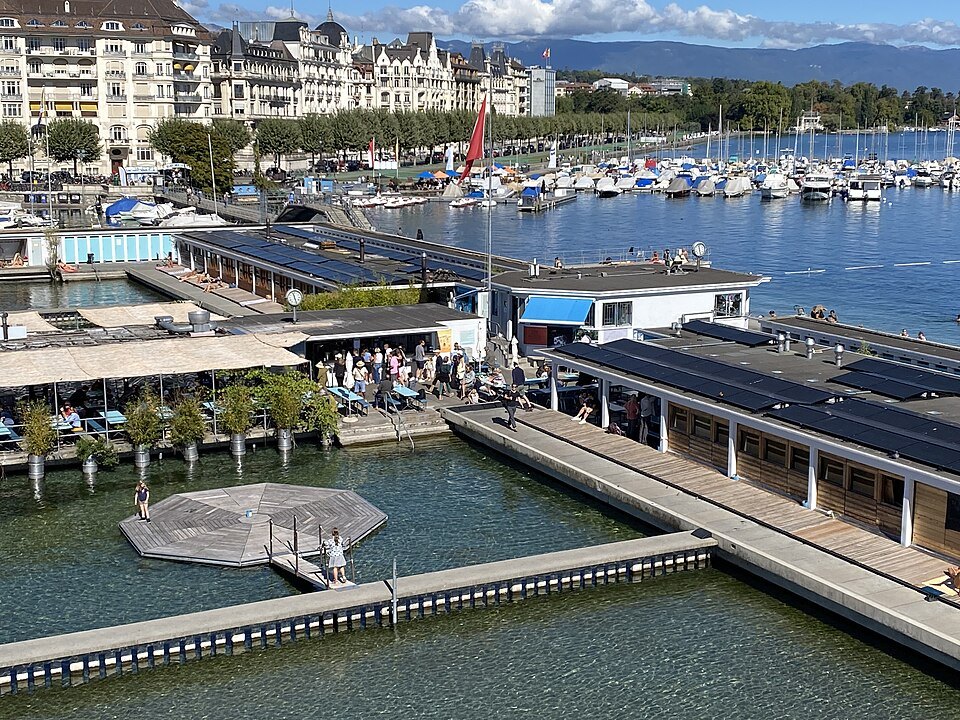
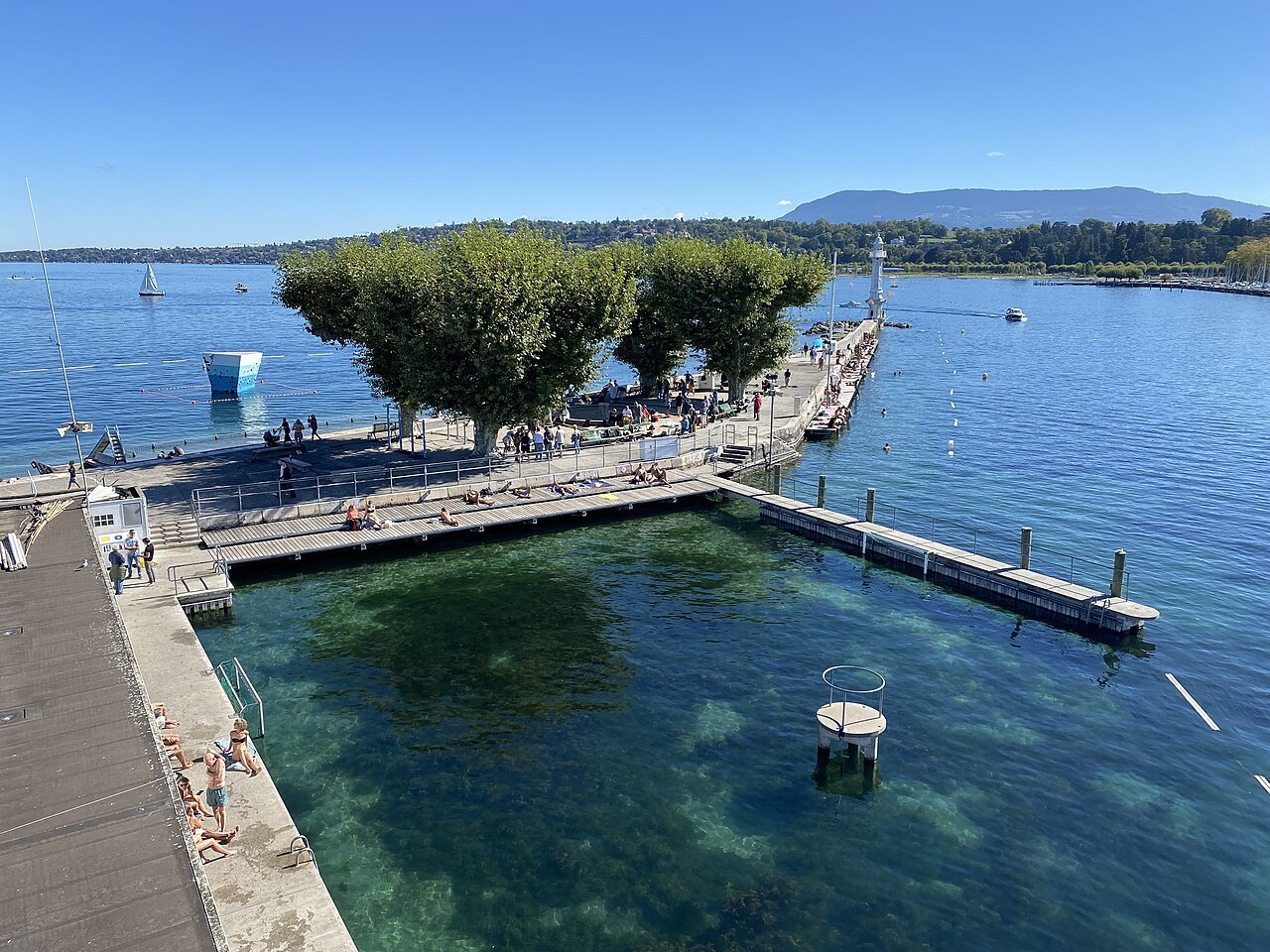
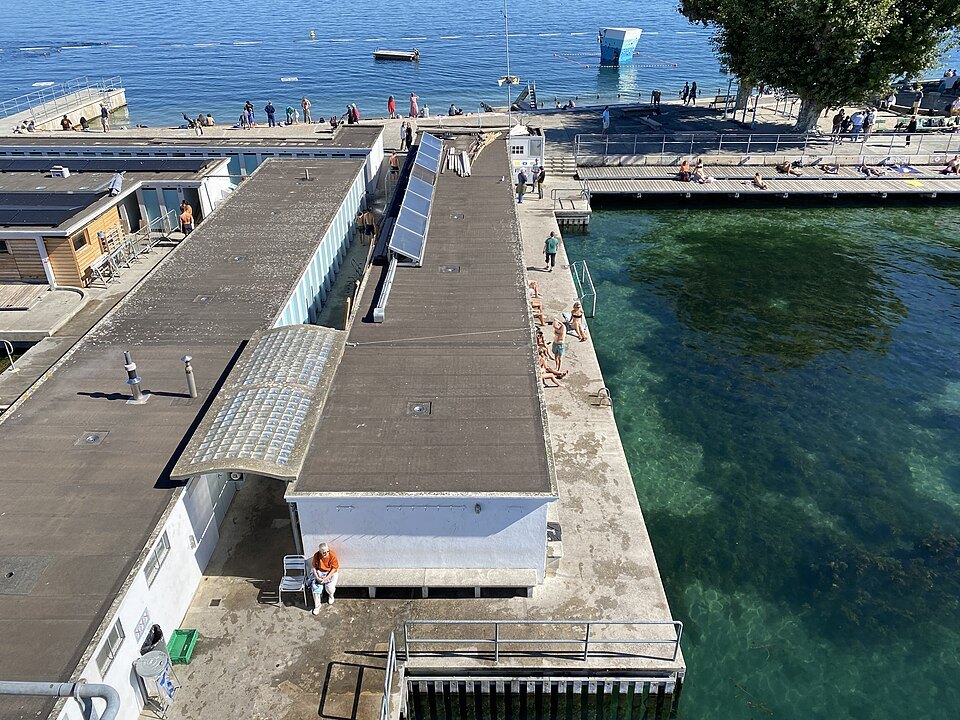
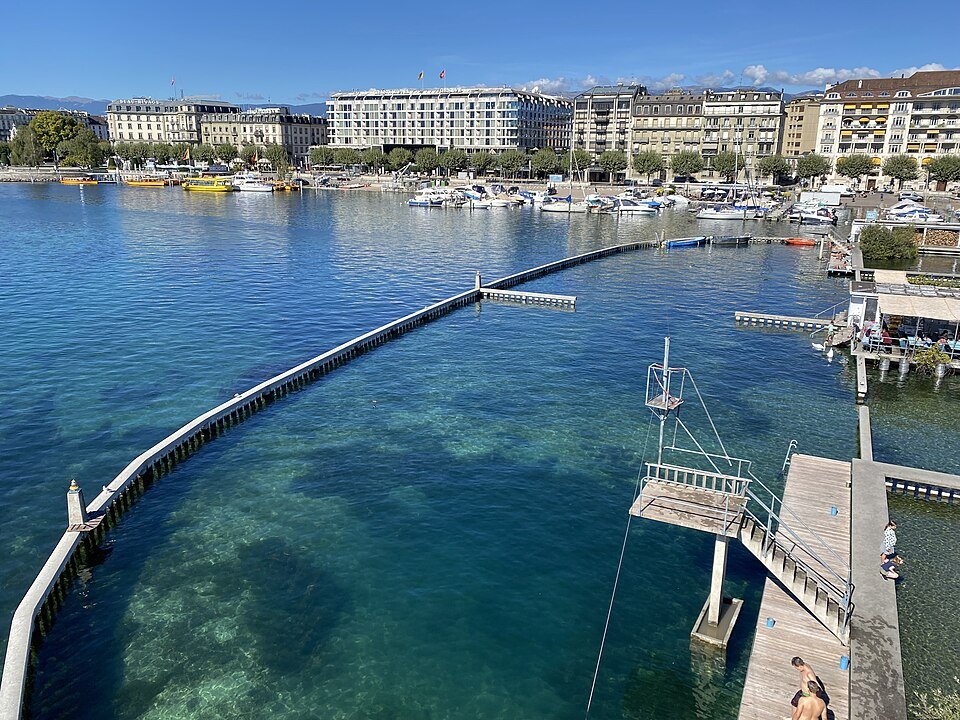
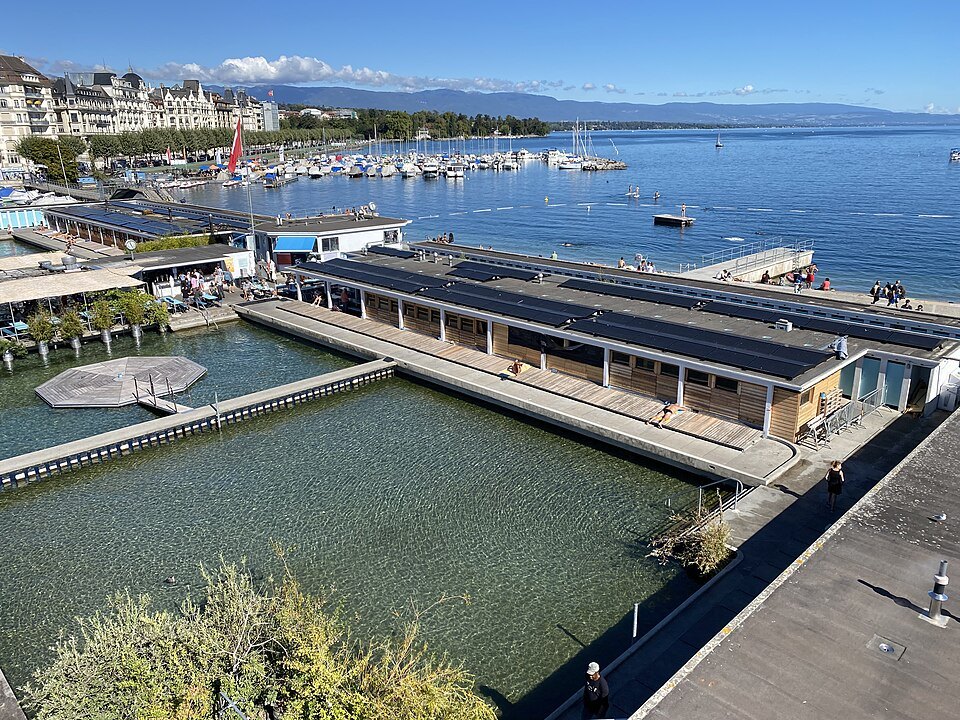
The Bains des Pâquis are the city's classic place to swim. The first wooden baths opened on the jetty in 1872; the present concrete-and-glass pavilions were built in 1932 in the spirit of the Bauhaus. When the city planned to replace them in the 1980s, users and neighbors collected nine thousand signatures, and in a referendum on 25 September 1988, 72 percent of voters rejected the project.
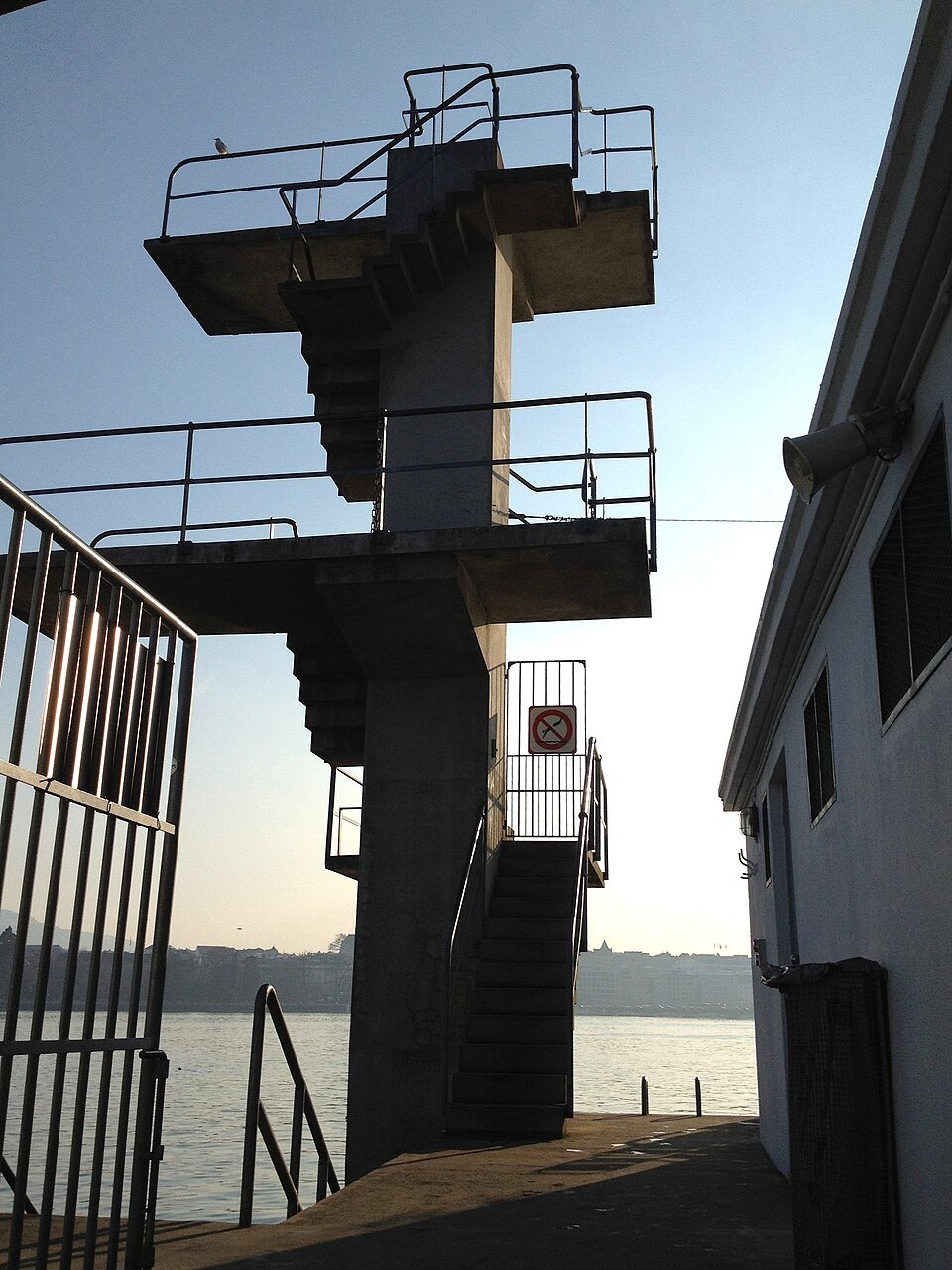
Their association has run the baths ever since, and it decided to open them all year round. In summer you swim from wooden decks and steps straight into the lake, with a diving tower and a small beach; in winter people come for the sauna and the Turkish bath, a plunge in the cold water, and fondue at the buvette. The Jet d'Eau stands directly across the harbor.
A day at the baths
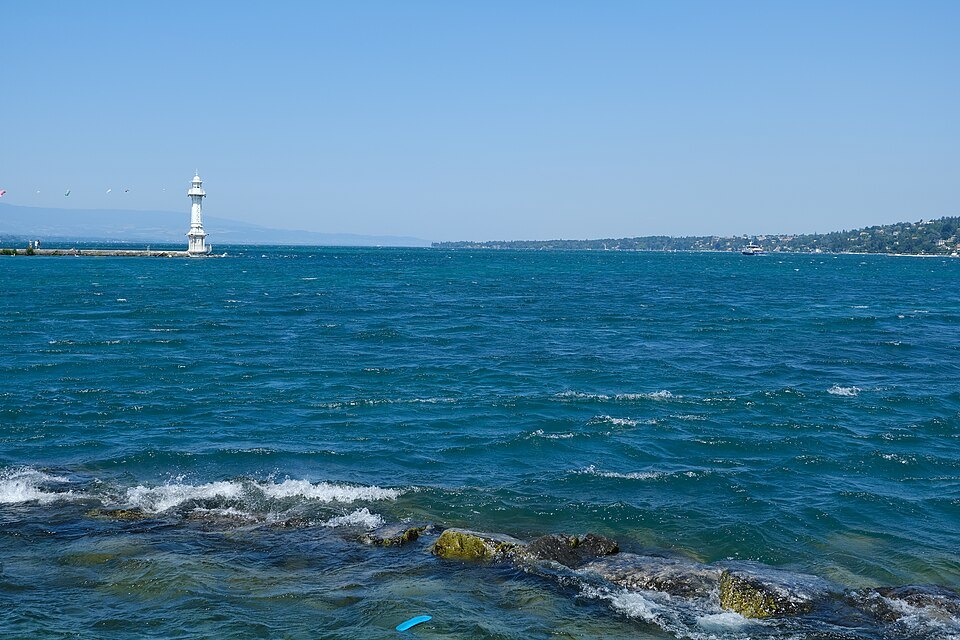
The baths are a social place as much as a swimming place. The association that runs them organizes concerts, festivals and exhibitions, and publishes its own newspaper twice a year. Among its traditions is a swimming race around the Pâquis lighthouse at the end of the jetty.
Since 2007 the baths have also held Les Aubes, summer concerts and performances at sunrise on the jetty, followed by breakfast at the buvette. The jetty is home to the Sauvetage de Genève, the lake rescue society, and walking out to the lighthouse is part of any visit, with one of the best views back to the old town and the cathedral.
The Plage des Eaux-Vives
On the left bank, the Plage des Eaux-Vives is the city's newest place to swim. The project began in 2008, the beach was inaugurated on 21 June 2019, and the full site opened in August 2020 after pandemic delays. It runs about four hundred meters along the lake and can hold up to eight thousand people.
Around the beach there is a two-hectare park, a nature area, a small port and a house of fishing. Facilities include showers on the jetties, drinking fountains, toilets and changing rooms, a restaurant, and a ramp into the water for people with reduced mobility. Trolleybuses stop at the Parc et plage des Eaux-Vives stop, and the M3 water bus calls at Port-Noir nearby.
Getting there on the water
The Mouettes genevoises, the yellow water buses that cross the harbor, are the most enjoyable way to move between the swimming places. Their four lines run all year and take the same tickets as the trams and buses. M1 runs from the Pâquis to the Molard, M2 from the Pâquis to the Quai Gustave-Ador, M3 from the Pâquis to Genève-Plage, and M4 from Genève-Plage to De-Chateaubriand on the right bank, near the lakeside parks.
Lines M1 and M2 run about every ten minutes; M3 and M4, around a kilometer and a half long, about every half hour. A swimmer can leave the Bains des Pâquis, cross on M3 and be at Genève-Plage without touching a road.
Genève-Plage
Further along the Quai Gustave-Ador, just over the city boundary in Cologny, Genève-Plage is a park of 42,000 square meters with a beach, lake bathing and a set of pools: an Olympic pool added in 1972, a second pool, a paddling pool and a water slide, as well as beach volleyball, pétanque, table tennis and a windsurfing center.
Its history goes back to baths built by the Lullin family, owners of the La Grange estate, in the eighteenth century. The present site was built in 1932 on land reclaimed from the lake with rubble from the demolition of the old Cornavin station, and it has been run from the start by the Genève-Plage association. It is reached by public transport and by the Mouettes, whose M3 line runs from the Pâquis to Genève-Plage.
Swimming through the year
Summer is the season, and on a hot day the decks, lawns and jetties fill. But Geneva's lake swimmers do not stop in autumn. The Bains des Pâquis stay open through the winter for the sauna and the cold plunge, and in December the Coupe de Noël sends swimmers into the harbor for a short race of 125 meters in the cold.
Longer races take place too. The longest, known as The Signature, crosses the whole length of the lake, some seventy kilometers from Chillon Castle to Geneva, and a crossing of almost two kilometers in Geneva each summer.
Before you get in
Swim only in the marked bathing areas. The lake is deep close to shore, the harbor is busy with boats, from the yellow Mouettes to the paddle steamers, and the water can be cold even when the air is warm.
Bring swimwear and a towel, and check each place's own arrangements, which change between summer and winter. If you are staying in registered accommodation, the free Geneva Transport Card covers the trams, buses and Mouettes that reach all three, so a swim can easily fit between the old town and the Jet d'Eau.
More from the journal
- The Jet d'EauWhy is the Jet d'Eau sometimes switched off?Geneva's fountain runs every day except when it cannot: why wind and cold stop it, when the annual maintenance happens, who decides, and what to do if you arrive to find only the jetty.Read the piece
- When to ComeWhat happens at the Escalade, Geneva's festival in December?Every December Geneva remembers the night in 1602 when it beat back a surprise attack by Savoy: the story, the costumed procession, the run through the old town, the chocolate cauldron, and how a visitor joins in.Read the piece
- Getting AroundWhat does the Geneva Transport Card cover, and how do you get one?Guests of registered accommodation in Geneva travel free on the trams, buses, local trains and water buses of the whole canton. What the card covers, what it does not, how it arrives, and what to do without one.Read the piece