Read on
The short answer
On a clear day, from many places. Mont Blanc, the highest summit of the Alps, can be seen from most of the city, standing above the far side of the lake to the southeast. The classic views are from the Pont du Mont-Blanc and the Quai du Mont-Blanc on the right bank, from the terrace of the Perle du Lac park, and from the top of the north tower of St. Pierre Cathedral.
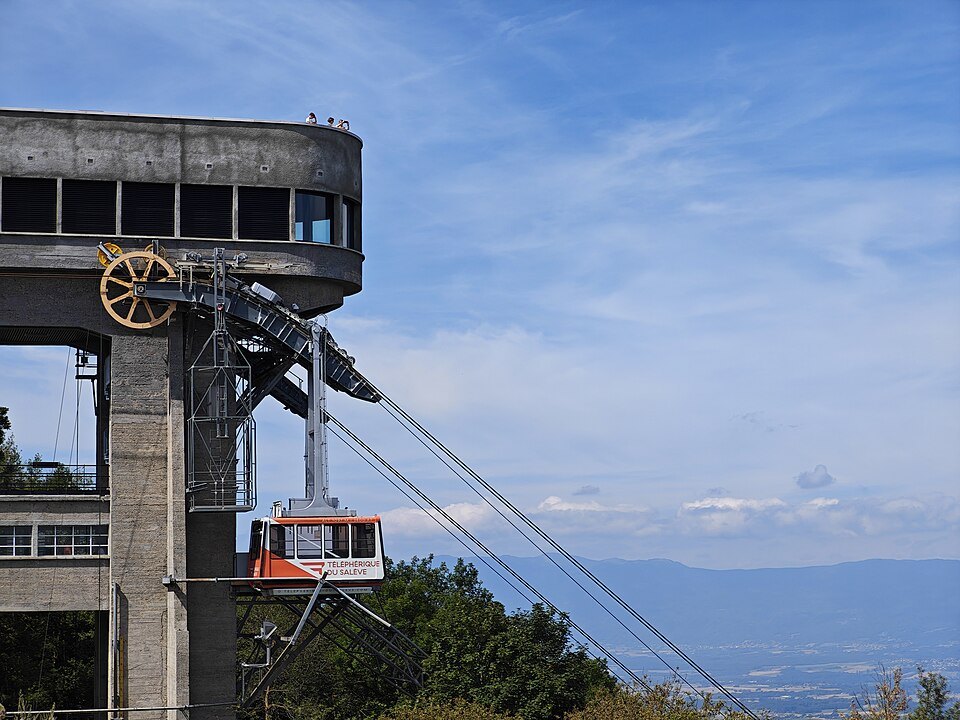
For the widest view of all, go above the city. The cable car on the Salève, the mountain just across the French border, climbs to a panorama that takes in Geneva, the lake, the Jura, the Prealps, Lake Annecy and Mont Blanc.
Some links on this page are affiliate links. If you book through one we may earn a commission, at no extra cost to you. It does not affect what is recommended here, and no sight page on this site carries one.
Somewhere to leave bags on a travel day, and mobile data for trains and route maps.
Why Geneva sees it at all
Most of Lake Geneva does not see Mont Blanc. The snowy peaks of the Mont Blanc massif are hidden from the western end of the lake by the Voirons mountain, and from its eastern end by the summits of the Grammont, the Cornettes de Bise and the Dent d'Oche. But they are visible from Geneva itself, and from the stretch of shore between Nyon and Morges.
That is part of the city's identity. The main bridge over the Rhône and the grand hotel quay beside it are both named after the mountain, and generations of visitors have come to the quays to look for the white dome over the roofs of the left bank.
On the bridge and the quays
The Pont du Mont-Blanc crosses the mouth of the Rhône where it leaves the lake, and its flags make it easy to find. Stand on the bridge, or walk along the Quai du Mont-Blanc toward the Pâquis, and look southeast, over the roofs of the left bank and beyond the end of the harbor. On a clear day the snow dome of Mont Blanc stands above the far end of the lake.
The quay is also the right bank's great promenade, lined with the Beau-Rivage, the Richemond and their neighbors, with the Brunswick Monument in its garden and the Bains des Pâquis on the jetty at its end. A walk from the bridge to the baths takes about a quarter of an hour at a stroll, and the view comes with it.
A bridge named for the view
The first bridge on the site of the Pont du Mont-Blanc was built in 1862, and the present bridge has been widened several times. Flags stand along both sides, usually alternating those of Switzerland and Geneva; on the Swiss national day, the flags of all twenty-six cantons fly.
The mountains around the city are woven into its landmarks in other ways too. The two pumps that drive the Jet d'Eau are named after the heights that frame Geneva, Salève for the first and Jura for the second, and from the bridge you can see the plume rise in front of the very hills they are named for.
From the lakeside parks
Further along the right bank, past the Pâquis, a chain of public parks runs along the water: Mon Repos, Perle du Lac, Moynier, Barton and William Rappard. The Perle du Lac park has a restaurant terrace with a view across the lake to the Jet d'Eau and, when the weather allows, Mont Blanc behind it.
The walk out from the city along the shore is part of the pleasure. It passes the Florentine-style villa of 1829 that holds the city's Museum of the History of Science, and continues toward the botanical garden and the international quarter up the hill.
From the cathedral tower
In the old town, St. Pierre Cathedral lets visitors climb its north tower. From the top the view takes in the whole city: the roofs of the old town, the harbor and the Jet d'Eau, the Jura to the west and, on a clear day, the Alps.
The climb is a good way to understand the city's shape as well as to look for the mountain: the lake narrowing into the Rhône below you, the two banks joined by bridges, and the international quarter on the rise of the right bank. The towers keep their own arrangements, separate from the church.
From the Salève
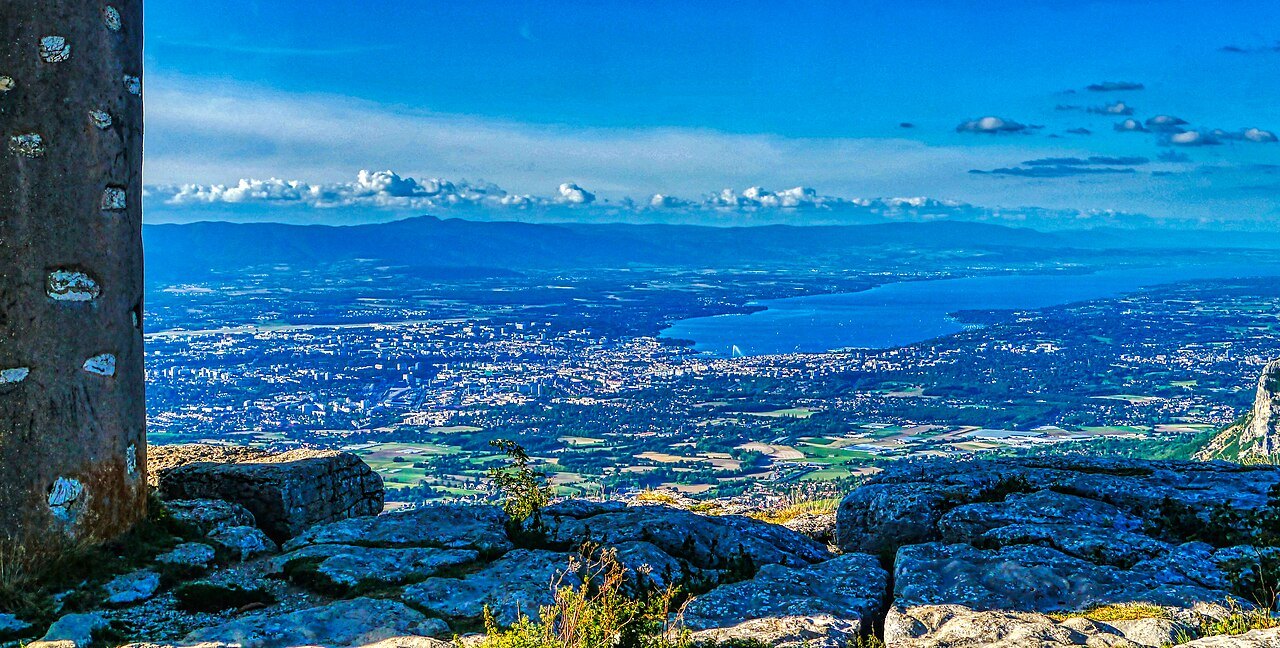
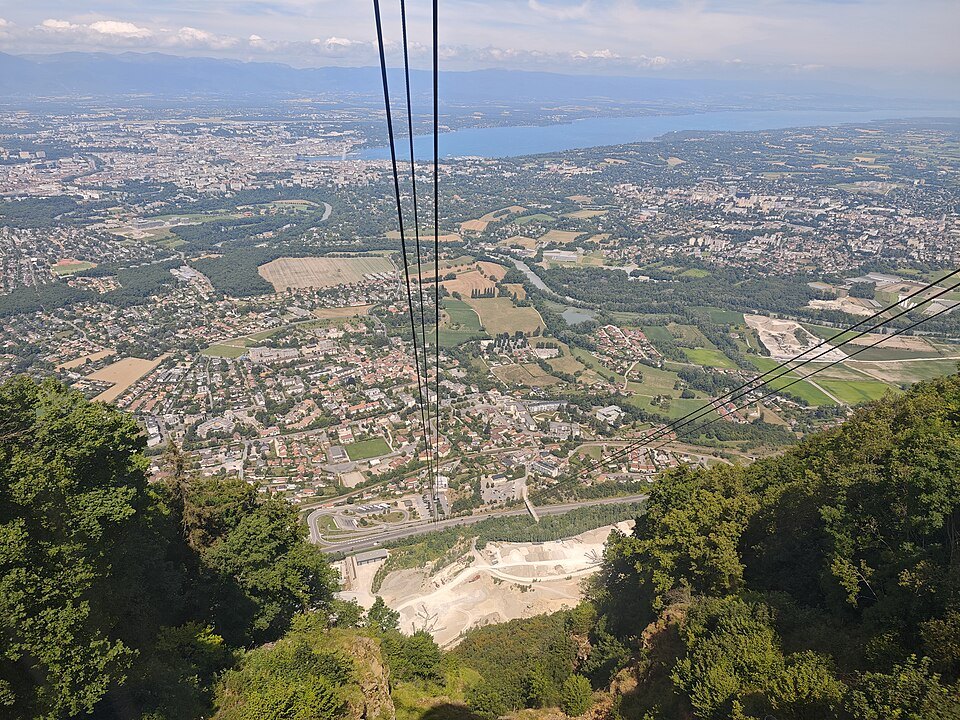
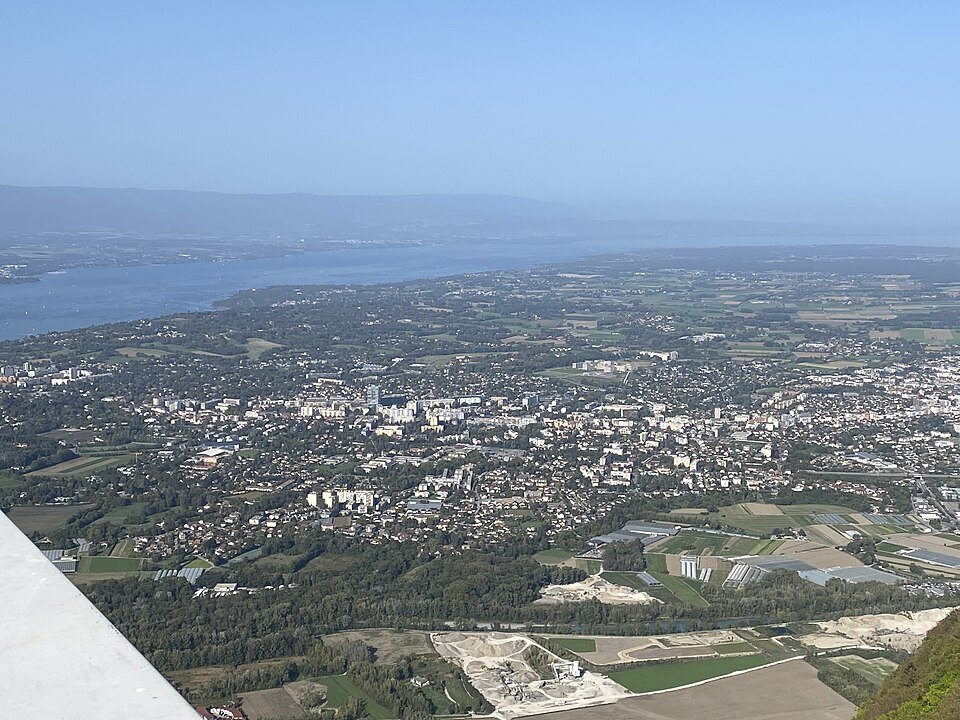
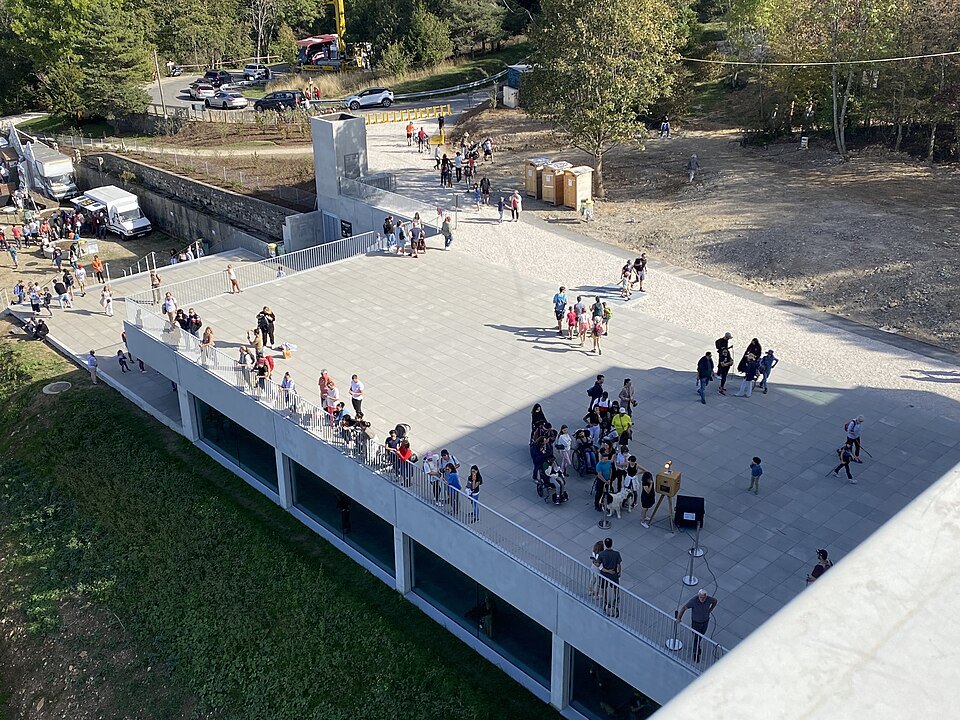
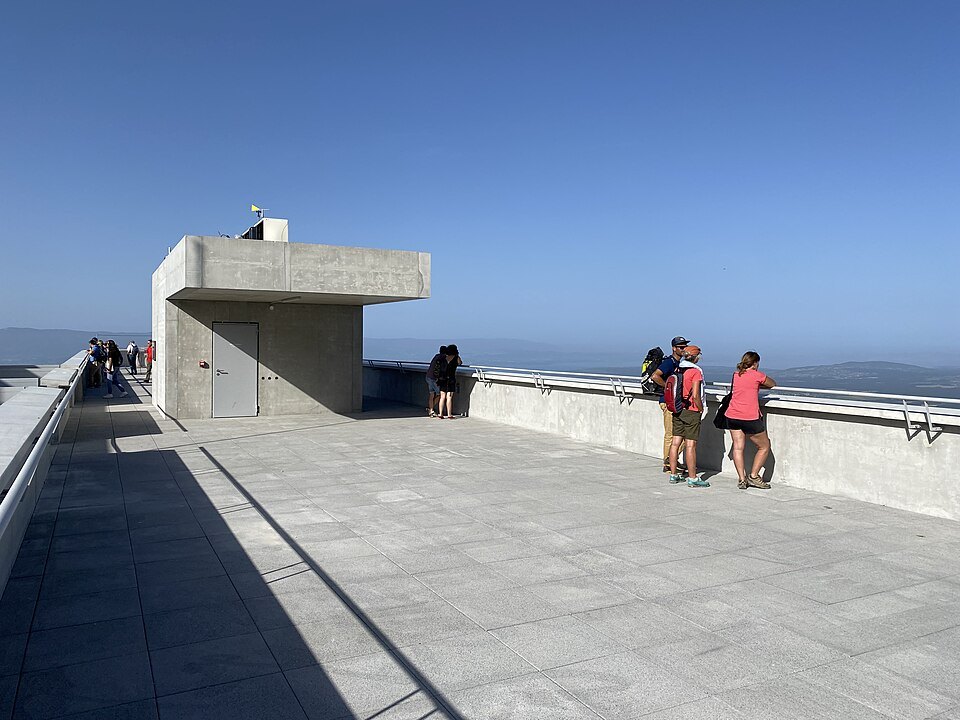
The Salève, the long limestone mountain that closes Geneva's view to the south, is known as the Balcony of Geneva. It lies in France, in Haute-Savoie, and rises to 1,379 meters at the Grand Piton. From the top the panorama covers the Geneva conurbation, the lake, the south of the Jura mountains, the Prealps, Lake Annecy and Mont Blanc.
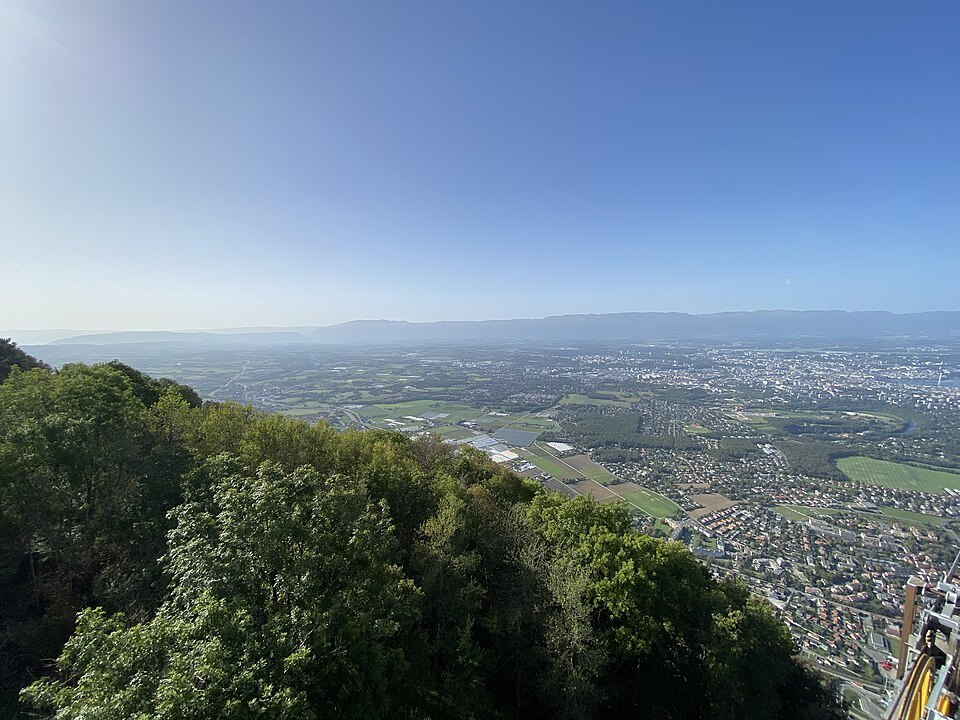
The easy way up is the cable car, opened in 1932 and rebuilt in the 1980s, which runs entirely on French territory just across the border. From Cornavin, a bus reaches the border at Veyrier in about twenty-five minutes, and the lower station is just across. Bring the identity documents you need for Schengen travel, and a warm layer for the top.
People have been going up for the view for a long time. Between 1892 and 1935 the Salève was served by the first electric rack railway in the world, and the cliff face toward Geneva, cut by narrow gorges such as the Grande Varappe, gave French its word for rock climbing at the end of the nineteenth century.
Choosing your day
Mont Blanc is a clear-day sight. Haze, low cloud and rain hide it, and there are days when it is simply not there, however long you wait on the quay.
The practical approach is to keep the view flexible. Look southeast from your hotel or the bridge in the morning; if the mountain is out, change the day's plan and go to the quays, the Perle du Lac or the Salève while it lasts. If it is not, go to a museum, and look again tomorrow.
More from the journal
- The Jet d'EauWhy is the Jet d'Eau sometimes switched off?Geneva's fountain runs every day except when it cannot: why wind and cold stop it, when the annual maintenance happens, who decides, and what to do if you arrive to find only the jetty.Read the piece
- The LakeCan you swim in Lake Geneva right in the city?Yes, and Genevans do, all year: the public baths on the Pâquis jetty, the new Eaux-Vives beach, the pools of Genève-Plage, how clean the water is, and what to know before you get in.Read the piece
- Booking AheadHow do you visit the Palace of Nations, and what do you need to bring?The guided tour is the only way inside the UN's palace in Geneva: how booking works, the passport rule, the security check, the luggage limit, and what you see if you cannot get a place.Read the piece