Home · Sights · Saint-Pierre Cathedral
Saint-Pierre Cathedral
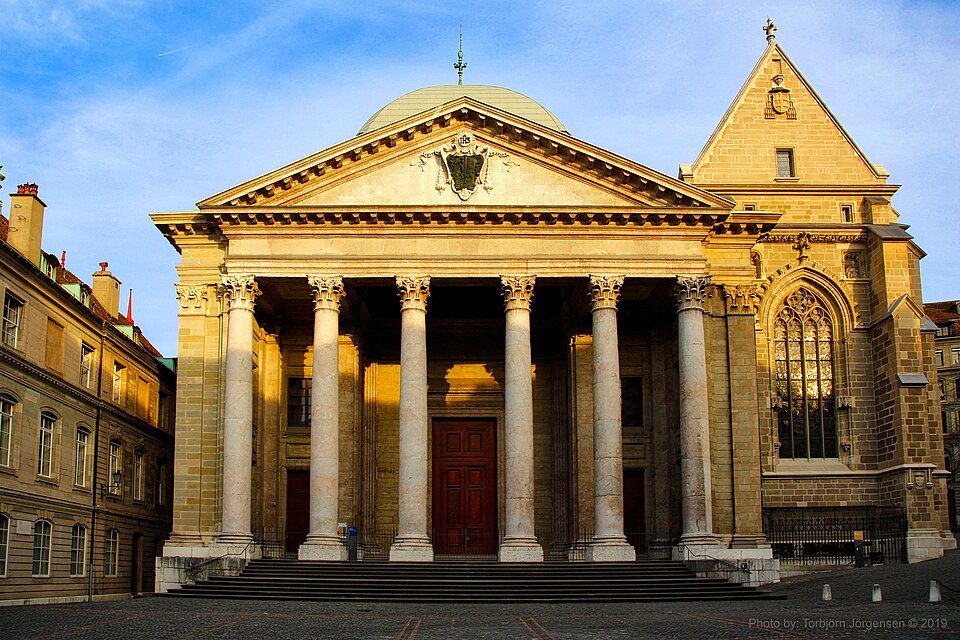
- IThe classical frontA portico of columns added between 1752 and 1756 when the old west front threatened to collapse
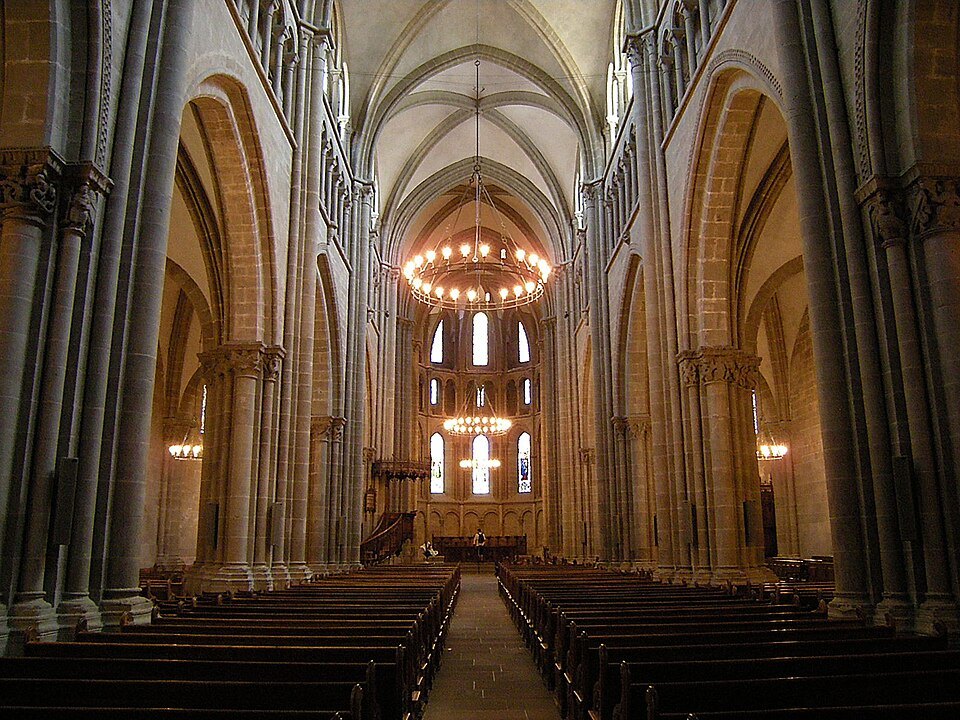
- IIThe bare naveA tall Gothic interior emptied of altars, statues and images in the iconoclasm of 1535
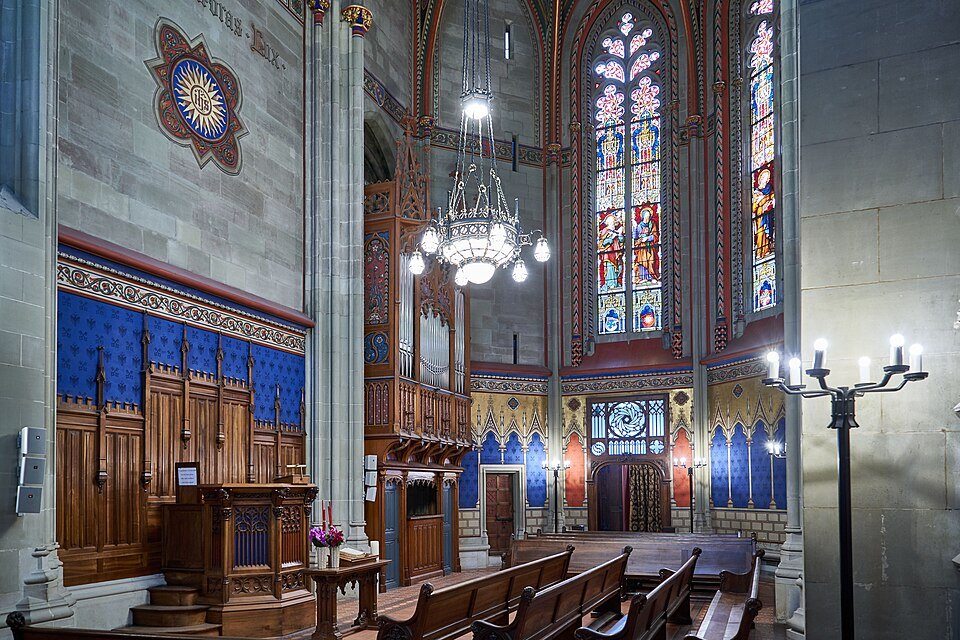
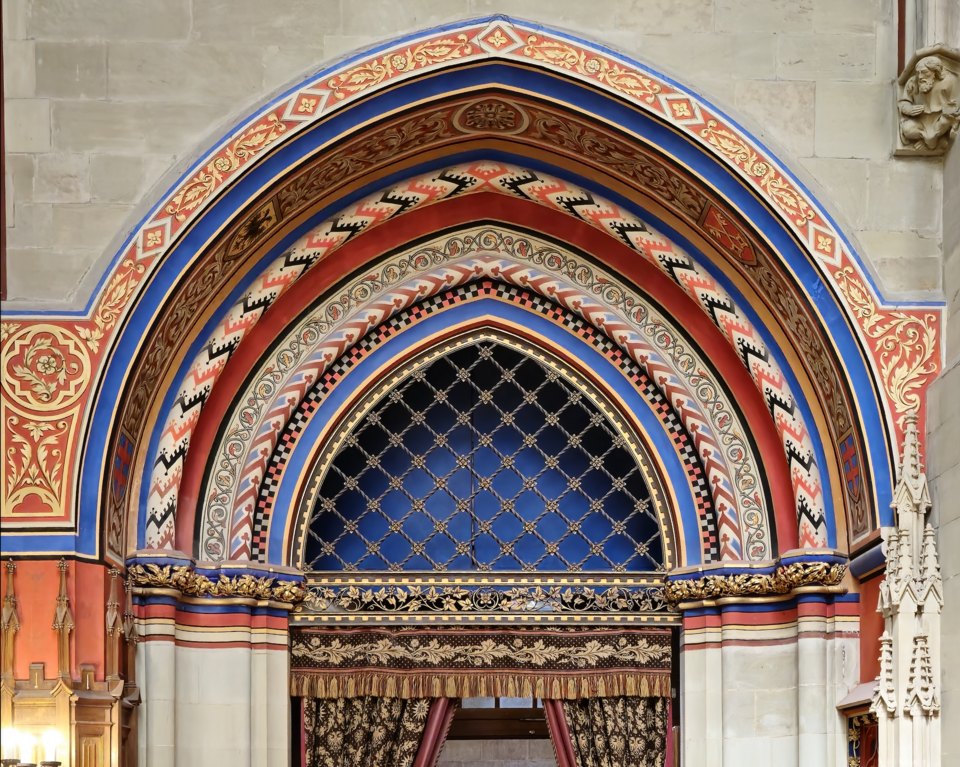
- IIIThe Maccabees ChapelA flamboyant Gothic funeral chapel built around 1405, restored and painted in the 1880s
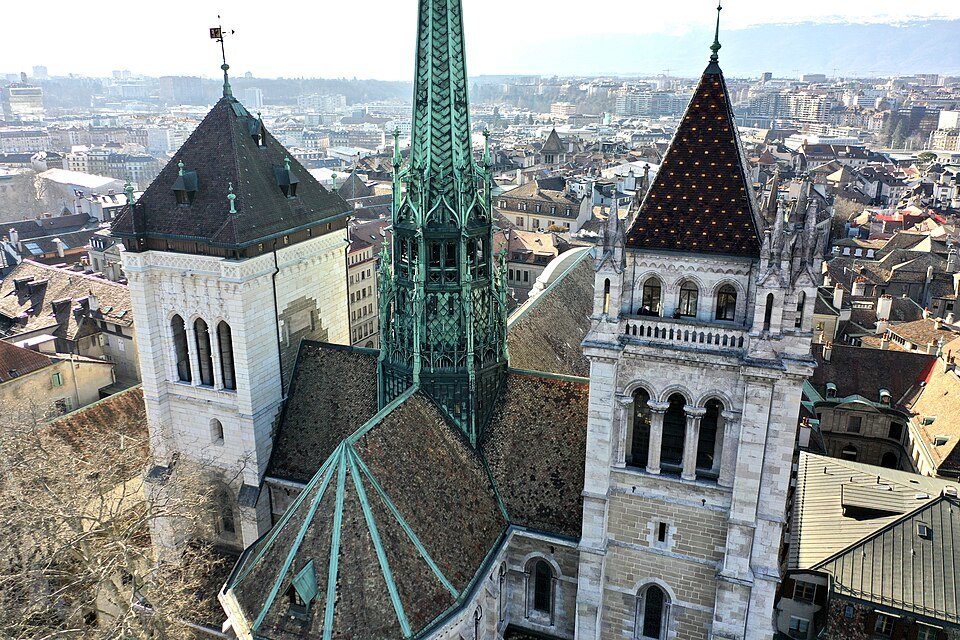
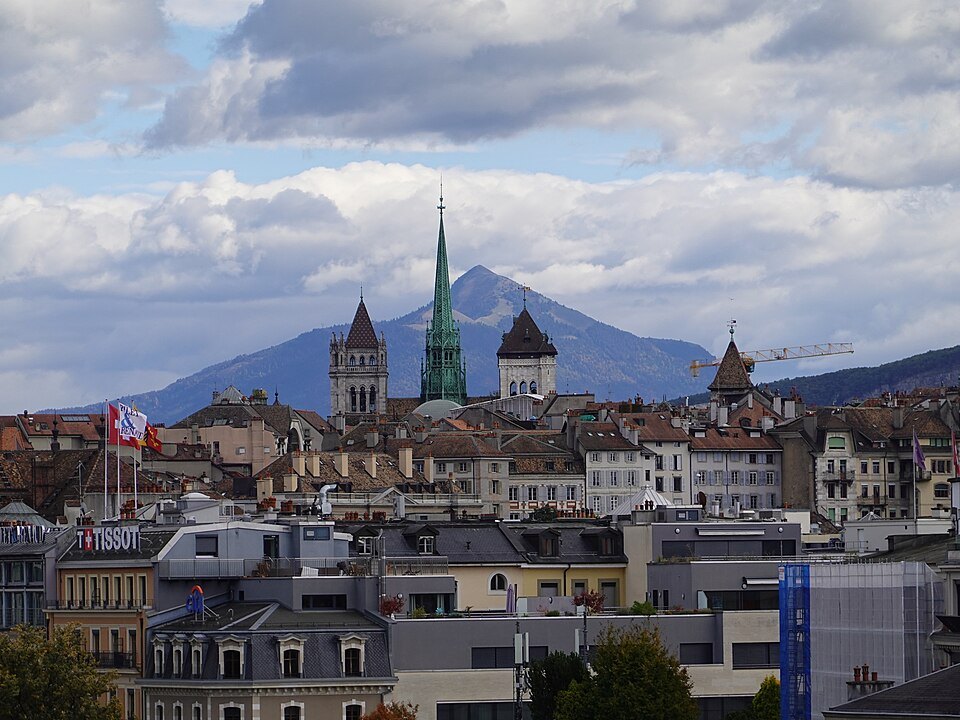
- IVThe north towerA long climb to a platform over the roofs, the harbor, the Jet d'Eau and the mountains
- VLa ClémenceThe largest of the forty-five bells, a descendant of the bell first cast in 1407
- VIThe archaeological siteExcavations beneath the floor, from a chieftain's grave to the churches of late antiquity
From darkness to light
Why it matters
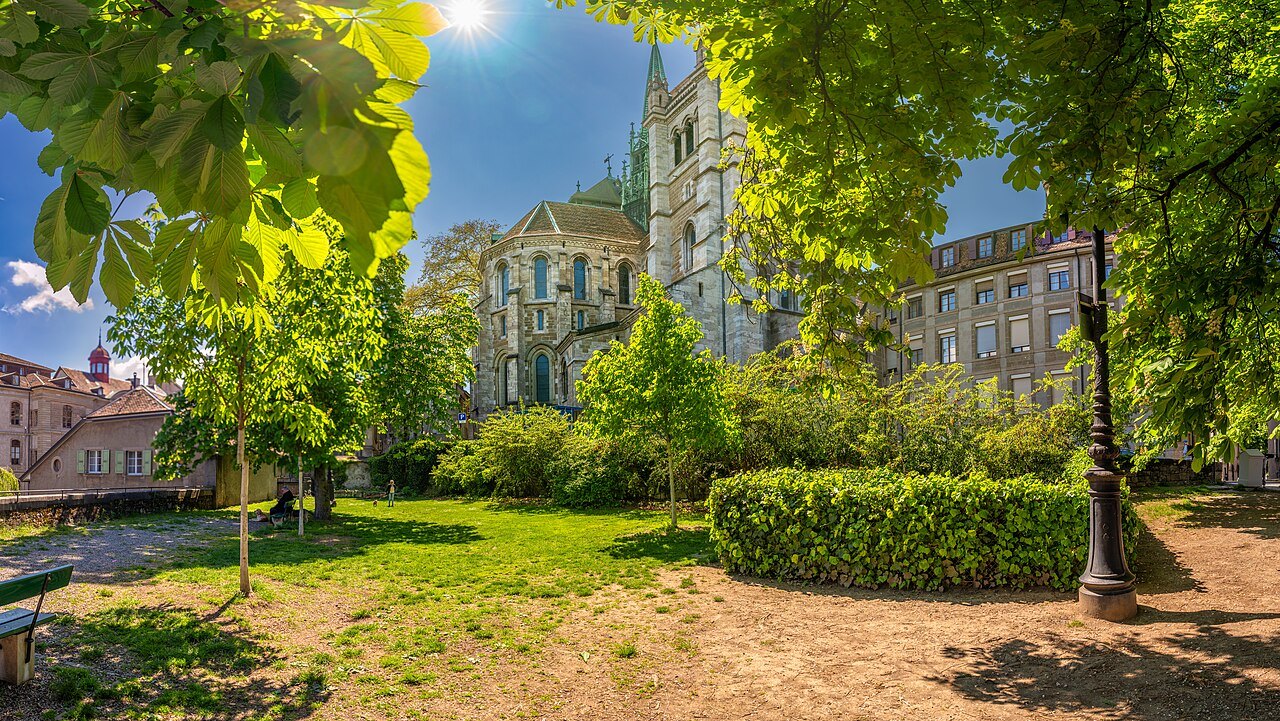
Saint-Pierre sits on the highest point of the old town, and it has been the center of religious life in Geneva for about sixteen hundred years. For roughly a thousand of them it was the cathedral of the bishops of Geneva, from the end of the fourth century until the Reformation. Since 1535 it has been the principal church of Protestant Geneva, and the building through which the city's break with Rome can be read most clearly.
John Calvin preached here and read and explained scripture here for more than two decades, and his successor Theodore Beza was buried here in 1605. The ideas that made Geneva the “Protestant Rome” were taught a few steps away, in the lecture hall beside the cathedral that still carries Calvin's name.
It is also a civic building. The members of the cantonal government are sworn in here, and in 2009 the cathedral received the European Heritage Label as a monument of European significance. In 2022, a Catholic Mass was celebrated inside for the first time in nearly five centuries, as a gesture of ecumenical hospitality.
A building of many centuries
The present church was begun around 1160 under Bishop Arducius de Faucigny. The choir was finished by the early thirteenth century, and the vaults of the nave and the towers by the end of it, so what you see inside is largely a building of the twelfth and thirteenth centuries.
Additions followed for the next seven hundred years. Cardinal Jean de Brogny had the Maccabees Chapel built as his funeral chapel, finished around 1405. In the middle of the eighteenth century the western part of the church was in danger of collapse, and between 1752 and 1756 it received the neoclassical portico designed by the architect Benedetto Alfieri, which is why a medieval cathedral greets you with a row of columns and a pediment. The green spire over the crossing was added in 1895.
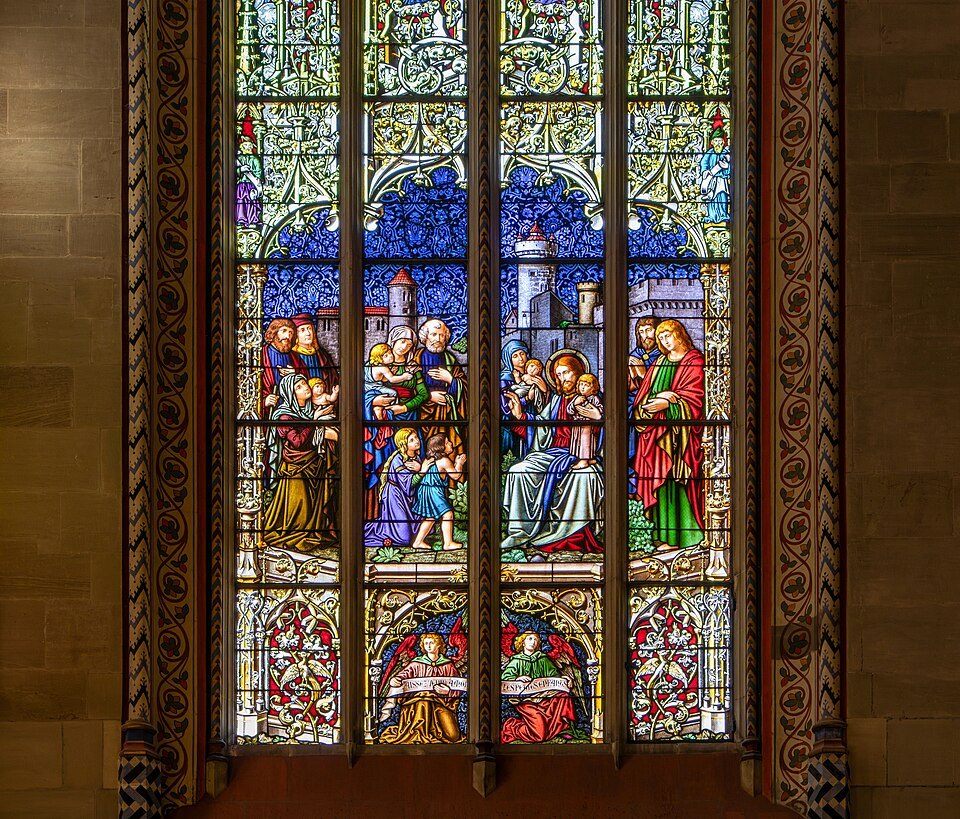
The break came on 8 August 1535. That day Guillaume Farel preached the Reformation in the cathedral against the magistrates' orders, and during vespers the same afternoon iconoclasts smashed the statues and tore down the images. The rood screen, the side altars and the church furniture went; only the stained glass was left. The result is the plain, light, bare interior of a Reformed church inside the walls of a medieval cathedral.
What you actually see
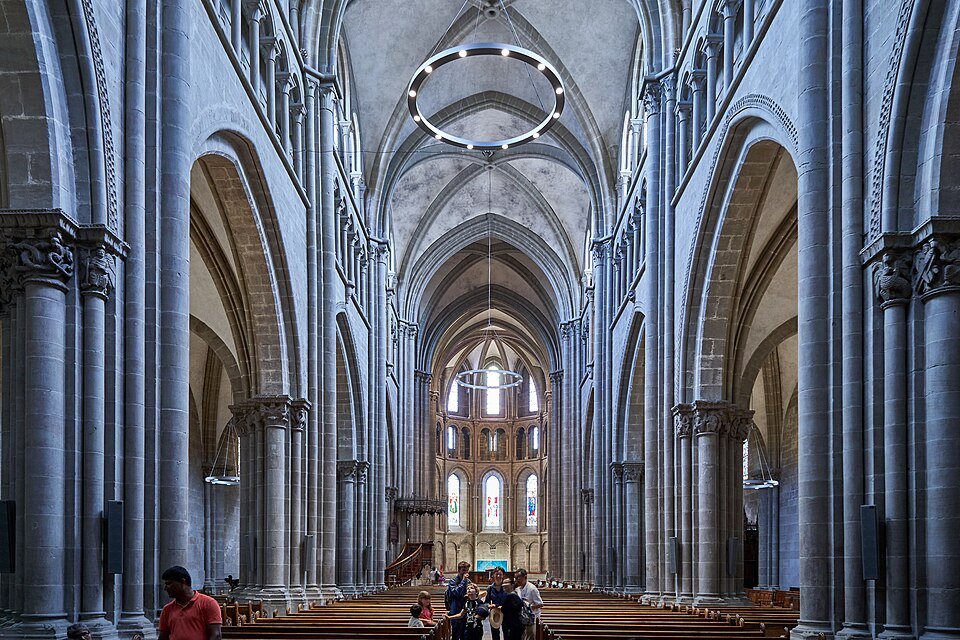
Inside, the first impression is height and emptiness. The nave rises to its vaults with little to interrupt the view from the entrance to the choir: no side chapels, no statues, a few tombs and the carved wooden choir stalls, some of them made by the same Burgundian sculptor who worked on Cardinal de Brogny's tomb.
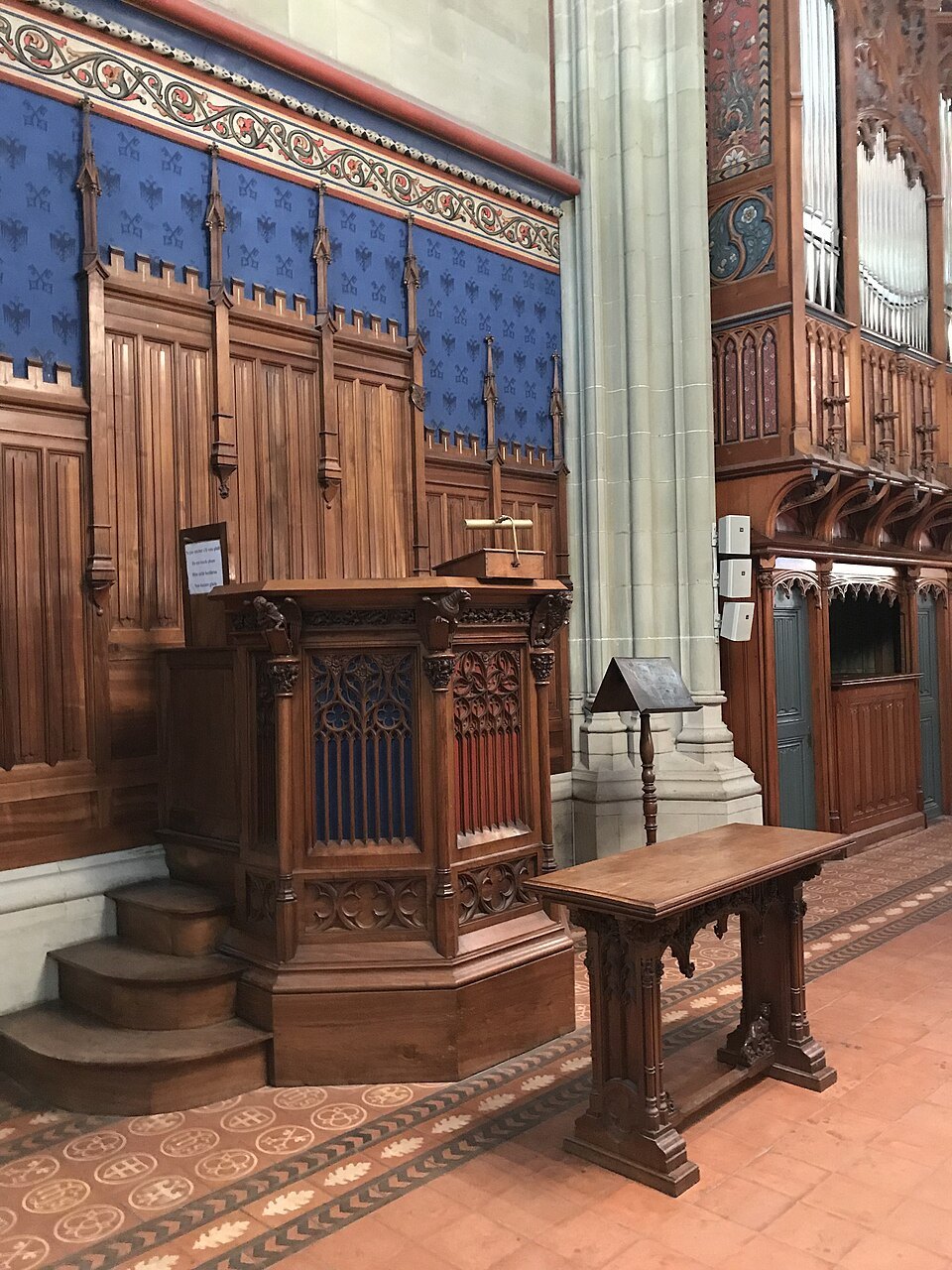
Look for the wooden chair that tradition calls Calvin's chair, the pulpit, and the stained-glass windows in the choir. The great organ in the west gallery, built by the Metzler firm, was inaugurated in 1965.
The Maccabees Chapel is the exception to all that restraint. The Reformation turned it into a storeroom and later into classrooms on three inserted floors; in the 1880s the city restored it, and the painted vaults and walls you see date largely from that restoration, which is why the chapel now reads as a richly colored neo-Gothic room. A Walcker organ of 1888 stands where the cardinal's tomb probably stood.
The towers are climbed separately. The south tower held a watchman who looked out for fires from 1527 until 1911. From the top of the north tower the view takes in the whole city: the roofs of the old town, the harbor and the Jet d'Eau, the Jura to the west and, on a clear day, the Alps. The largest bell, La Clémence, hangs in the north tower; the first bell of that name was cast in 1407, and the one heard today was recast in 1902.
Under the floor
Excavations beneath the cathedral, begun systematically in the 1970s and opened as an archaeological site in 1976, reveal what lies under the building. The route runs from the third century BC to the start of the present cathedral in the twelfth century, and it is one of the largest archaeological sites of its kind north of the Alps.
At its heart is the grave of an Allobrogian chieftain buried around the first century BC on the summit of the hill, a place that went on being honored long after him. Over it, and around it, lie the remains of the churches of late antiquity: a first cathedral of the late fourth century, a second one beside it, baptisteries, and a reception hall with a mosaic floor.
Walking through it is the easiest way to understand why the cathedral stands where it does. The hill was a sacred place before it was a Christian one, and every church here was built on top of the last.
How to visit
Give the church itself half an hour, the north tower another half hour with the climb, and the archaeological site an hour. The International Museum of the Reformation, in the Maison Mallet on the site of the old cloister next door, and Calvin's lecture hall make it easy to spend a whole morning on this one corner of the old town.
The cathedral is a place of worship, so services take priority, and the towers and the archaeological site keep their own arrangements. On certain nights of the full moon the towers open after dark for a view of the city by moonlight. Check the cathedral's own site before planning around any of these.
It combines naturally with Place du Bourg-de-Four a few steps downhill, the Hôtel de Ville and the Treille terrace, and the Reformation Wall in the Parc des Bastions below the old walls.
Honest notes
The front is not medieval. Visitors expecting a Gothic facade are sometimes puzzled by the columns; they are an eighteenth-century rescue of a failing structure, not a restoration of anything that stood there before.
The painted chapel is largely nineteenth-century work, not the colors of 1405, and it should be seen as a careful restoration rather than as survival.
The famous altarpiece painted for this cathedral by Konrad Witz in 1444, with its Miraculous Draught of Fishes set on the shore of Lake Geneva, is not here. It hangs in the Musée d'Art et d'Histoire, a short walk away.
Nearby
- A few steps awayPlace du Bourg-de-Four and the Grand-RueA sloping, hourglass-shaped square on the flank of the old town, a market since Roman times, where the lanes from the lake shore and the Arve met at the city gate.Read the page
- A few steps awayThe Hôtel de Ville, the Old Arsenal and the TreilleFive centuries of Geneva's government in one street: the town hall with its stepless ramp tower, the old arsenal across the way, the city's oldest house, and a terrace with one very long bench.Read the page
- A few steps awayThe Reformation Wall and the Parc des BastionsA hundred meters of carved stone set against the old city walls, with Farel, Calvin, Beza and Knox standing five meters tall, in the park where Geneva's university grew up.Read the page