Home · Sights · The Hôtel de Ville, the Old Arsenal and the Treille
The Hôtel de Ville, the Old Arsenal and the Treille
- IThe ramp towerA square tower of 1553–1584 whose gently sloping ramp climbs the floors without a single step
- IIThe Alabama roomThe reception room where an international arbitration tribunal sat in 1872, named after the case
- IIIThe Tour BaudetThe fifteenth-century tower on the Treille side, still the meeting place of the cantonal government
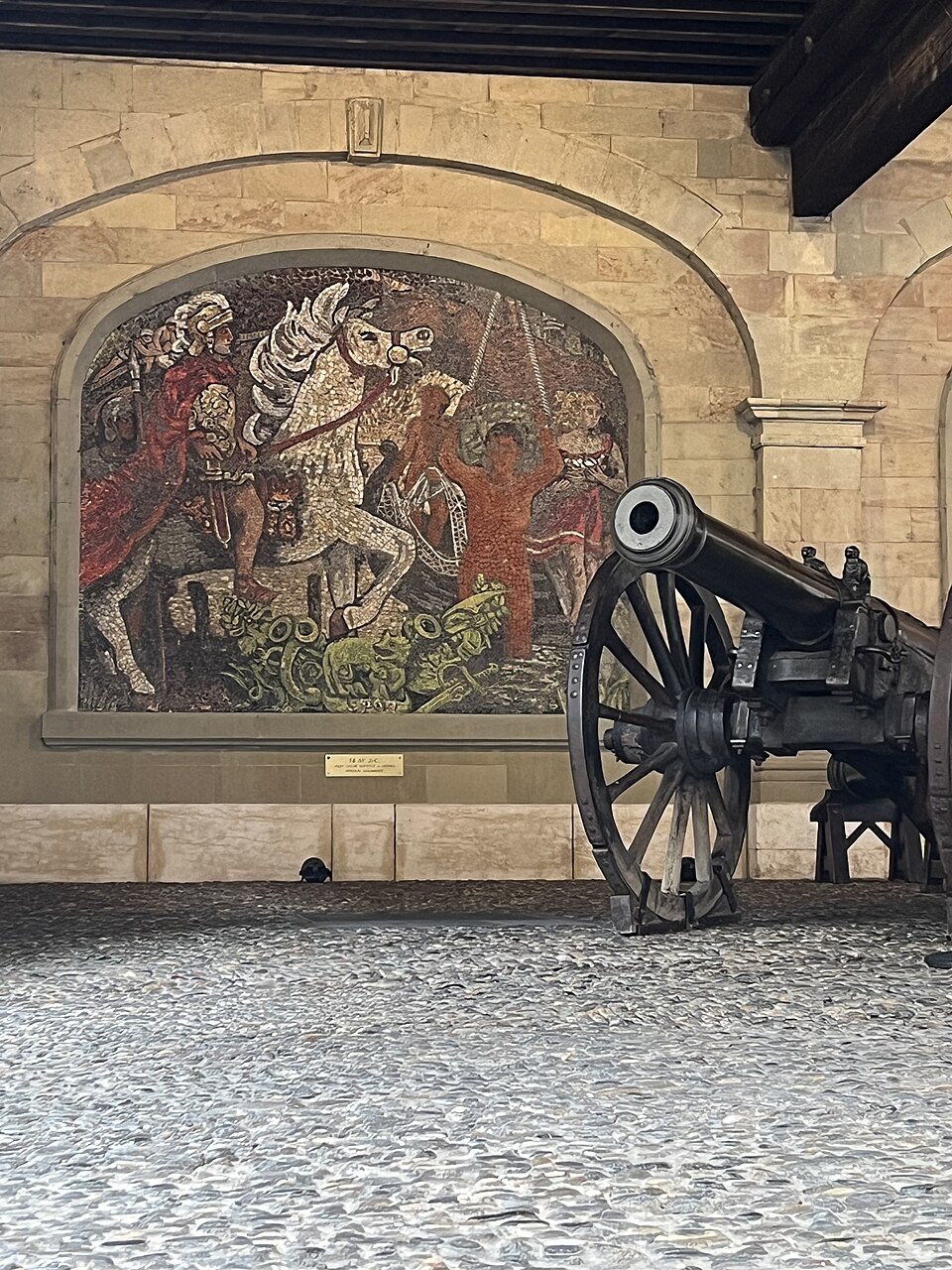
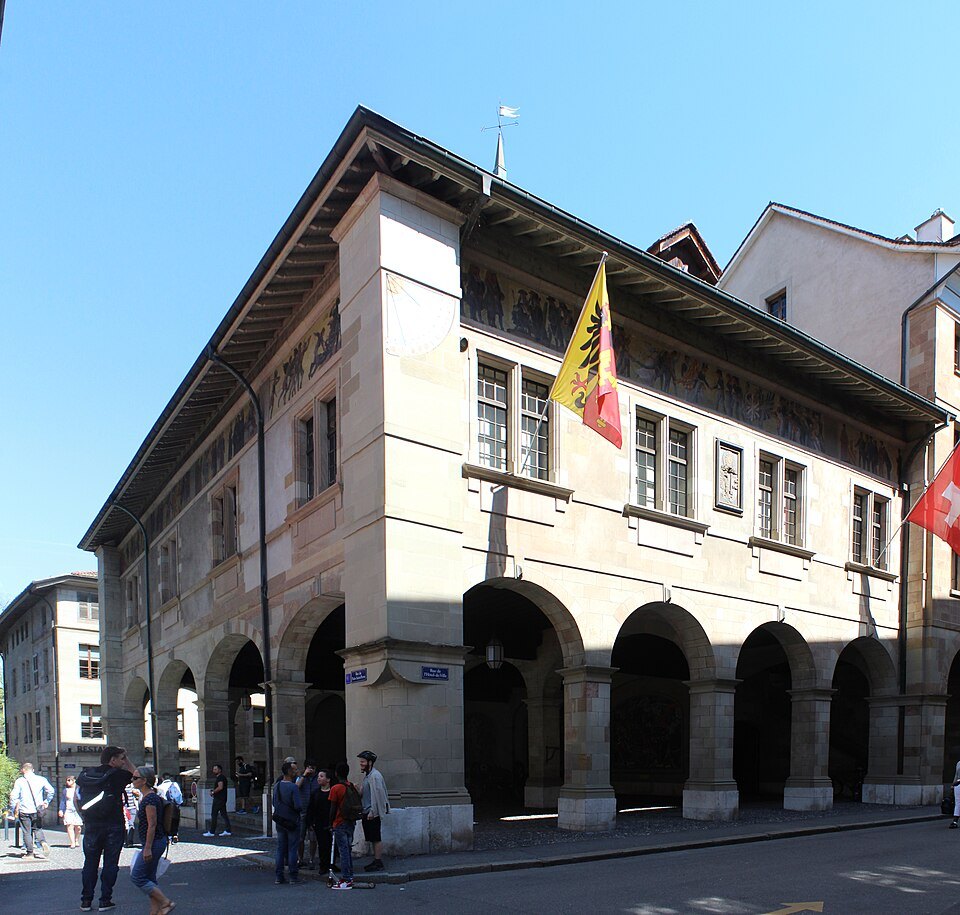
- IVThe Old ArsenalAn arcaded hall across the street, with old cannons and three mosaics of Geneva's history
- VMaison TavelThe oldest private house surviving in Geneva, now the museum of the city's history
- VIThe Treille terraceA chestnut-shaded promenade above the Bastions, with a bench said to be the longest in the world
From darkness to light
Why it matters
The Hôtel de Ville is not a museum piece. It is still the seat of the political authorities of the Republic and Canton of Geneva, and it has been growing on this spot, in stages, since the fifteenth century. Few town halls in Europe show so plainly how a small city-state built itself a place of government one room at a time.
Around it, within a couple of hundred meters, stand the other pieces of the old republic: the arsenal where its artillery was kept, the oldest private house in the city, and the Treille, the terrace laid out in the sixteenth century to defend the government buildings and later turned into the city's favorite promenade.
Together they make the most rewarding short walk in the old town, and one of the few places where you can step inside the buildings of Geneva's own history rather than admire them from outside.
The town hall, room by room
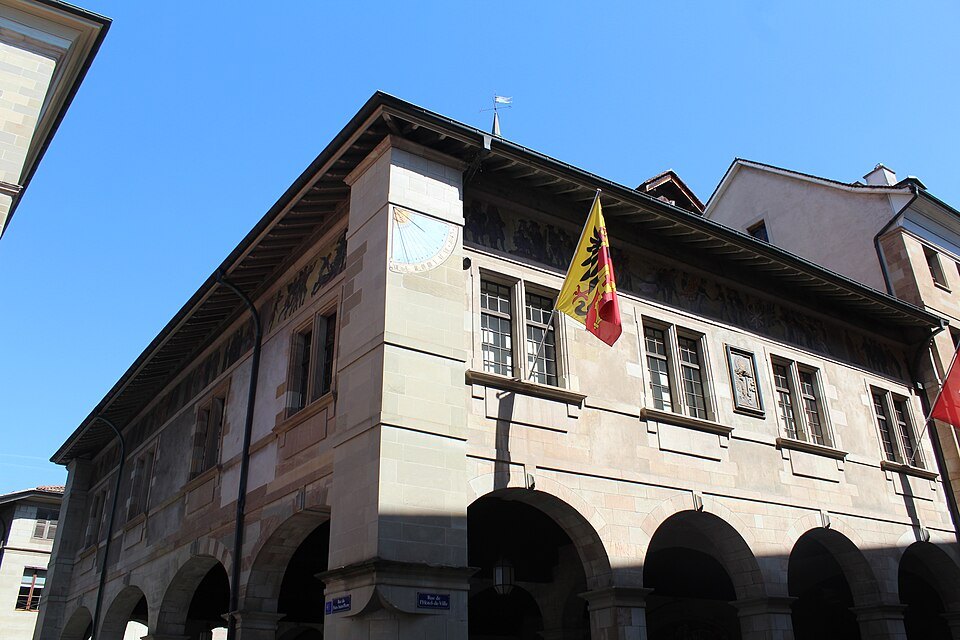
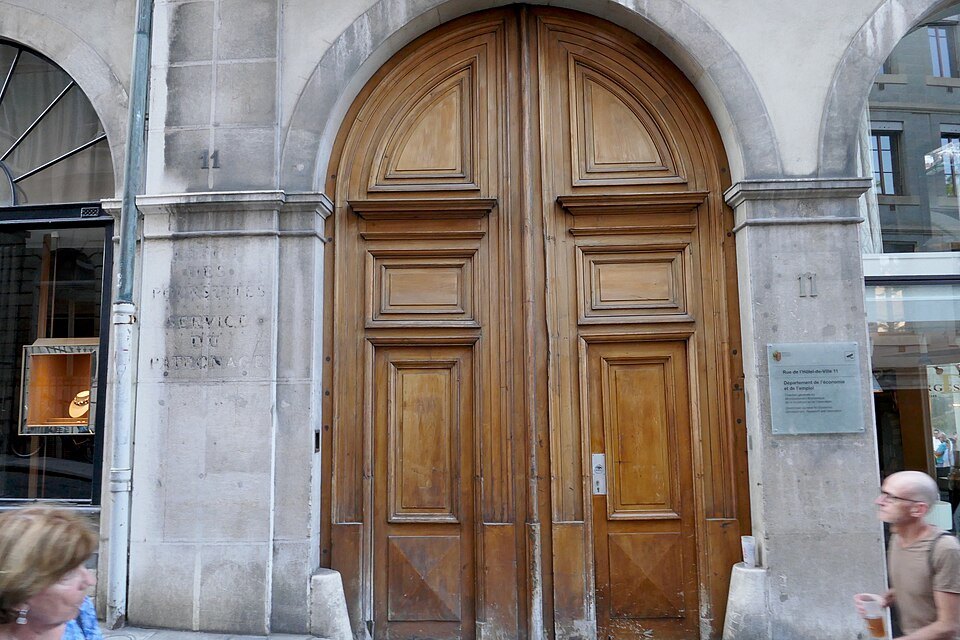
The city's councils long had no fixed meeting place and usually met in the cathedral cloister. In 1405 the commune bought several private houses on what is now the Rue de l'Hôtel-de-Ville to make its first town house. The Tour Baudet, first mentioned in 1455, gave the group a defensive air, and a new council chamber on its second floor, decorated in 1501 and 1502, gradually became the room where all the councils met.
Those wall paintings, with their scrolling foliage and biblical and symbolic figures, disappeared in 1711 behind paneling and hangings. They were rediscovered in 1901 and restored the following year, and the Tour Baudet still houses the Council of State.
The most famous piece is the ramp tower. Discussed from 1553, with an entrance portal dated 1556 and finished around 1584 by the master mason Nicolas Bogueret, it is a massive rectangular tower inside which a ramp rises on a gentle slope with no landings at all. It is the kind of detail that stays with visitors long after the council chambers have blurred.
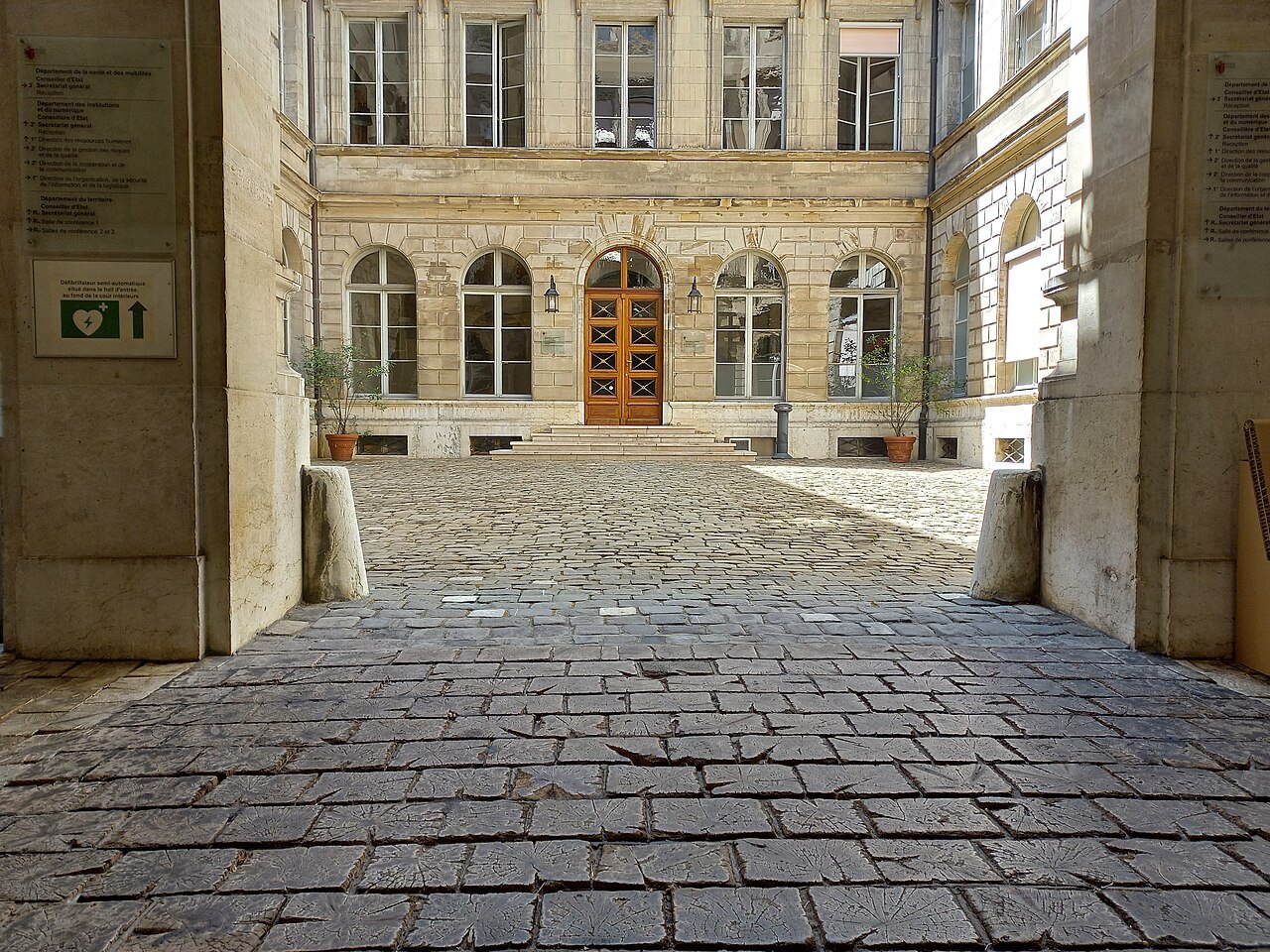
The street fronts were rebuilt from the 1610s, the arcaded galleries around the courtyard were only completed in 1706, and in the early eighteenth century a new wing added a hall for the Council of Two Hundred. The result looks remarkably uniform from the street for a building assembled over three hundred years.
The Alabama room
One room gave its name to a chapter of international law. In 1872 the tribunal that settled the Alabama Claims, the dispute between the United States and Britain over Confederate warships built in British yards during the American Civil War, sat in a reception room of this town hall.
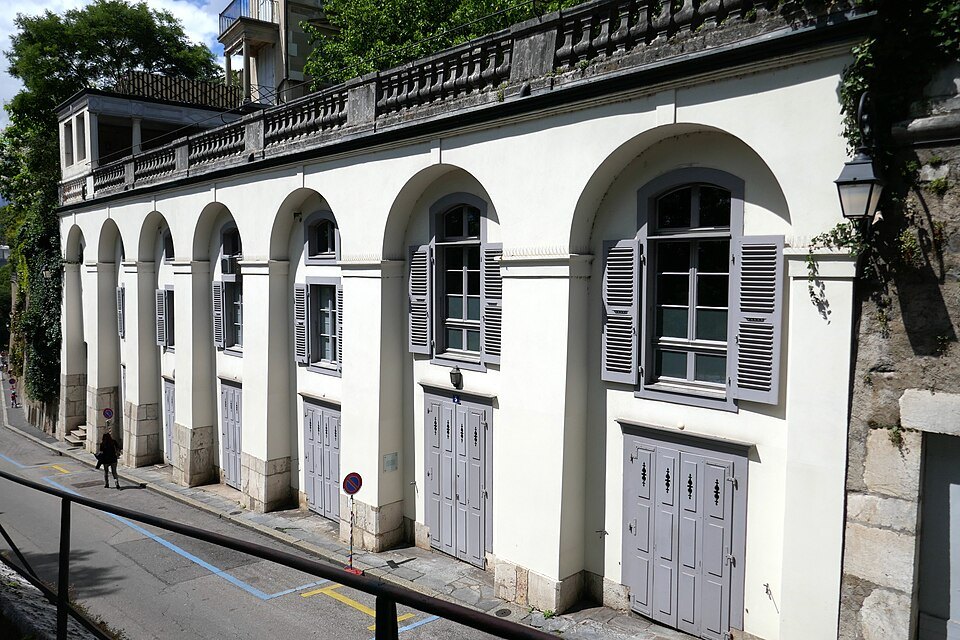
The room has been called the salle de l'Alabama ever since. The arbitration ended the quarrel and led to restored friendly relations between the two countries, an early case of a serious dispute between powers settled before an international tribunal.
The Old Arsenal and Maison Tavel
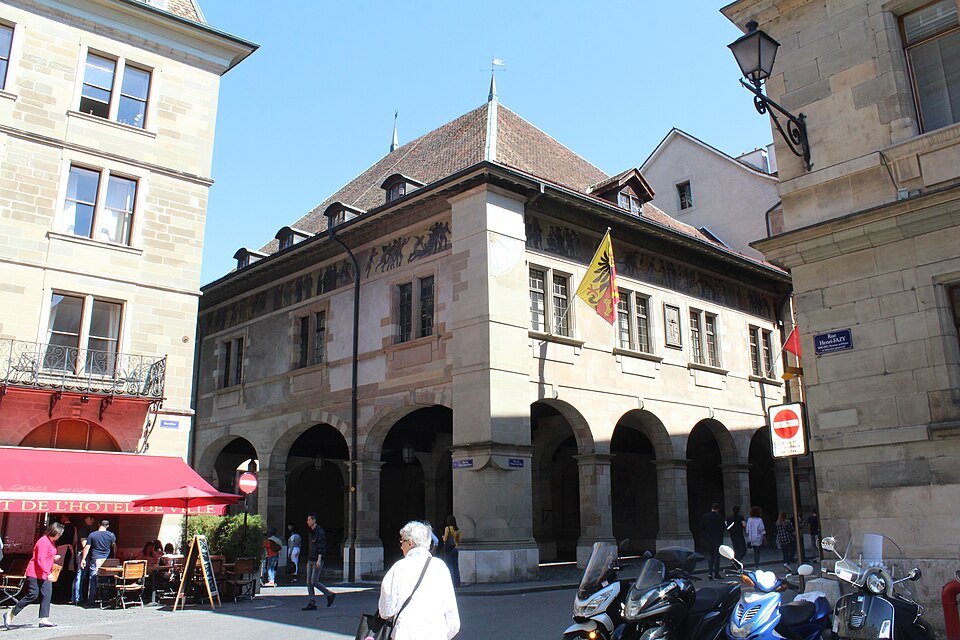
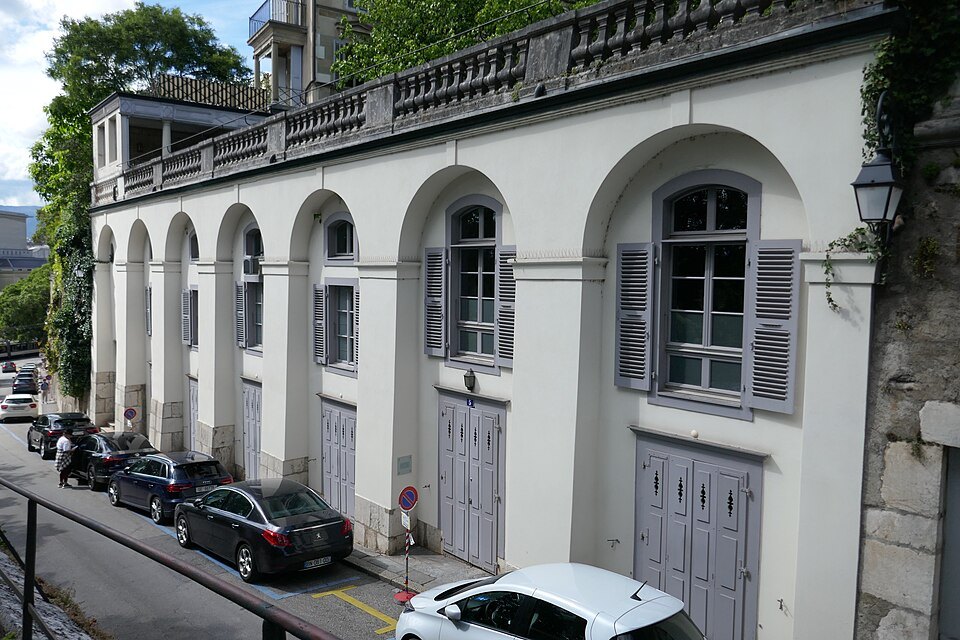
Across the street from the town hall stands the Old Arsenal, an arcaded building that now houses the State Archives of Geneva. Under its arcades sit old field guns of the seventeenth and eighteenth centuries. The wall behind them carries three mosaics of episodes from Geneva's history, among them the arrival of Julius Caesar. They were made between 1946 and 1948 by René Antonietti from designs by the painter Alexandre Cingria, who had originally intended them for the courtyard of the town hall.
A few steps away, at number 6 Rue du Puits-Saint-Pierre, Maison Tavel is the oldest private house preserved in Geneva. The first building on the site goes back to the twelfth century. The Tavel family owned it from the late thirteenth century, rebuilt it after the great fire of 1334 that destroyed half the town, and made it one of the finest houses in the city, with corner turrets like a small fortified palace.
The city bought it in the 1960s and opened it in 1986 as a museum of urban history and daily life in Geneva. Its best-known exhibit is the Relief Magnin, a model of Geneva as it was in 1850, before its fortifications were torn down, with around two thousand buildings made in zinc and roofs in copper.
The Treille and its bench
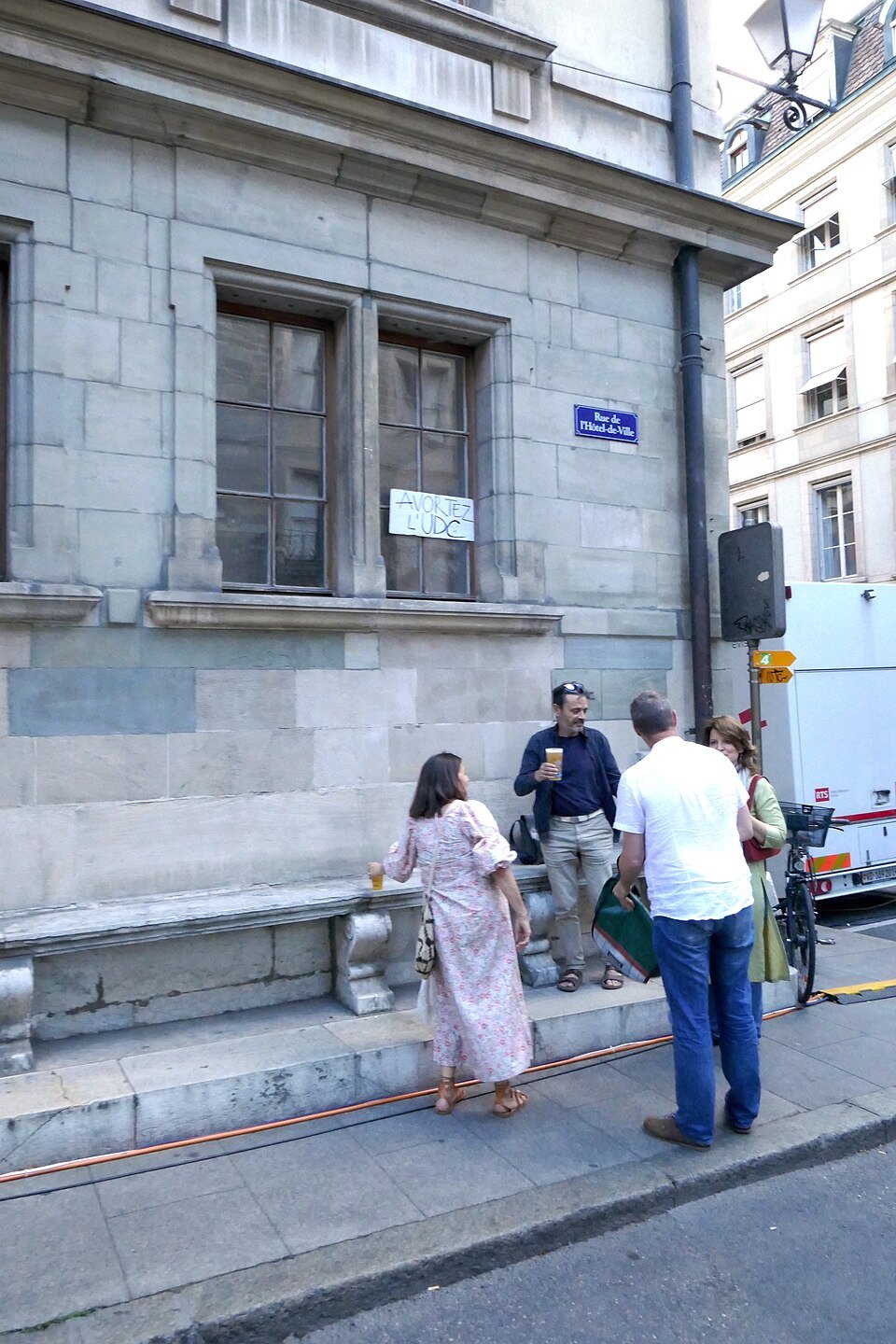
Behind the town hall, the Promenade de la Treille runs along the top of the old walls above the Parc des Bastions. The authorities bought the land in the early sixteenth century as a platform to defend the government buildings; it was planted with trees from 1558, and the vine trellis that gave it its name is recorded from 1574.
In 1721 its trees were replaced by two rows of horse chestnuts. From 1767 benches were set end to end along the whole length of the terrace, their backs forming a barrier. At about 120 meters, the bench is said to be the longest in the world.
One of the chestnut trees has an official job. Since 1818, the city has recorded the date on which the first leaf opens on a designated chestnut on the Treille, and that date is taken as the official start of spring in Geneva. The tree has been replaced several times as the old ones died.
How to visit
The street, the arsenal arcades, the Treille and the courtyard of the town hall can be seen on any walk through the old town, and together they take about an hour at an easy pace. Maison Tavel is a museum with its own arrangements; allow an hour inside, most of it with the relief model.
Access to the council rooms is more limited, because this is a working seat of government, and the city opens them on particular occasions. The ramp tower and the courtyard are the parts most visitors see.
The walk joins naturally with Place du Bourg-de-Four up the street, the cathedral above, and the Reformation Wall directly below the Treille.
Nearby
- A few steps awaySaint-Pierre CathedralGeneva's cathedral, begun around 1160, stripped bare by the Reformation in 1535, given a classical front in the 1750s, and standing on the ruins of every church that came before it.Read the page
- A few steps awayPlace du Bourg-de-Four and the Grand-RueA sloping, hourglass-shaped square on the flank of the old town, a market since Roman times, where the lanes from the lake shore and the Arve met at the city gate.Read the page
- A few steps awayThe Reformation Wall and the Parc des BastionsA hundred meters of carved stone set against the old city walls, with Farel, Calvin, Beza and Knox standing five meters tall, in the park where Geneva's university grew up.Read the page