Home · Sights · The Reformation Wall and the Parc des Bastions
The Reformation Wall and the Parc des Bastions
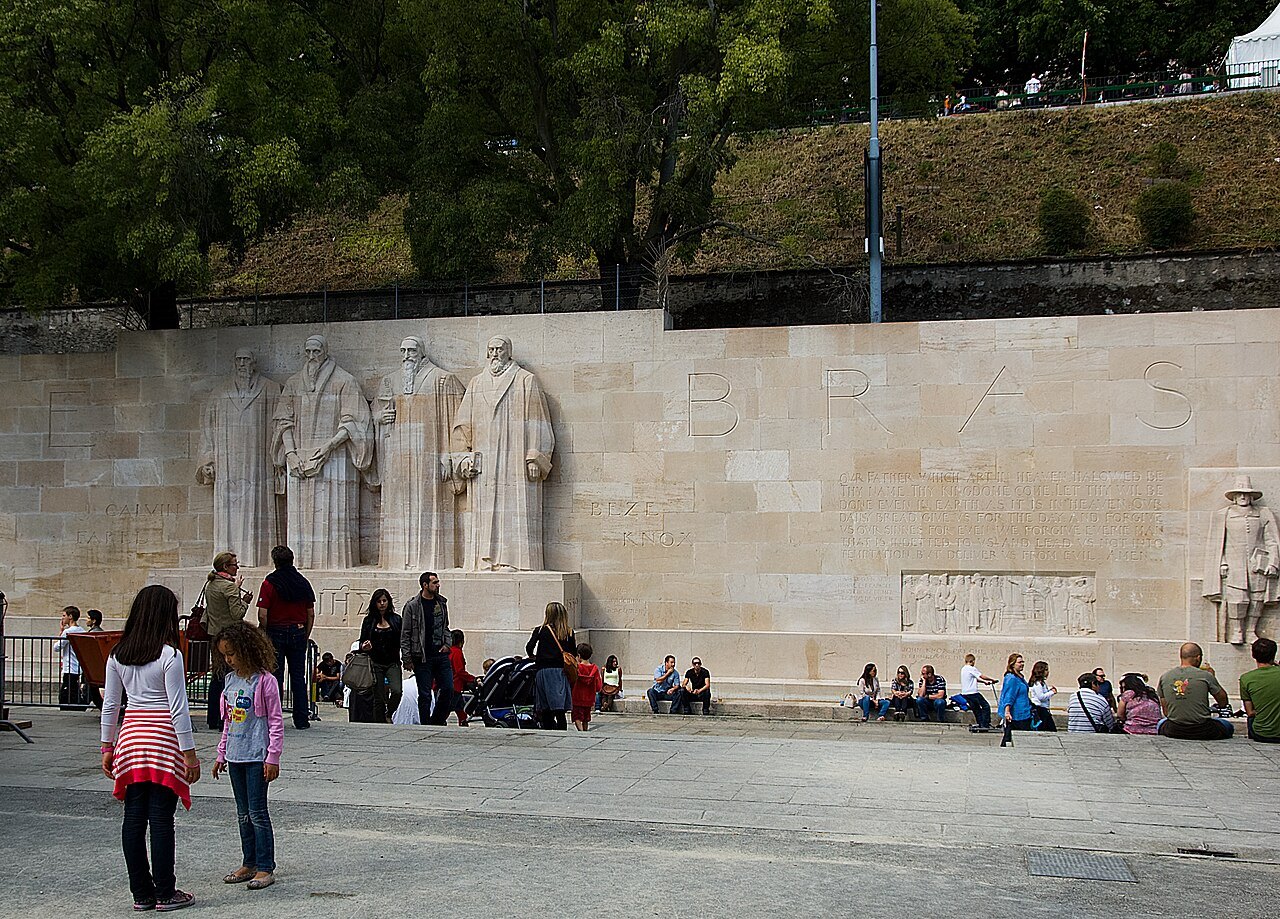
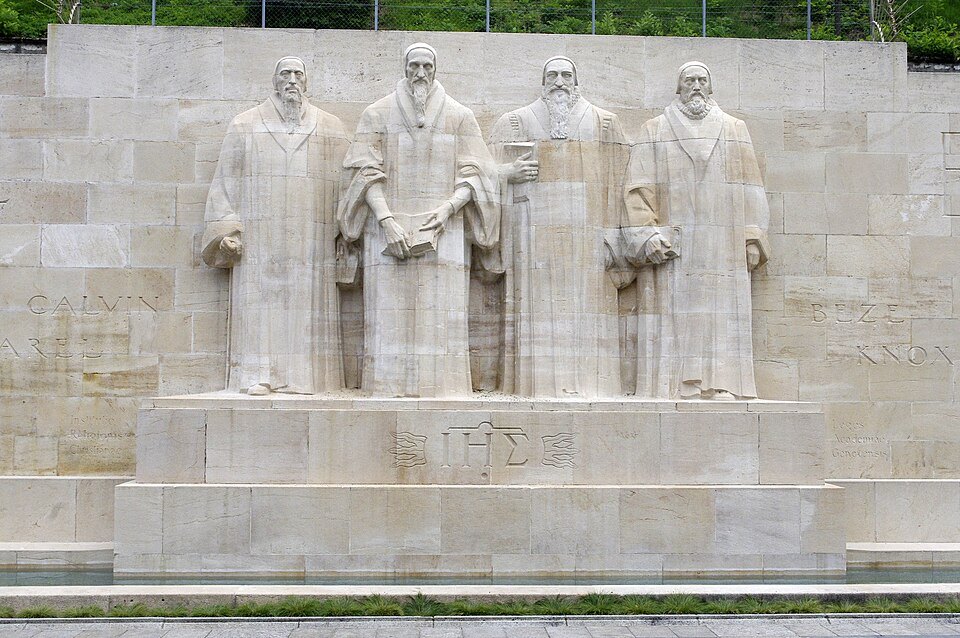
- IThe four reformersFarel, Calvin, Beza and Knox at the center, each about five meters tall, in Geneva gowns
- IIThe mottoPost Tenebras Lux, Geneva's motto, cut in large letters along the length of the wall
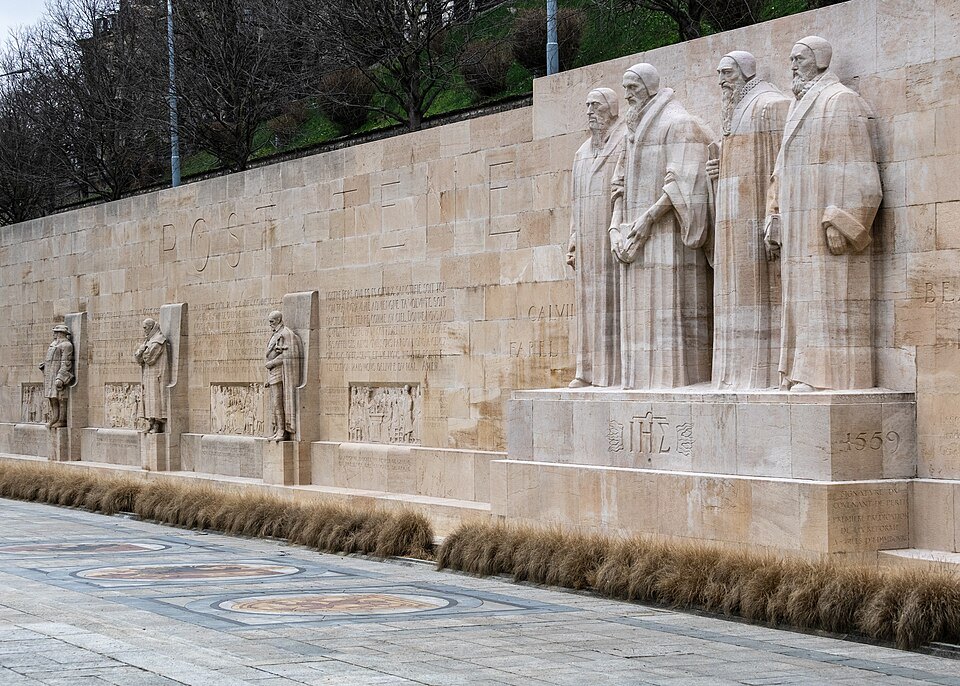
- IIIThe six protectorsStatues of Coligny, William the Silent and Cromwell among the champions of the Reformation abroad
- IVThe two dates1536, the adoption of the Reformation, at one end; 1602, the Escalade, at the other
- VThe water basinA long pool at the foot of the wall, recalling the moat of the old fortifications
- VIThe two memorial stonesStones for Luther and Zwingli at the two ends of the esplanade facing the wall
From darkness to light
Why it matters
Geneva calls itself the Protestant Rome, and this is where it says so in stone. The International Monument to the Reformation, known to everyone as the Reformation Wall, runs for about a hundred meters along the foot of the old ramparts in the Parc des Bastions, directly below the old town and the Treille terrace.
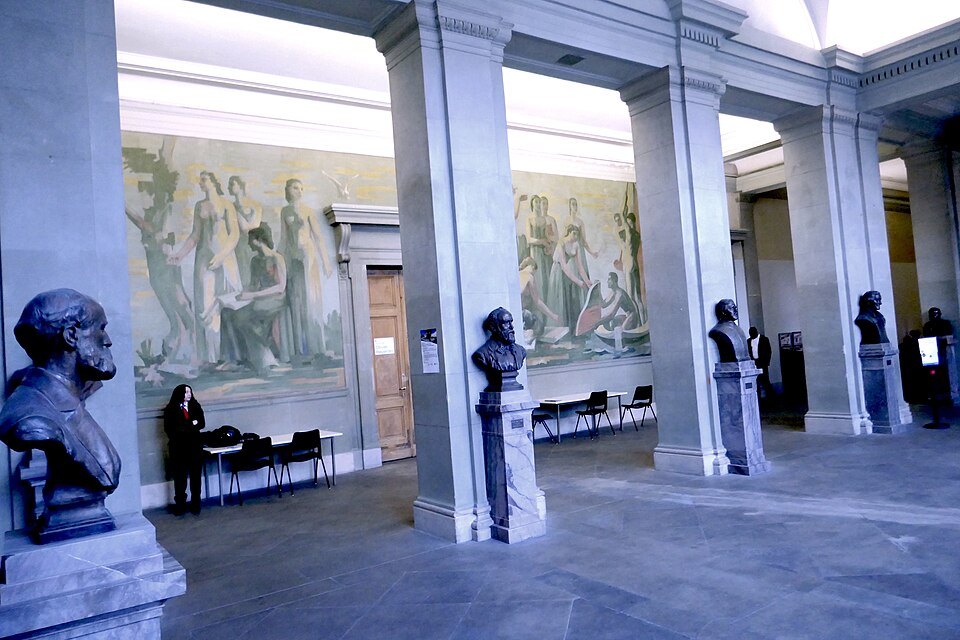
It was begun in 1909, for the four hundredth anniversary of John Calvin's birth and the three hundred and fiftieth of the founding of the Geneva Academy, the school Calvin created and which became the University of Geneva, whose oldest buildings stand in the same park, behind you as you face the wall. The monument was inaugurated in 1917.
The wall is more than a portrait of Calvin. It sets the Reformation of Geneva inside a European and American story, from Scotland and the Netherlands to New England and Hungary, and it names the men who carried Calvin's ideas to each of them.
Who is on the wall
At the center stand the four men most closely tied to the Reformation in Geneva. Guillaume Farel was one of those who brought it to the city; John Calvin was its central figure; Theodore Beza succeeded him and led the Academy; and John Knox took Calvin's teaching home and founded Presbyterian worship in Scotland. Each is about five meters tall and wears the long preacher's gown still called the Geneva gown.
At their feet are the arms of Bern, Geneva and Scotland: Bern for the alliance between the two cities, Scotland for Knox and the spread of Calvinism there.
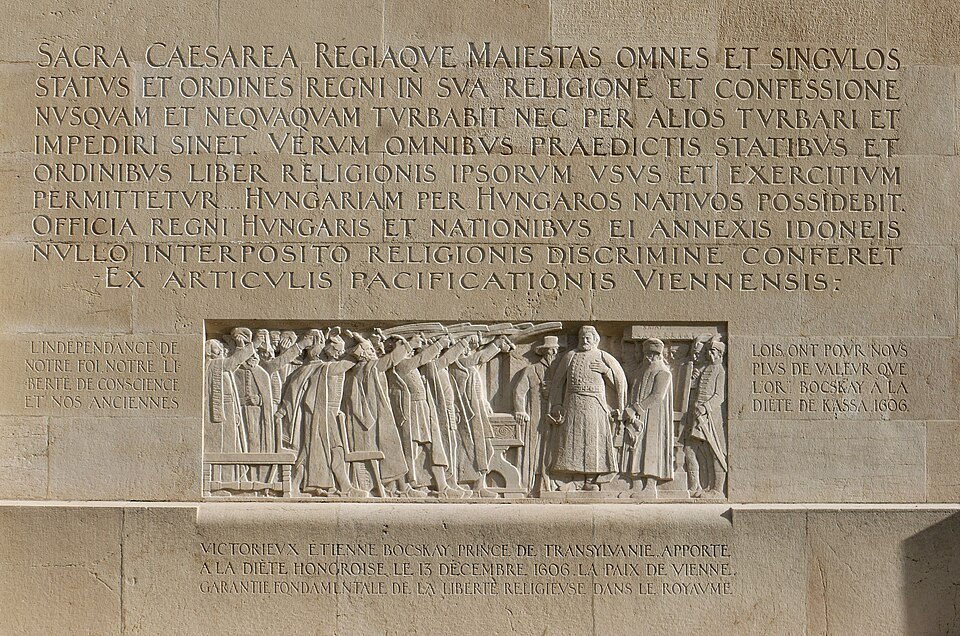
To the left of the group stand Admiral de Coligny for France, William the Silent for the Netherlands and Frederick William of Brandenburg, protector of the Huguenot refugees. To the right are Roger Williams for New England, Oliver Cromwell for England and István Bocskai for Hungary. Bas-reliefs between them show key moments of the Reformation in their countries.
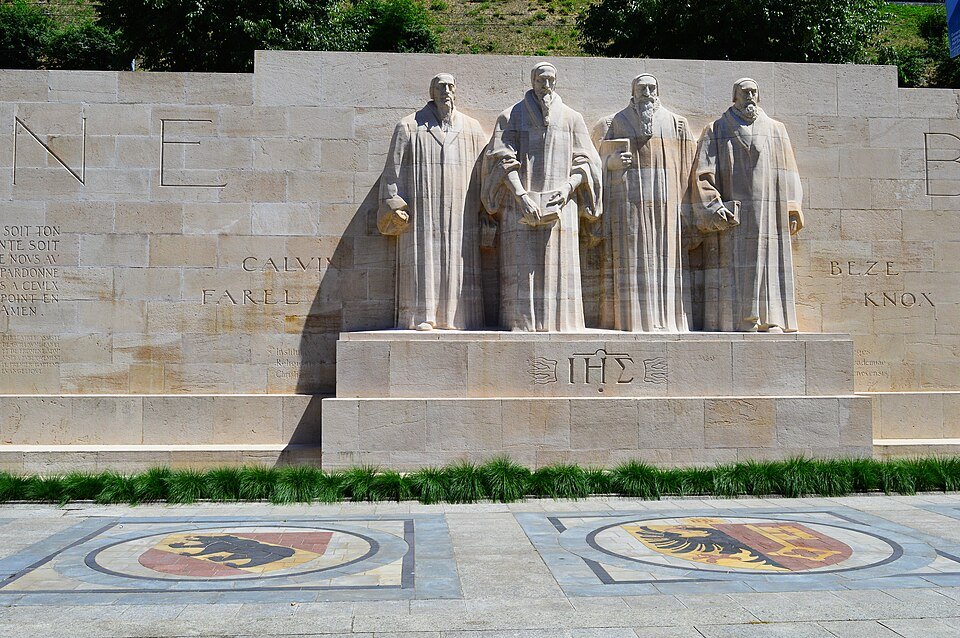
Along the wall runs the city's motto, Post Tenebras Lux: after darkness, light. At the far left is carved 1536, the year Geneva officially adopted the Reformation, and at the far right 1602, the year of the Escalade, when the city beat off the Duke of Savoy's attempt to take it back for Catholicism. Separate stones at the two ends of the esplanade honor Martin Luther and Ulrich Zwingli.
How it was made
Where to put the monument was argued over at length, and in 1908 an international competition was launched for a design in the Bastions. It drew seventy-one entries, and the winning design came from a team of four Swiss architects, among them Alphonse Laverrière and Jean Taillens. The statues were carved by two French sculptors, Paul Landowski and Henri Bouchard.
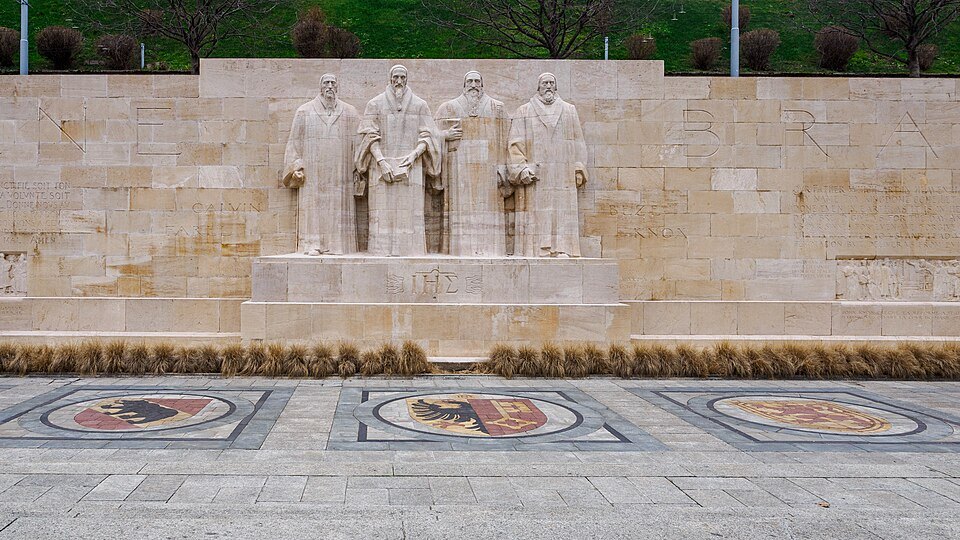
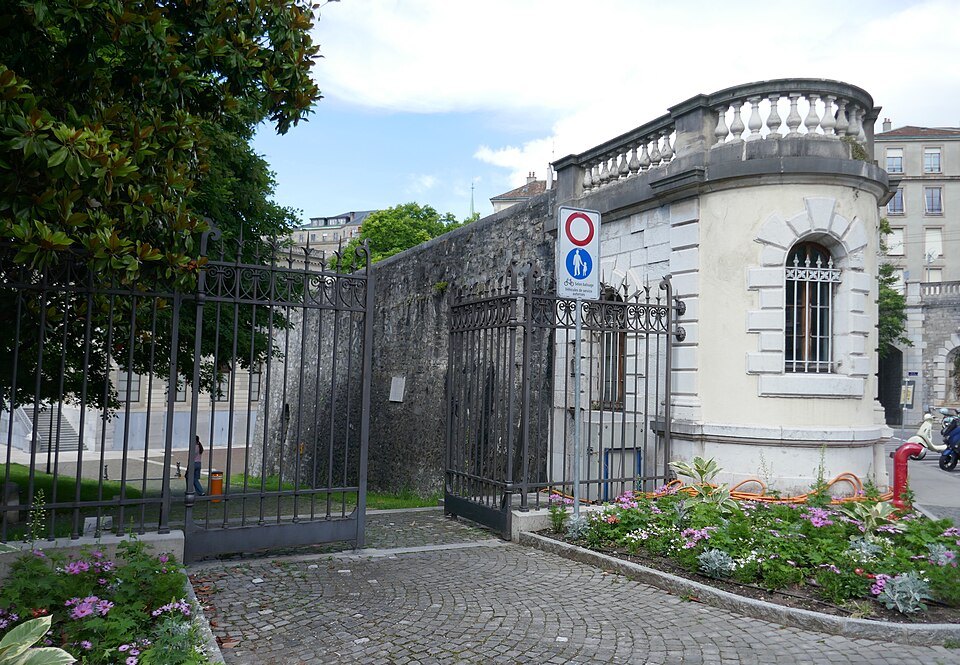
The wall is built of stone quarried at Pouillenay, in Burgundy, and set against a surviving stretch of the sixteenth-century fortifications that encircled Geneva until the middle of the nineteenth century. The long pool in front of it recalls the moat that once ran along those walls.
The monument has not always been treated gently. In the 1960s it was daubed with red paint at least nine times, the heads of the reformers being the favorite target, and during the restoration of 1985 to 1987 the heads of Calvin and Beza were replaced.
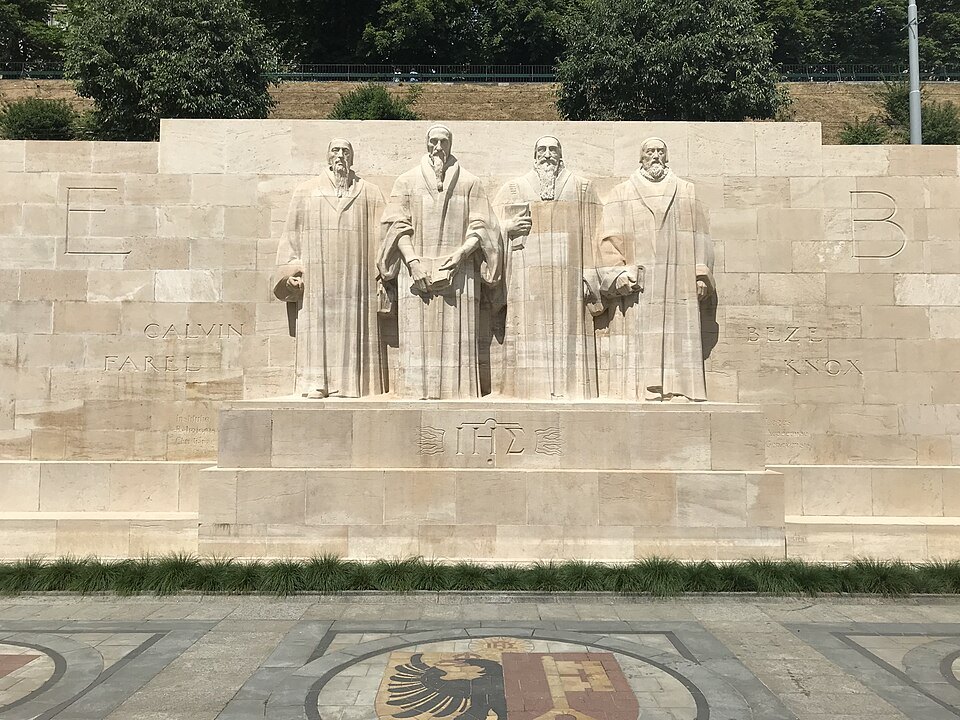
It has also been added to. On Reformation Day in 2002, the names of three earlier reformers, Peter Waldo, John Wycliffe and Jan Hus, were carved into the stone, together with that of Marie Dentière, a theologian and historian of the Reformation and the first woman to appear on the wall.
The park around it
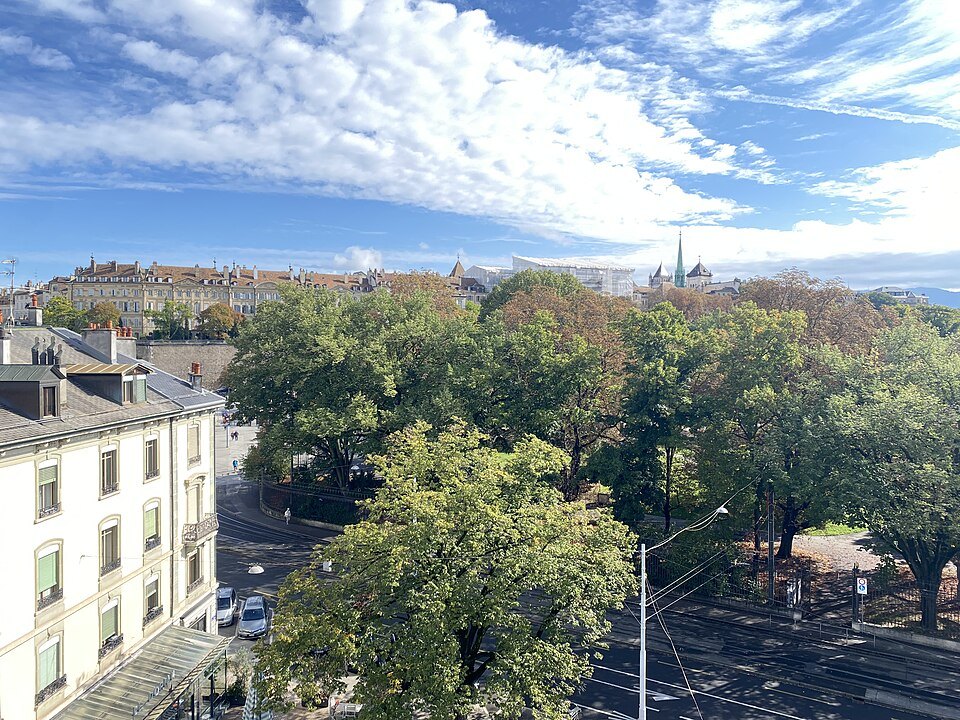
The Parc des Bastions lies between the city's sixteenth-century and seventeenth-century fortifications. It was laid out from 1720 as a promenade inside the ramparts at a time when Geneva had closed its gates against the plague then raging in Marseille. During the years of French rule it served as stabling for the garrison, and during the famine of 1816 and 1817 it was planted with potatoes.
In 1817 the botanist Augustin Pyramus de Candolle created Geneva's first large botanical garden in the middle of the park, with an orangery and greenhouses designed by General Dufour. The garden moved across the Rhône in 1904, where it still is.
Between 1868 and 1872 the city built three buildings in the park for the university; they house the Faculty of Humanities and the Bibliothèque de Genève. The Palais Eynard, built in 1817 on the edge of the park for a Swiss banker, is now the seat of the city's executive council.
Today the park is where the city plays chess on giant boards, where the bandstand of 1882 stands under the trees, and where the Escalade race starts and finishes each December.
How to visit
The park is public and the wall is outdoors, so there is nothing to book. Give it half an hour, longer if you want to read the bas-reliefs and the inscriptions. The main gates open onto the Place de Neuve, beside the Grand Théâtre, and a path climbs from the park to the Treille and the old town.
The light on the wall is best when the sun is on it and the pool is still. In winter, when the trees are bare, the whole length of the monument can be seen at once from across the park.
It combines well with the old town above, reached up the Treille ramp, and with the Place de Neuve and the Musée Rath at the park gates.
Nearby
- A few steps awayPlace de Neuve and the Grand ThéâtreThe square laid out where Geneva's western gate was pulled down in 1853, ringed by the opera house, the music conservatory and the old museum of fine arts, with General Dufour on horseback in the middle.Read the page
- A few steps awayThe Hôtel de Ville, the Old Arsenal and the TreilleFive centuries of Geneva's government in one street: the town hall with its stepless ramp tower, the old arsenal across the way, the city's oldest house, and a terrace with one very long bench.Read the page
- A few steps awaySaint-Pierre CathedralGeneva's cathedral, begun around 1160, stripped bare by the Reformation in 1535, given a classical front in the 1750s, and standing on the ruins of every church that came before it.Read the page