Home · Sights · Place de Neuve and the Grand Théâtre
Place de Neuve and the Grand Théâtre
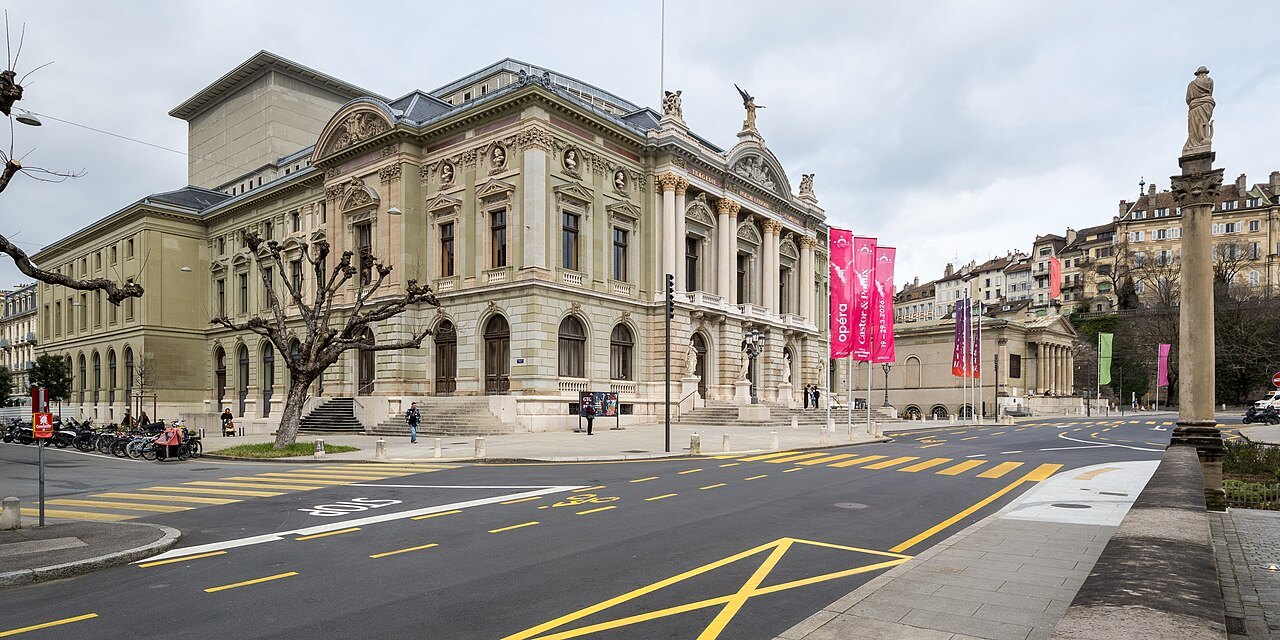
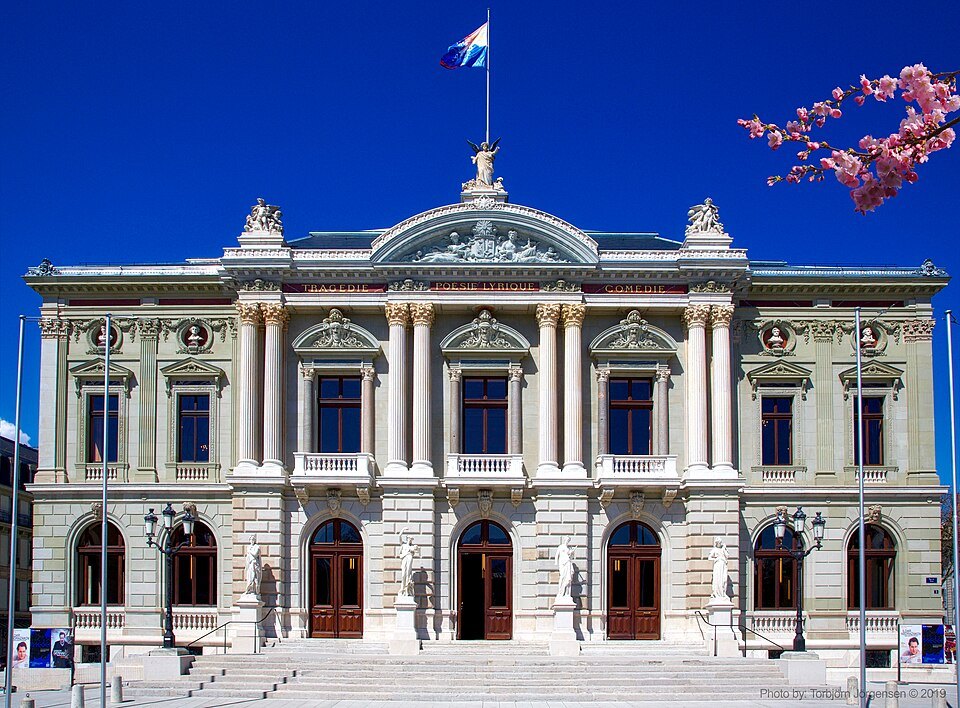
- IThe Grand ThéâtreGeneva's opera house, opened in 1879 and rebuilt inside its walls after the fire of 1951
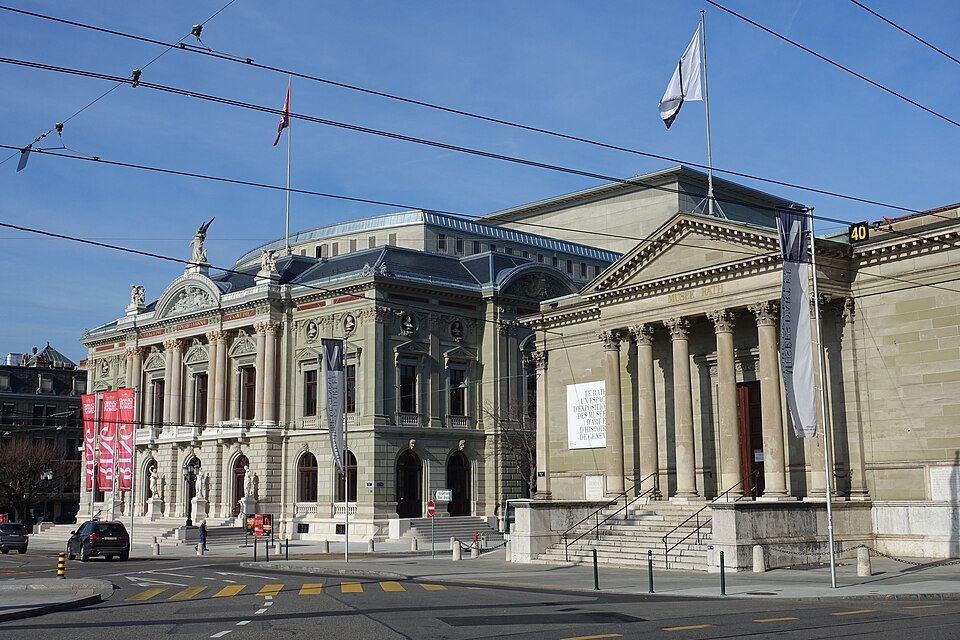
- IIThe Musée RathA neoclassical temple of art of 1824–1826 that held the city's collections until 1910
- IIIThe ConservatoireThe music conservatory's palace of 1856–1858, home of the oldest music school in Switzerland
- IVGeneral DufourAn equestrian statue of 1884 of the general who made the first detailed maps of Switzerland
- VThe Bastions gatesThe iron gates of the Parc des Bastions, leading to the Reformation Wall
From darkness to light
Why it matters
Place de Neuve is where the walled city ended and the nineteenth-century city began. A gate stood here from 1564, it was rebuilt in grander form in 1740, and when it was demolished in 1853, as Geneva tore down its fortifications, the open space left behind became a square that people simply called the Place Neuve, the new square.
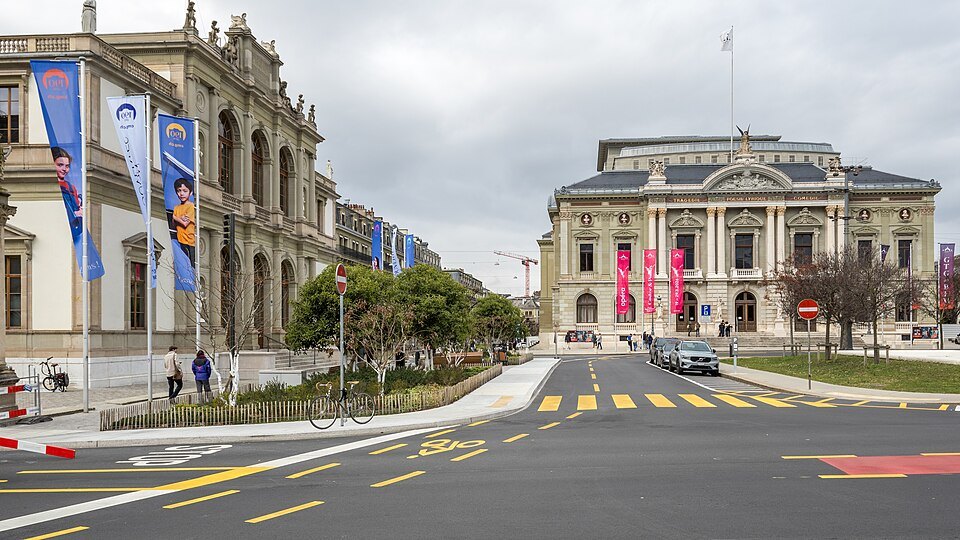
The city then made it the stage for its cultural life. Within a few decades the square was framed by a museum of fine arts, a music conservatory and an opera house, three institutions that still face each other across it today.
It is also a crossroads. Trams and buses meet here, the gates of the Parc des Bastions and the Reformation Wall open off it, the Treille ramp climbs to the old town above, and the Rue de la Corraterie leads down toward the Rhône.
The gate that gave the square its name
The Porte Neuve was built in 1564 to strengthen the city's defenses, replacing three older gates. It has its own place in the story of the Escalade: on the night of the Savoyard attack in 1602, a petard man named Picot came to grief here trying to blow it open.
In 1740 the gate was moved toward the Rhône and rebuilt as a monumental structure with a drawbridge. For a time the building housed the offices of General Guillaume-Henri Dufour, the engineer and soldier who made the first detailed topographic maps of Switzerland. It was demolished for good in 1853.
Genevans called the new open space the Place Neuve, and the administration kept that name until 1988, when the square officially became the Place de Neuve, from its old name of Place de la Porte Neuve. In everyday speech, it is still the Place Neuve.
What you actually see
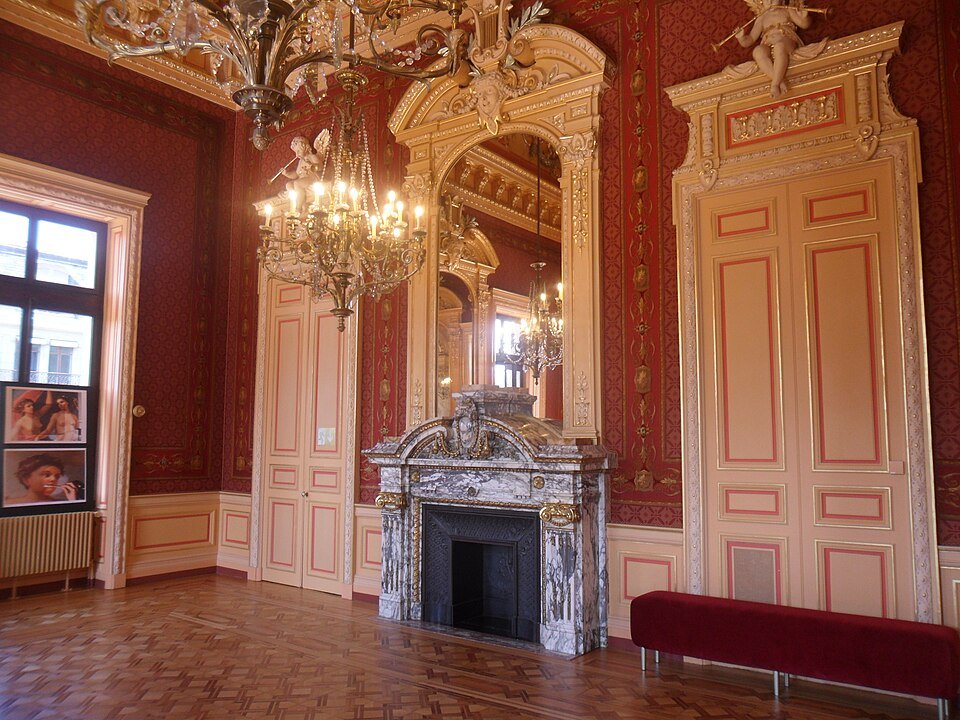
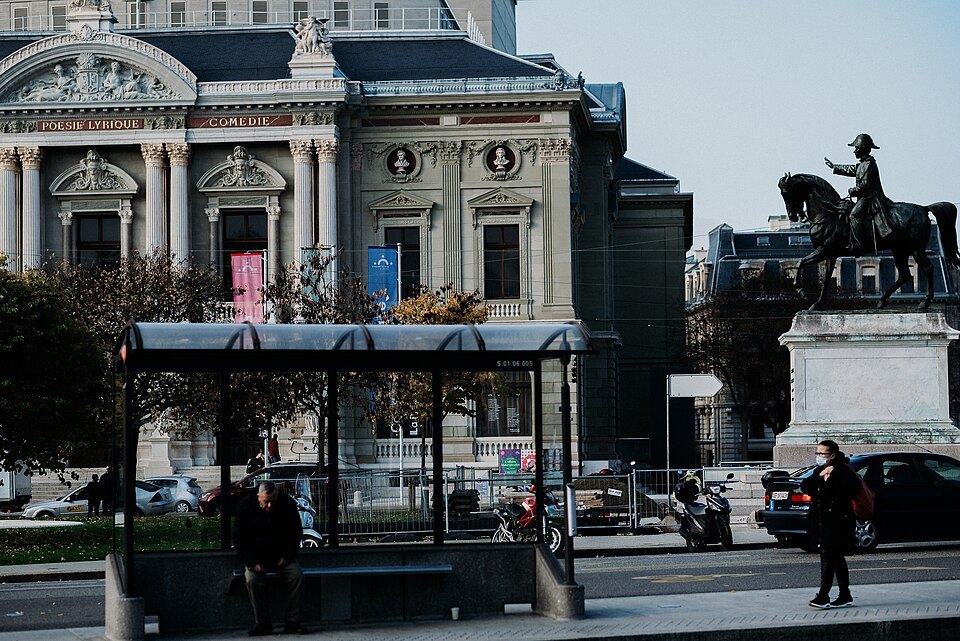
The largest building is the Grand Théâtre, Geneva's opera house. The idea of a large theater dates from 1862, but it became possible only in 1873, thanks to the fortune the Duke of Brunswick left to the city and a plot of land given by the canton. The architect Jacques-Élysée Goss designed a building inspired by the Paris Opéra, and it opened on 2 October 1879 with Rossini's William Tell.
The facade is in the Second Empire style, with statues on the central projection and the arms of Geneva in the pediment. On 1 May 1951, while a pyrotechnic effect was being prepared for the last act of Wagner's The Valkyrie, a fire destroyed the auditorium and the stage. The facades, the foyers and the library survived; the auditorium was rebuilt with a new design and reopened in December 1962.
Opposite stands the Musée Rath, a neoclassical building with a portico of columns. It was built between 1824 and 1826 by the architect Samuel Vaucher, paid for largely by the sisters of General Simon Rath, a Genevan who had served in the Russian army and left money for a museum of fine arts. It held the city's art collections until the Musée d'Art et d'Histoire opened in 1910, and it now shows temporary exhibitions.
The third side belongs to the Conservatoire de musique, founded in 1835 by the financier François Bartholoni as the oldest institution of music teaching in Switzerland; Franz Liszt taught there in its first year. Its building on the square was put up between 1856 and 1858 to plans by the French architect Jean-Baptiste Lesueur.
In the middle, on horseback, is General Dufour, in a statue put up in 1884 on the site of the old gate he once worked in.
Opera in a Calvinist city
An opera house on this scale was a late arrival. Under the strict orthodoxy of Calvinist Geneva, theater and opera were long restricted, and it was only in the 1760s that the city's leaders agreed to a building for them, partly under the influence of Voltaire.
A first theater burned in 1768. In 1783 the Théâtre de Neuve opened at the bottom of what is now the Rue de la Croix-Rouge, close to the gate, but it was cramped and poorly equipped, and it was demolished in 1880, the year after the Grand Théâtre opened a few steps away.
The opera house today
The Grand Théâtre is the largest producing theater in French-speaking Switzerland and presents opera, ballet and concerts each season. Between 2016 and 2019, while the building underwent its first major works since 1962, its productions moved to a temporary wooden theater near the Palace of Nations, and the foyers were restored in the same period.
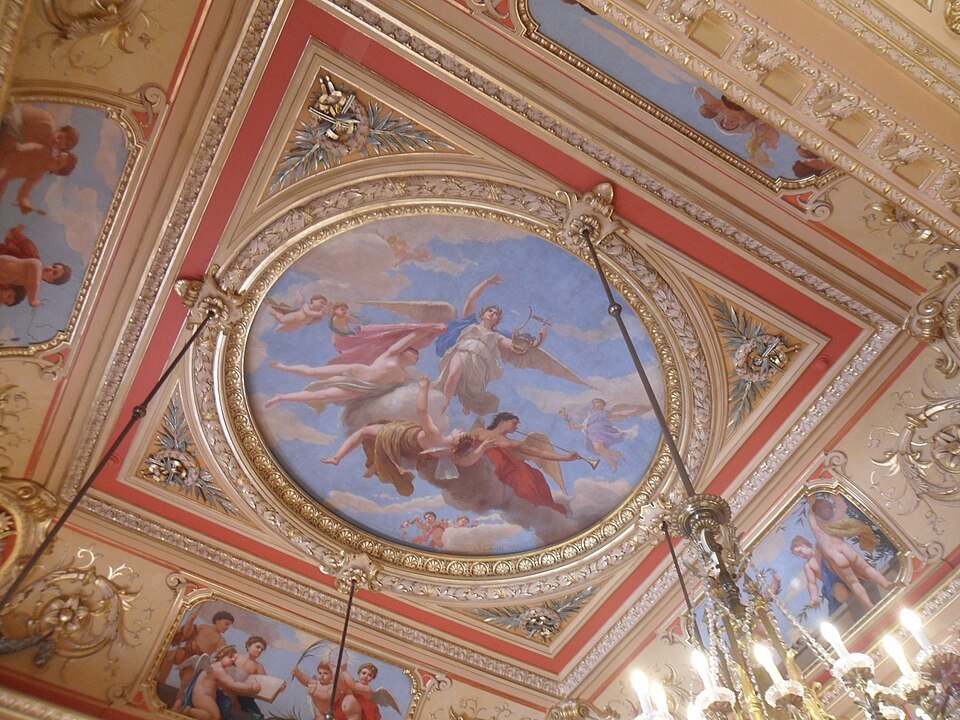
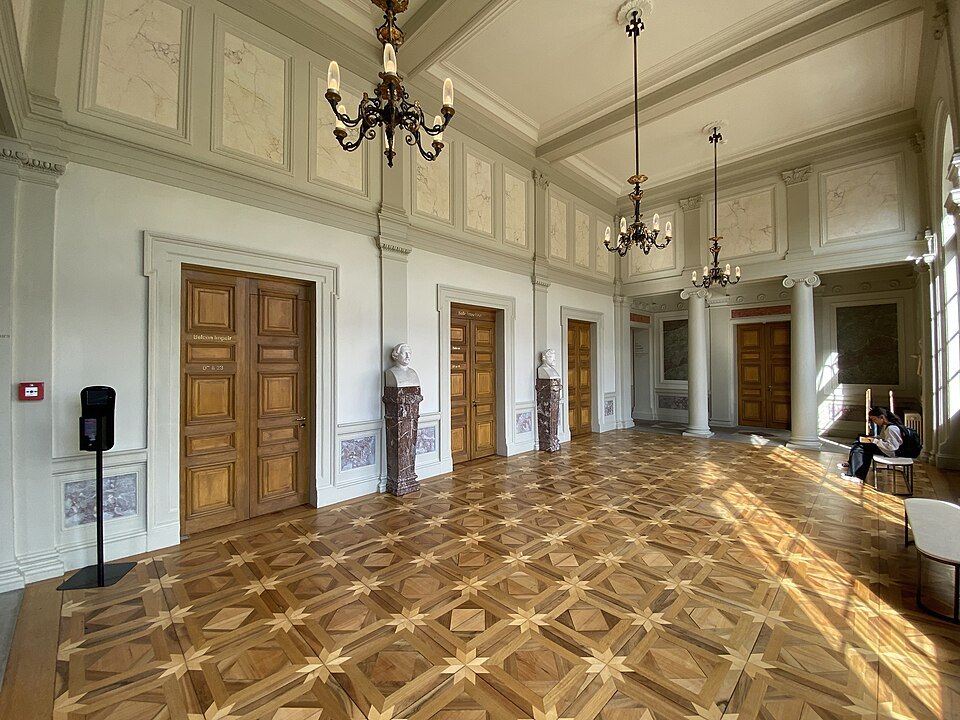
The grand foyer, the small foyer and the gilded room known as the Carré d'or, all spared by the fire, are among the protected buildings of Geneva, decorated in a lavish historicist taste.
How to visit
The square itself takes ten minutes; what takes time is what surrounds it. The Musée Rath has its own exhibitions, and the Grand Théâtre is best seen from inside at a performance, which is one of the few things in Geneva that really does need booking ahead.
It is the natural starting point for a walk through the Parc des Bastions to the Reformation Wall, and from there up the Treille ramp to the Hôtel de Ville and the cathedral.
Several tram lines stop at the square, which makes it an easy meeting point and an easy place to finish a day in the old town.
Honest notes
Geneva's first tramway started from this square in 1862, and it has been a transport junction ever since; the square is a place to pass through and look around, and the calm is in the park next door.
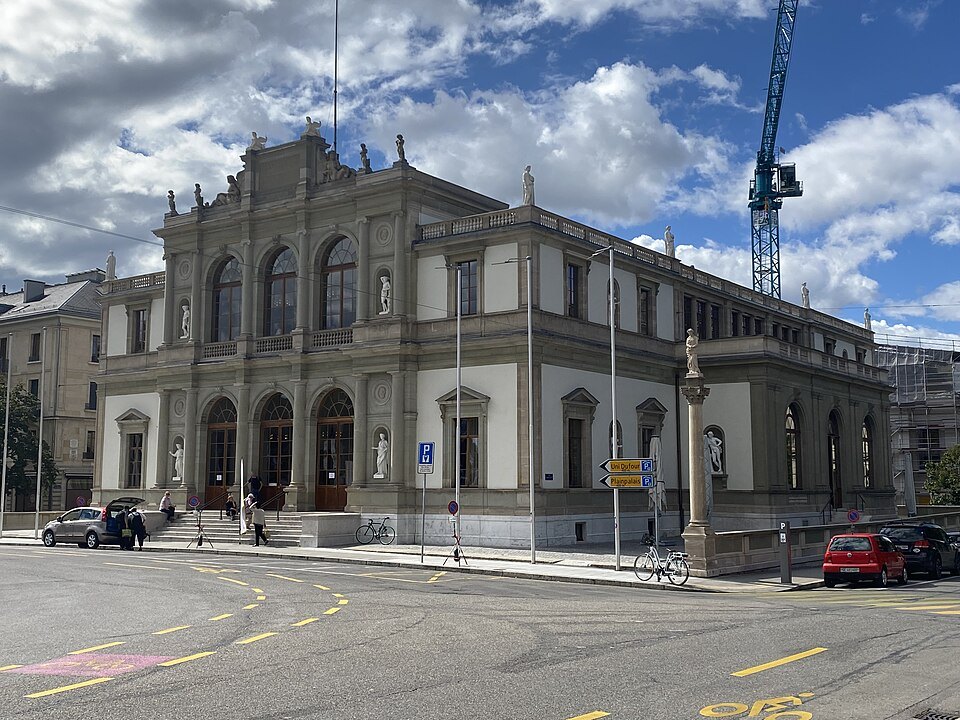
The opera house you see from the square is original on the outside only. The auditorium is the post-1951 reconstruction, not the hall of 1879.
Nearby
- A few steps awayThe Reformation Wall and the Parc des BastionsA hundred meters of carved stone set against the old city walls, with Farel, Calvin, Beza and Knox standing five meters tall, in the park where Geneva's university grew up.Read the page
- A few steps awayThe Hôtel de Ville, the Old Arsenal and the TreilleFive centuries of Geneva's government in one street: the town hall with its stepless ramp tower, the old arsenal across the way, the city's oldest house, and a terrace with one very long bench.Read the page
- A few steps awayThe Musée d'Art et d'HistoireGeneva's encyclopedic museum of 1910, where the Konrad Witz altarpiece shows Lake Geneva in 1444, the armor of the Escalade hangs in its own hall, and the collections run from Egypt to Hodler.Read the page