Home · Sights · The Russian Church
The Russian Church
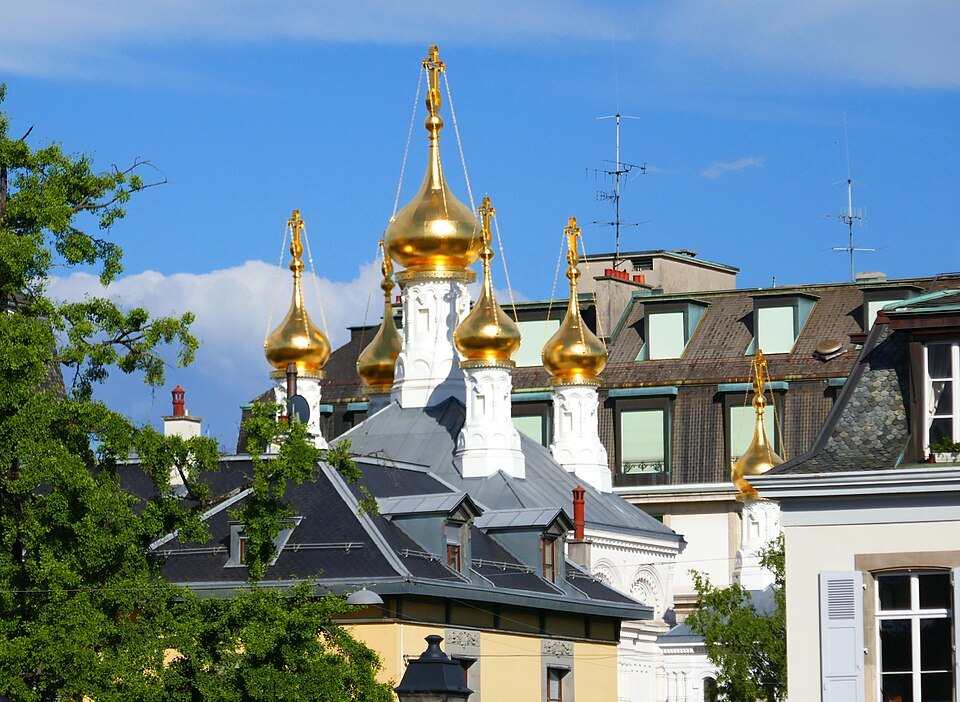
- IThe nine domesFive gilded domes over the nave, three over the apses and one on the bell tower
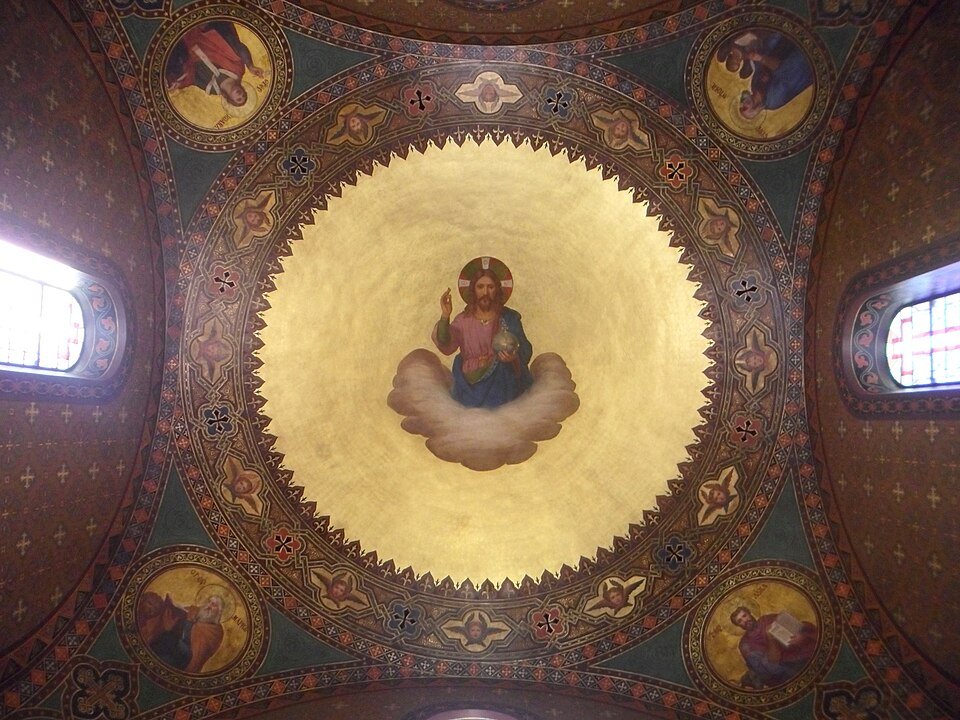
- IIThe Christ in the domeGiacomo Donati's Christ Pantocrator on a gold ground, ringed by painted seraphim
- IIIThe marble iconostasisA screen of Carrara marble with five arches, the central Royal Door painted with the Evangelists
- IVThe iconsIcons from the sixteenth to the twentieth centuries, two of them sent from Mount Athos
- VThe Art Nouveau windowThe risen Christ above the iconostasis, made in 1927 by Genevan artists
- VIThe bell towerAdded in 1916 over the porch, with seven bells, one of them a gift of Serbia
From darkness to light
Why it matters
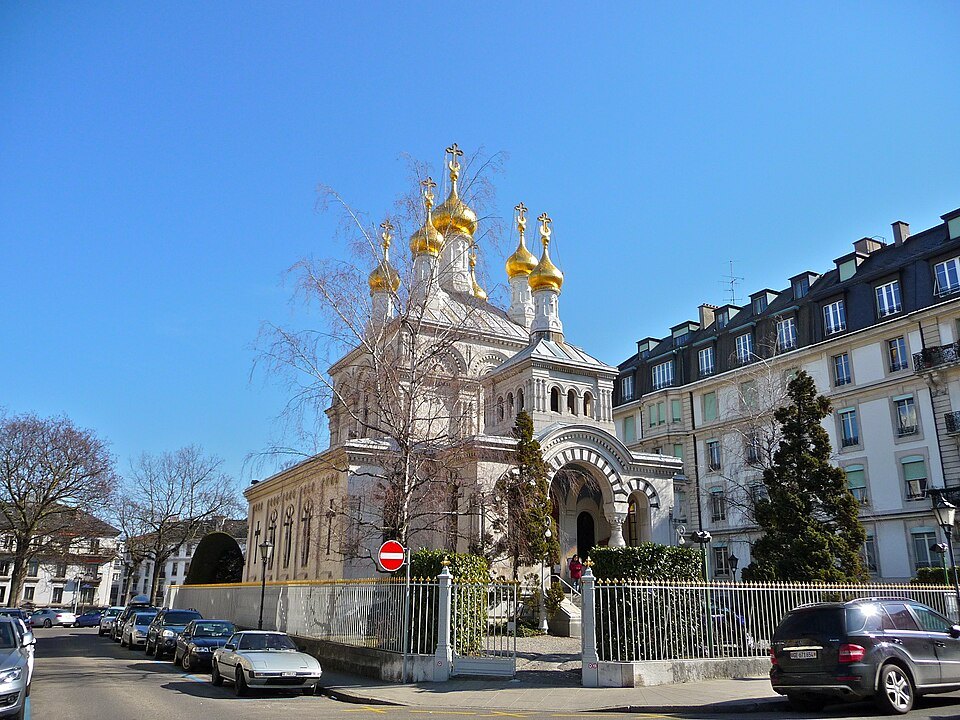
Walk up from the old town to the plateau of the Tranchées and the skyline suddenly changes: nine gilded onion domes rise above the apartment buildings. The Cathedral of the Exaltation of the Holy Cross, known to everyone in Geneva as the Russian Church, is the most unexpected building in a city better known for the bare interiors of its Protestant churches.
It also marks a turning point in the city's history. After the revolution of 1846, Geneva's constitution of 1847 guaranteed freedom of worship and equal state protection for all faiths, and the canton offered religious communities plots of land on the site of the old fortifications, then being demolished, to build their places of worship. The Russian Church was one of the results.
It was the first building put up in this part of the Tranchées, and the streets of the district were laid out around its orientation. While it was being built, the remains of an early Christian cemetery and of the priory of Saint-Victor came to light. It was listed as a cultural property of national importance in 1979.
How it was built
A small Russian community had lived in Geneva since the early nineteenth century: diplomats, officers, aristocrats, engineers, students, visitors and exiled activists. From 1854 its Orthodox parish met in a villa in the Eaux-Vives, and it needed a proper church.
The archpriest Athanase Petroff raised the money in Russia, with the approval of the Holy Synod in 1863 and the support of members of the family of Emperor Alexander II. The design was directed by David Grimm, professor of architecture at the Imperial Academy of Arts in Saint Petersburg, and the building work was entrusted to the Genevan architect Jean-Pierre Guillebaud.
The first stone was laid on 26 September 1863, and the church was finished in September 1866 and consecrated the same month. A bell tower planned for the north side was dropped because of the cost.
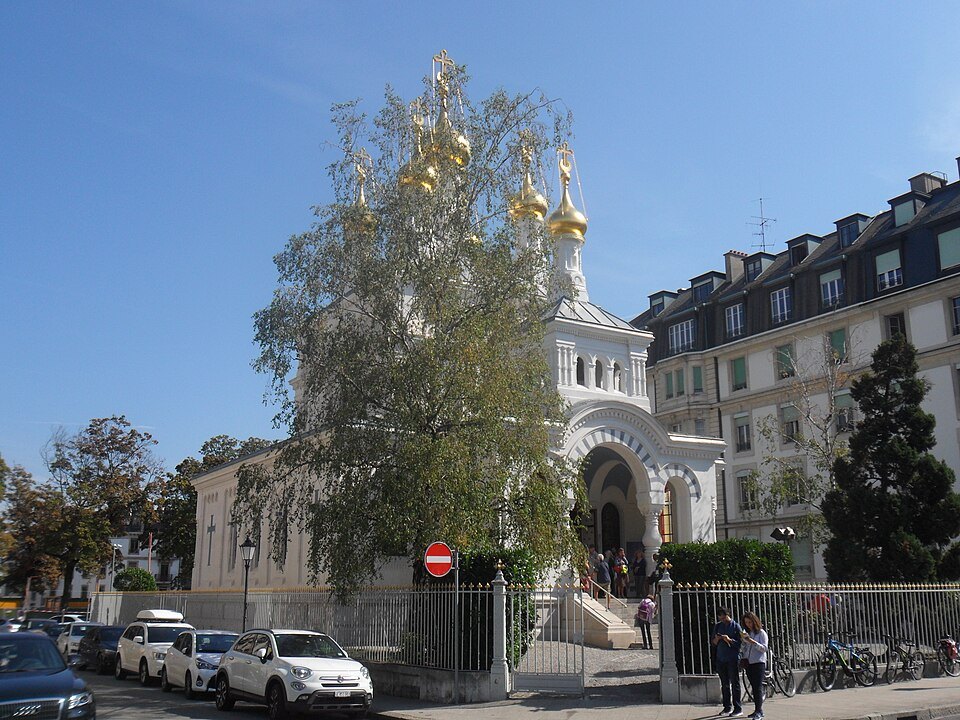
For the church's fiftieth anniversary in 1916 the west wall was moved to enlarge the nave and a bell tower was finally added over the central porch; its bells rang for the first time that September. After the Russian Revolution of 1917, White Russian émigrés and Swiss families who had lived in Russia swelled the parish.
What you actually see
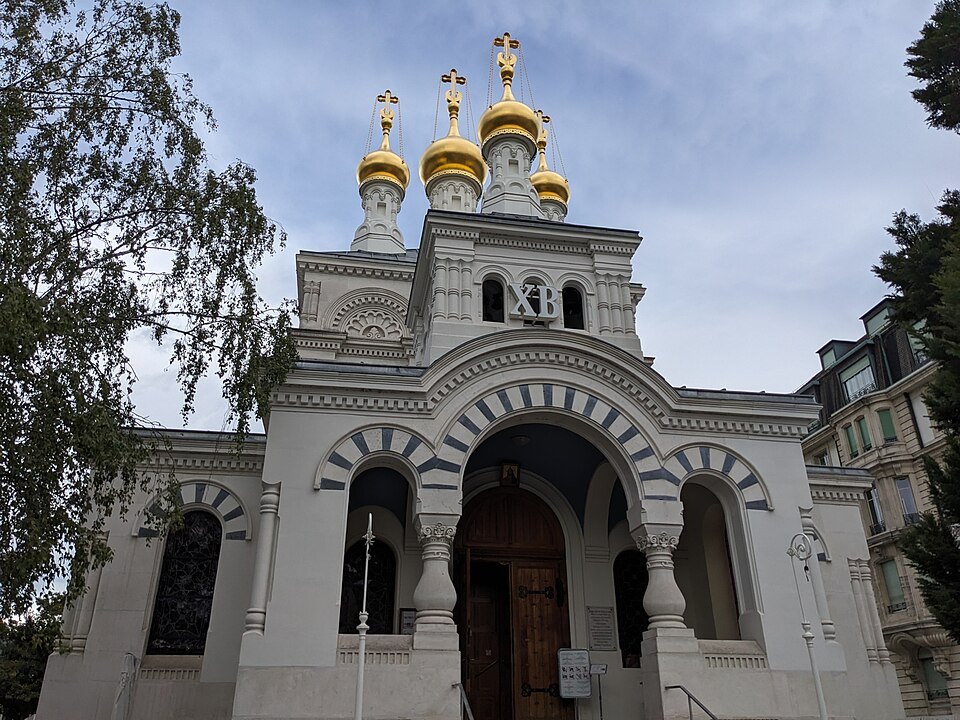
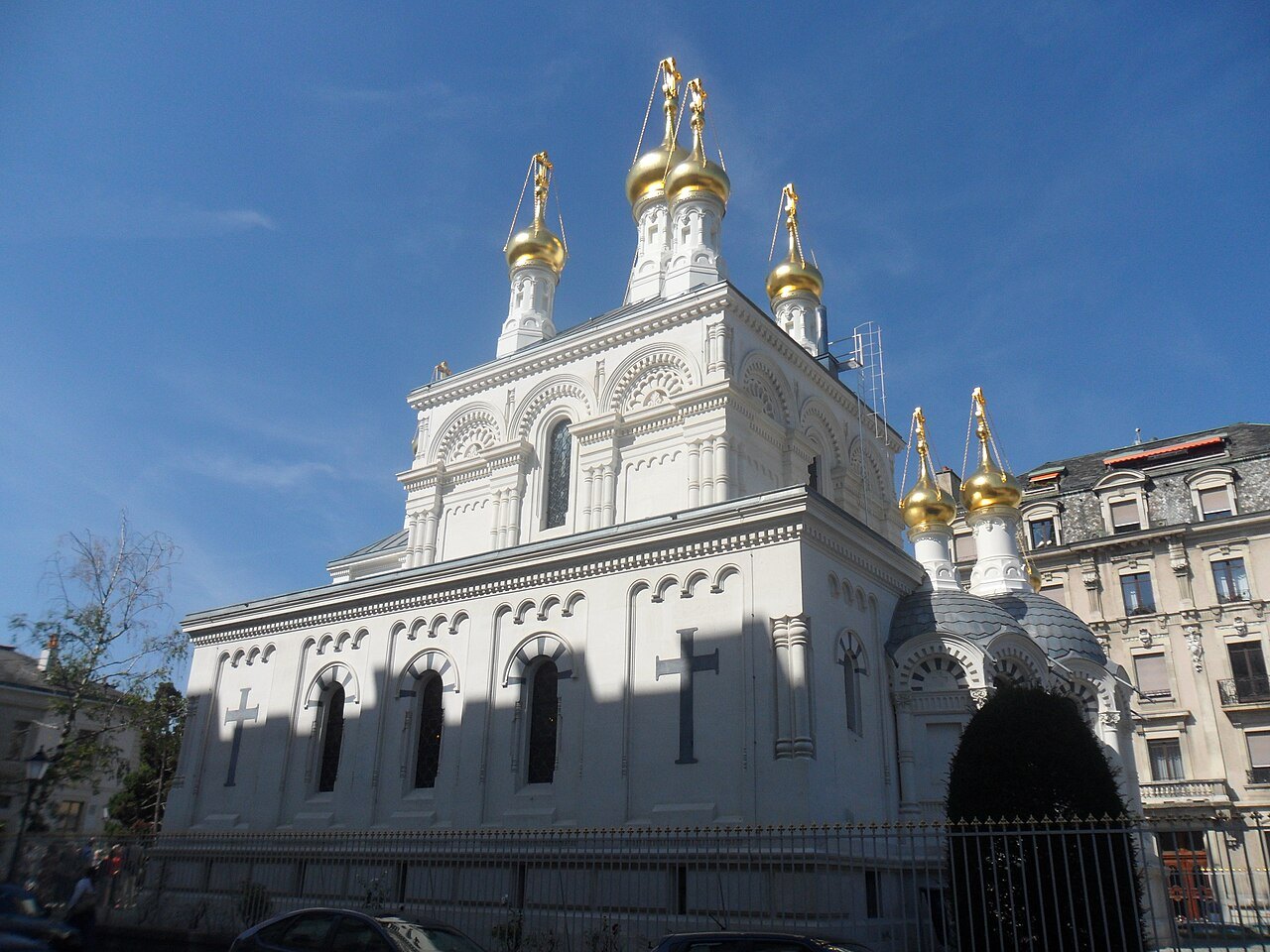
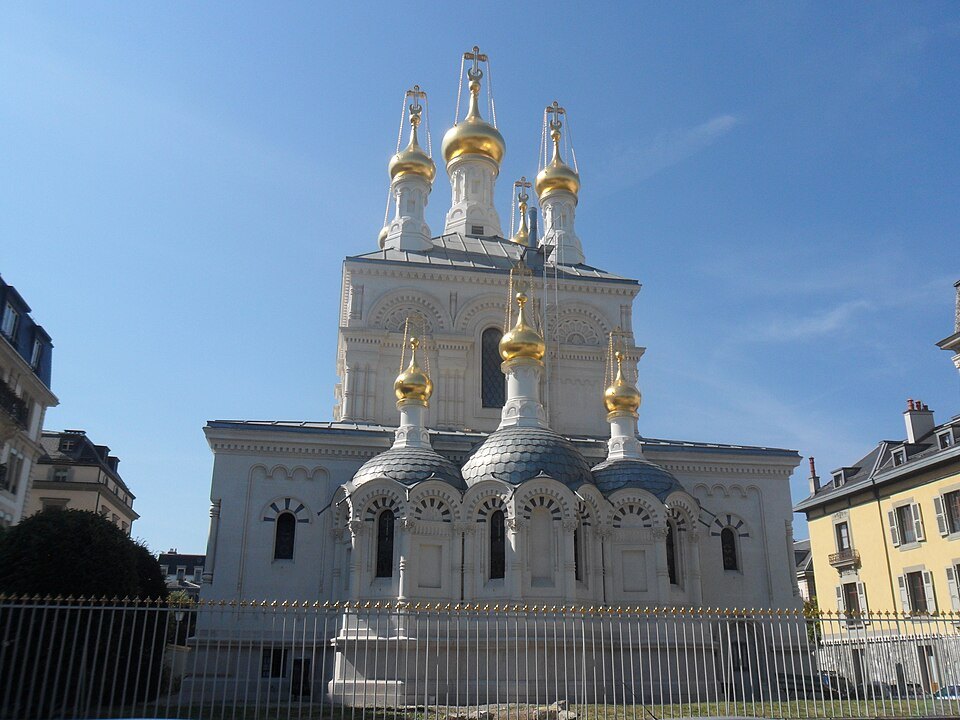
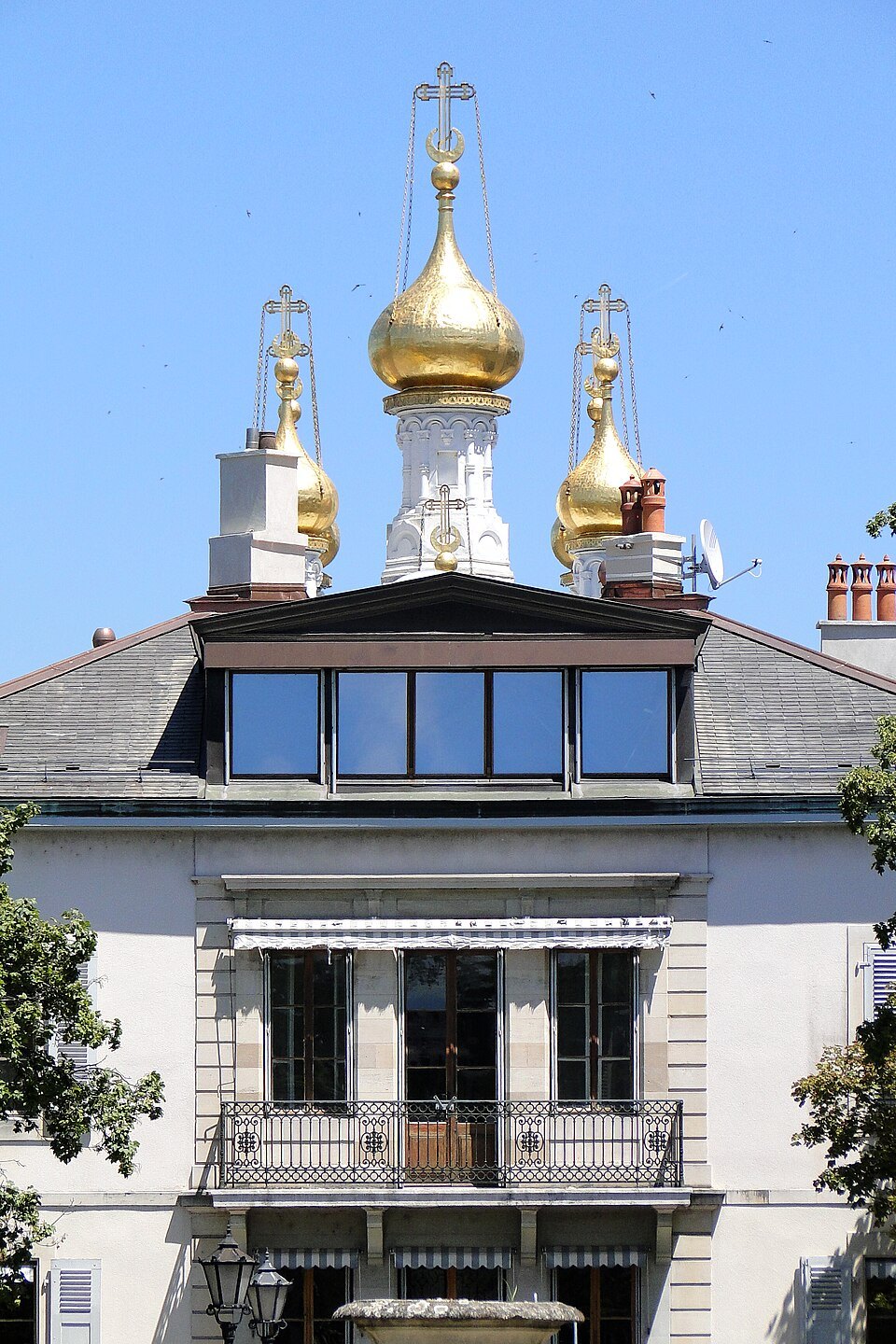
The church is built on the plan of a Greek cross in the Russian Revival style, in limestone from the quarries of Seyssel trimmed with dark gray marble. Tall marble crosses stand out on the north and south walls. Its nine golden domes are symbolic: five over the nave for Christ and the four Evangelists, three over the apses and one on the tower, together recalling the nine choirs of angels.
Inside, the color is the surprise. The central dome carries Giacomo Donati's fresco of Christ Pantocrator on a gold ground, in a red tunic and blue cloak, surrounded by a frieze of twelve medallions of seraphim. The Evangelists appear on gold in the corners beneath the dome, framed by arabesques, gold stars and bands of red and blue.
Across the east end runs the iconostasis, in Carrara marble, with five arches. The central Royal Door, used only by the clergy, has cypress-wood leaves decorated with gilded medallions of the Evangelists and the Annunciation, and is framed by icons of the Virgin and Christ. Above it, a stained-glass window of the risen Christ, in an Art Nouveau spirit, was made in 1927 by the Genevan artist Jules Monard and the glassmaker Jacques Wasem.
The church also holds icons dating from the sixteenth to the twentieth centuries, including a Virgin of Tikhvin of the late seventeenth century and two icons received from Mount Athos, set in marble frames at the ends of the platform in front of the iconostasis.
Restorations and visitors
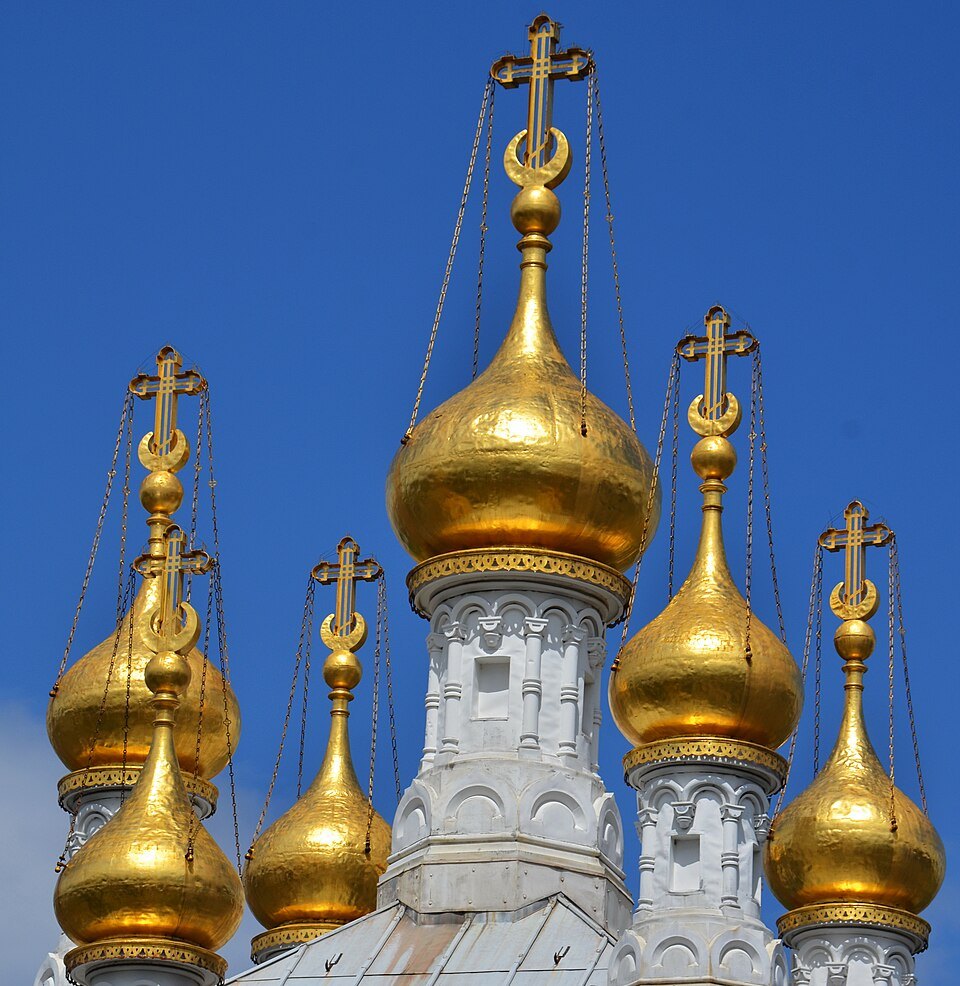
A restoration for the centenary in 1966 ran out of money and was completed only in 1989 with public funds. For the hundred and fiftieth anniversary the building was restored again: the lower parts of the domes and the central dome were replaced after damage from rising damp, and the interior paintings, darkened by a varnish applied in 1966, were cleaned and returned to their decoration of 1916. The anniversary was celebrated in September 2017, once the work was done.
The church has its place in Russian cultural history too. It saw the wedding of the painter Mikhail Vrubel and the singer Nadezhda Zabela-Vrubel, and the baptism and then the funeral of Sofia, the first daughter of Fyodor Dostoevsky and his wife Anna, who died as a baby in 1868.
How to visit
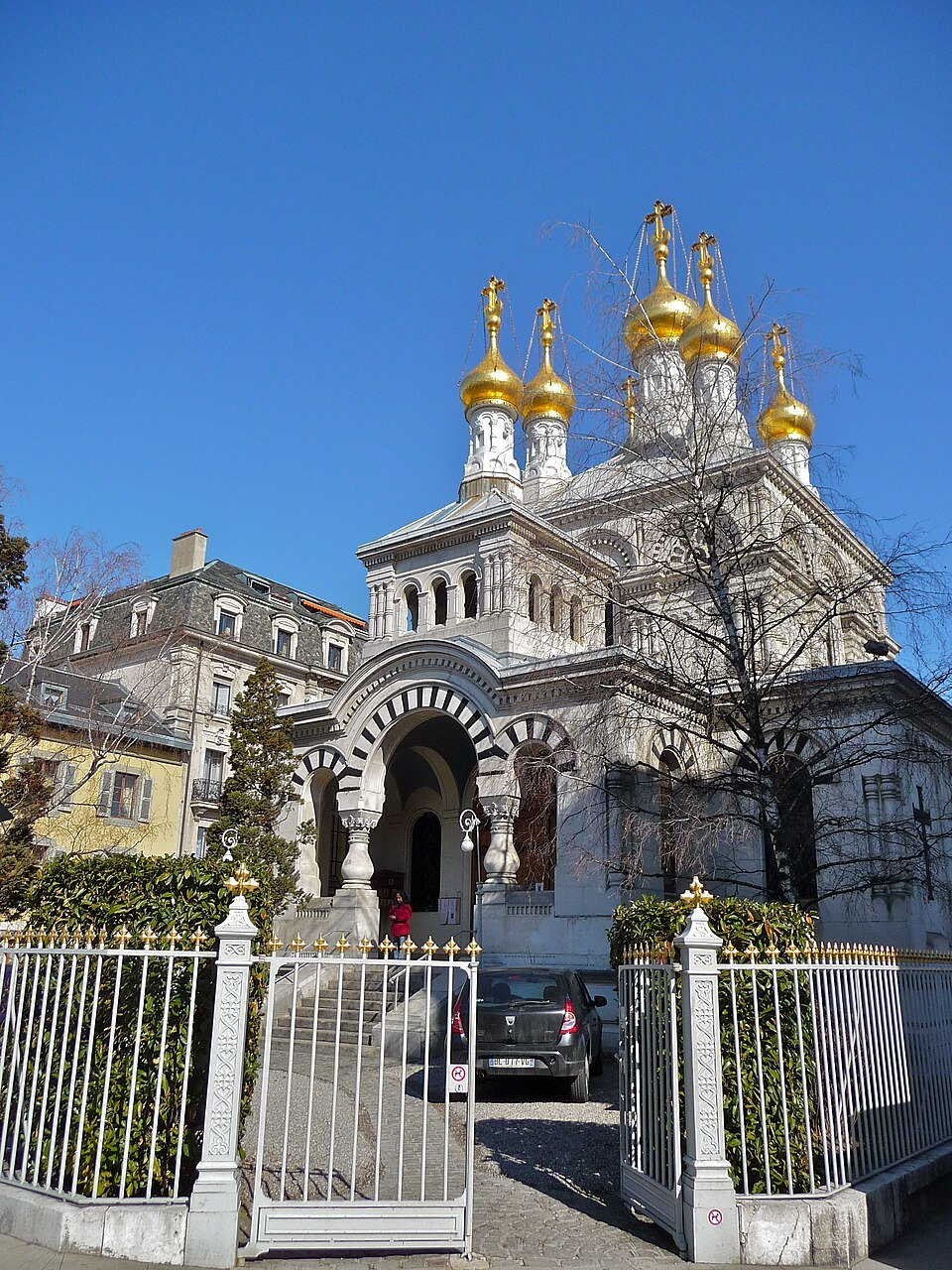
The church stands on a small rise at the corner of the Rue Rodolphe-Töpffer and the Rue François-Le-Fort, a few minutes' walk from the Musée d'Art et d'Histoire and from Place du Bourg-de-Four. Twenty minutes is enough to see the outside and, when the church can be visited, the interior.
It is a working parish church whose congregation today comes from many Orthodox backgrounds, so visits fit around services. Dress modestly and keep your voice down inside, and check with the parish before planning a visit around a particular time.
Behind the iconostasis, in the part of the church reserved for the clergy, the central apse carries Donati's Christ enthroned, the largest fresco in the church; twenty-two stained-glass windows complete the decoration of the nave.
Nearby
- A few steps awayThe Musée d'Art et d'HistoireGeneva's encyclopedic museum of 1910, where the Konrad Witz altarpiece shows Lake Geneva in 1444, the armor of the Escalade hangs in its own hall, and the collections run from Egypt to Hodler.Read the page
- A few steps awayPlace du Bourg-de-Four and the Grand-RueA sloping, hourglass-shaped square on the flank of the old town, a market since Roman times, where the lanes from the lake shore and the Arve met at the city gate.Read the page
- A few steps awaySaint-Pierre CathedralGeneva's cathedral, begun around 1160, stripped bare by the Reformation in 1535, given a classical front in the 1750s, and standing on the ruins of every church that came before it.Read the page