Home · Sights · The Quai du Mont-Blanc and the Brunswick Monument
The Quai du Mont-Blanc and the Brunswick Monument
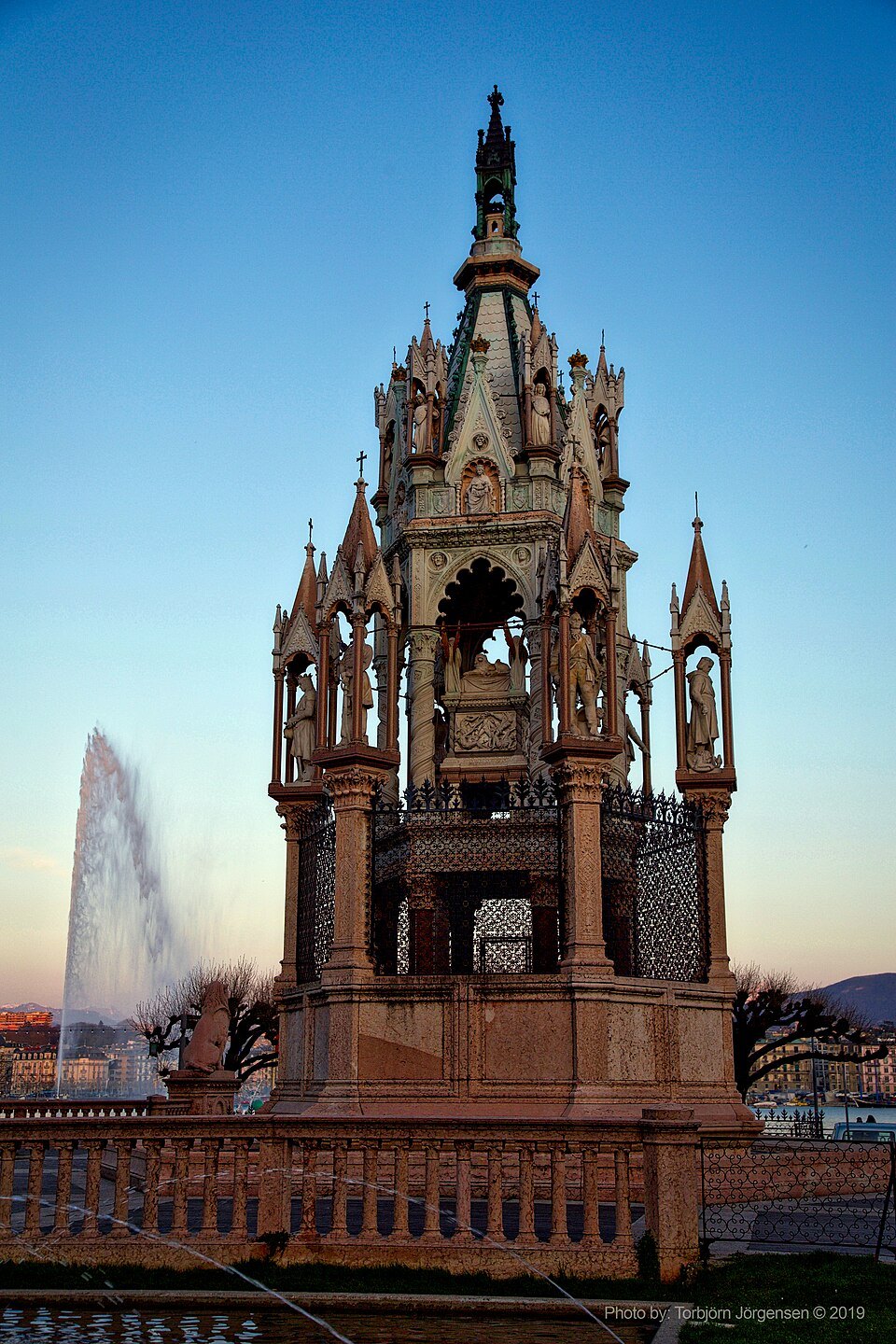
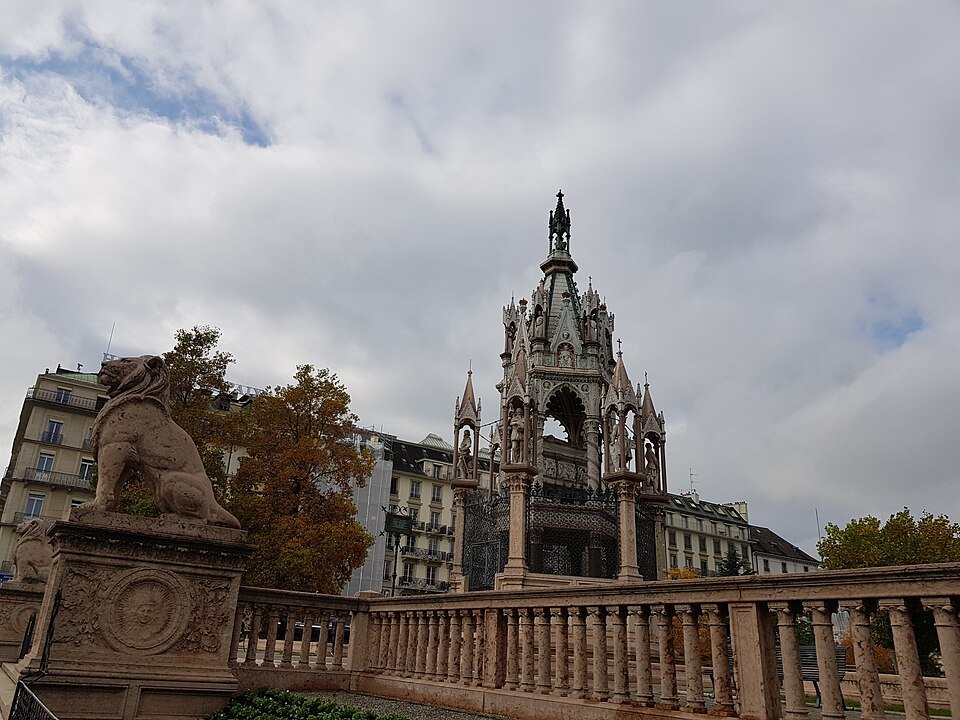
- IThe Brunswick MonumentA three-story Gothic mausoleum of 1879 for the duke who left his fortune to Geneva
- IIThe Pont du Mont-BlancThe first bridge over the Rhône as it leaves the lake, lined with flags on both sides
- IIIThe hotel frontsThe Beau-Rivage, the Richemond and their neighbors facing the harbor along the quay
- IVThe Mont Blanc viewOn clear days the snow dome of Mont Blanc stands above the far end of the lake
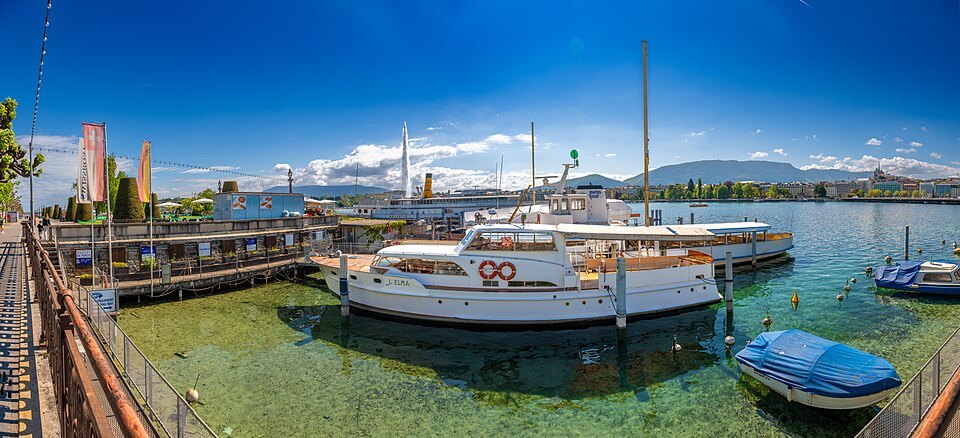
- VThe steamer landingThe Mont-Blanc landing stage, where the large lake boats call
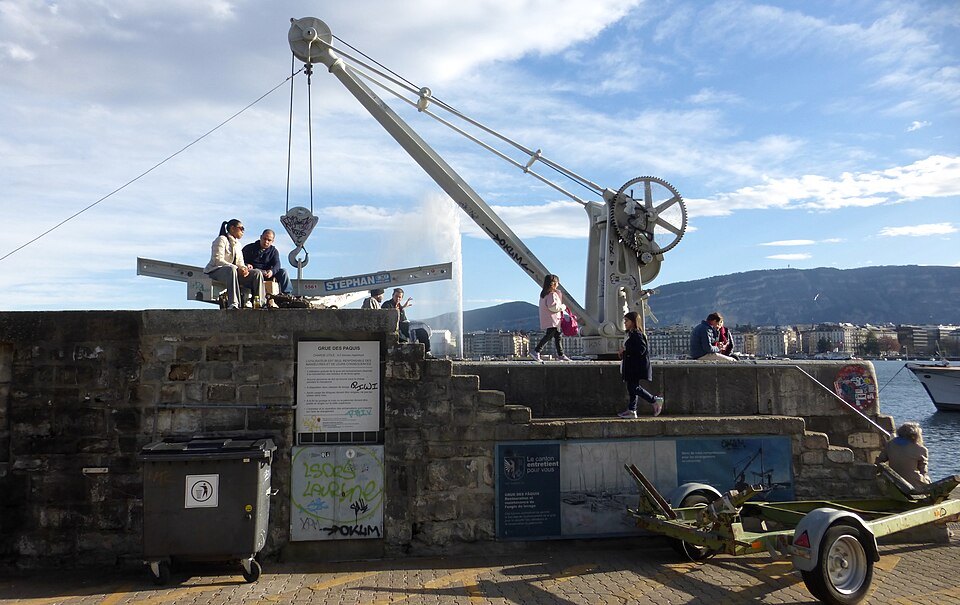
- VIThe Pâquis jettyThe breakwater at the end of the quay, leading to the baths and the lighthouse
From darkness to light
Why it matters
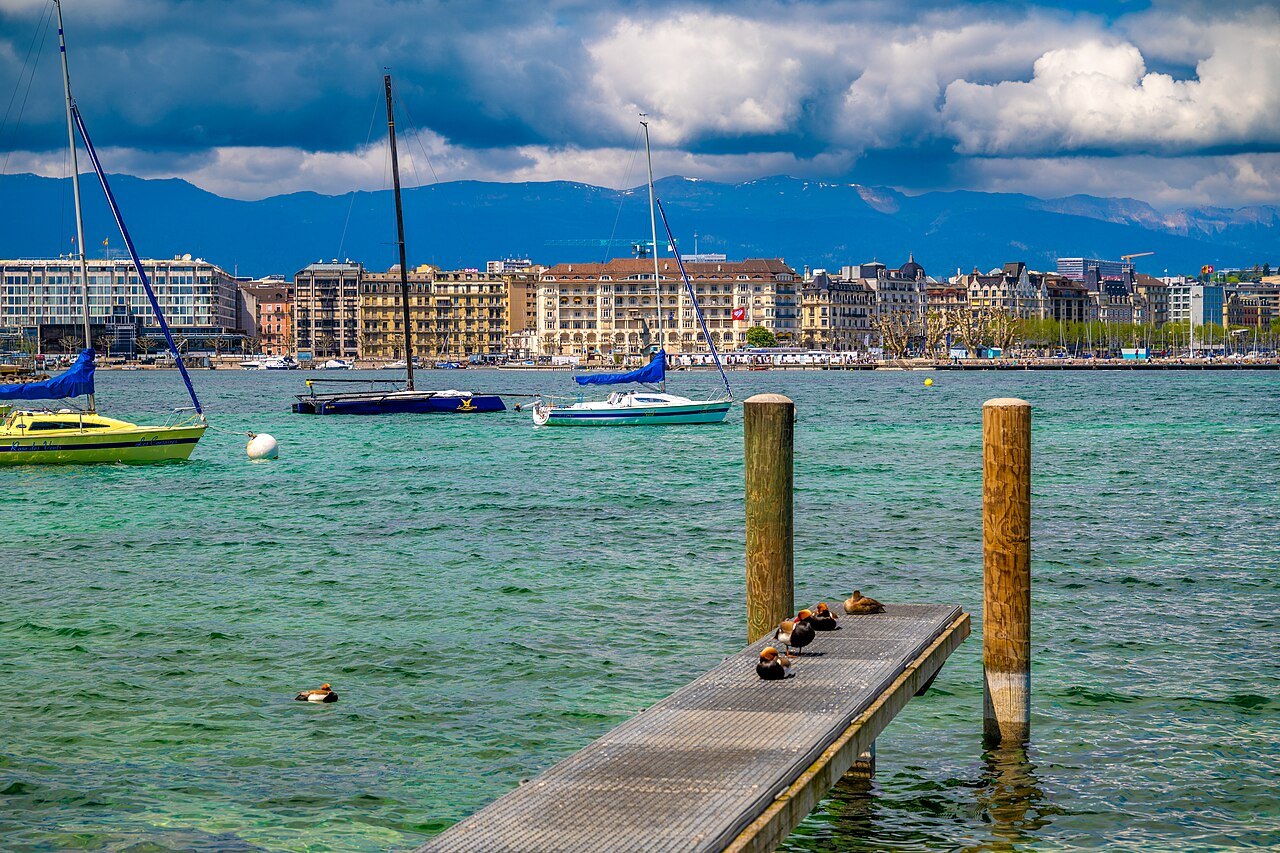
The Quai du Mont-Blanc is the promenade of nineteenth-century Geneva at its most confident. It runs along the right bank of the harbor from the Pont du Mont-Blanc, the first bridge over the Rhône as it leaves the lake, toward the Pâquis jetty, lined with the grand hotels that made the city a destination for travelers from all over Europe.
It also carries the most improbable monument in a city famous for restraint: a Gothic mausoleum built for a deposed German duke, paid for by a fortune that went on to build much of modern Geneva. A few steps away, in 1898, Empress Elisabeth of Austria was fatally stabbed as she walked along this quay to catch a boat.
And it has a view that gave the quay its name. From the quay and the bridge, on clear days, you can see the distant dome of Mont Blanc above the end of the lake.
The duke and his fortune
Charles II, Duke of Brunswick, was driven out of his duchy in 1830. After a long exile in Paris he settled in Geneva, where he died in 1873. In his will he left his entire fortune to the city on one condition: that he be given a fine funeral and a monument in his name, in a prominent and worthy position. The fortune was estimated at twenty-four million gold francs, and the will caused a sensation.
No mausoleum had ever been built in Geneva, and the request was debated at length before the city chose the Jardin des Alpes, a former natural harbor in the Pâquis, on the quay. The duke had specified that the monument should imitate the style of the fourteenth-century Gothic tombs of the Scaliger family in northern Italy, and it was designed by the architect Jean Franel and unveiled in 1879.
The money did far more than build a tomb. It allowed the city to pay off public debt, widen streets, pave roads, build slaughterhouses, a watchmaking school and a primary school, create public promenades, support the municipal orchestra and build the Grand Théâtre on the Place de Neuve.
What you actually see
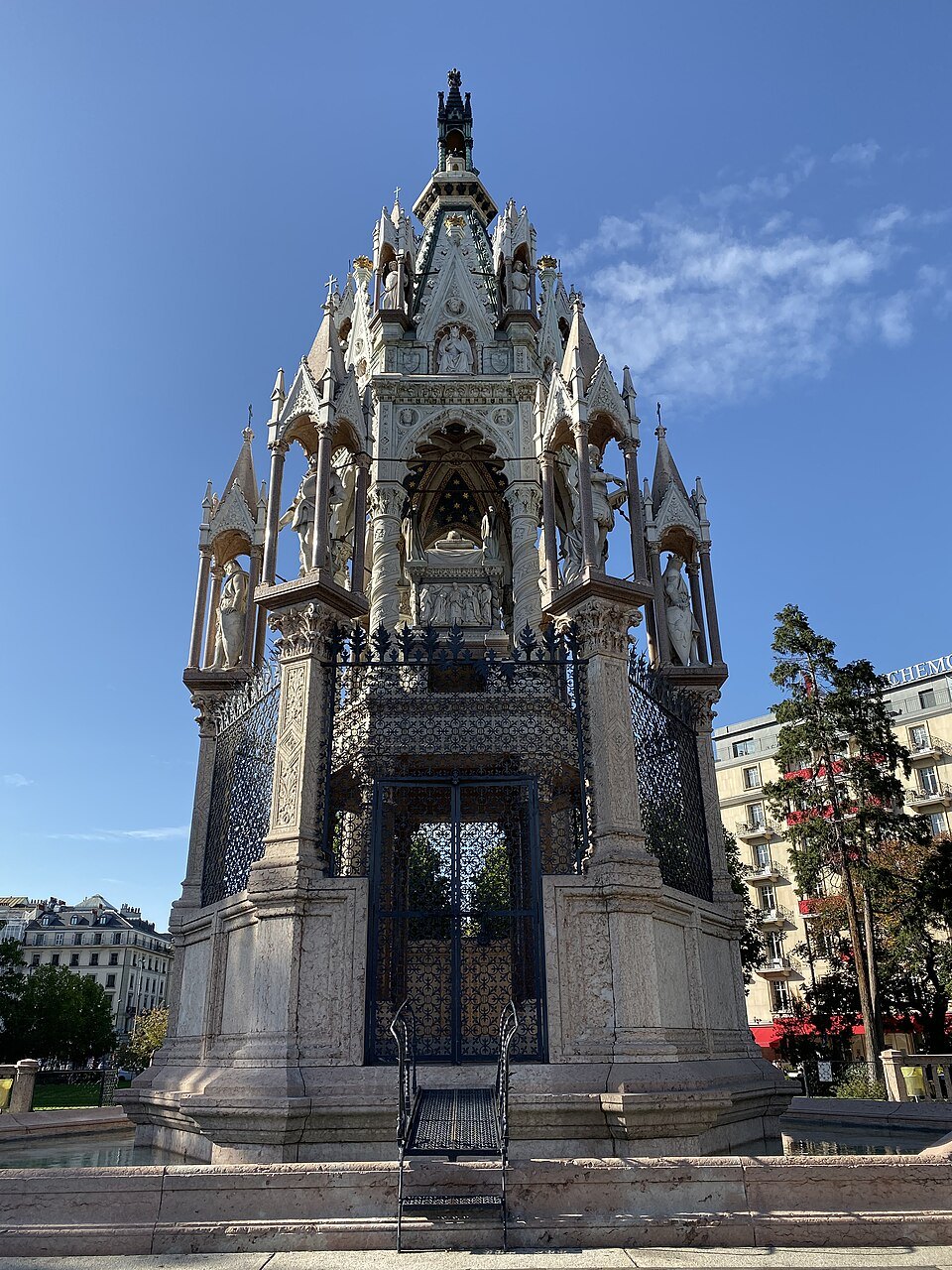
The monument stands in a small square garden on the quay. It rises in three stories of white marble around a hexagonal canopy sheltering a sarcophagus with the recumbent figure of the duke. At the corners stand statues of his ancestors, and the platform, about sixty-five meters long, is guarded by marble chimeras and lions by the French sculptor Auguste Cain.
What you do not see is the original top. A bronze equestrian statue of the duke by Cain once crowned the spire, but damage to the upper part appeared almost at once, and in 1890, for fear of an accident, the upper part was taken down. Writing in 1892, the architect Louis Viollier blamed builders who had copied Gothic forms without understanding how they stood up. The rider was moved to a plinth beside the monument, near the Hôtel Beau-Rivage, and the spire was rebuilt with a crown. The monument is listed as a Swiss cultural property of national importance.
Along the quay, the facades of the grand hotels face the water: Le Richemond, the Beau-Rivage and their neighbors around the Square des Alpes. Just upstream, on the Quai des Bergues, the Hôtel des Bergues of 1834 was the first grand hotel built in Switzerland, and delegations to the League of Nations held many private meetings there. Between the hotels and the lake run the promenade, its old lampposts and the landing stage where the large lake steamers call.
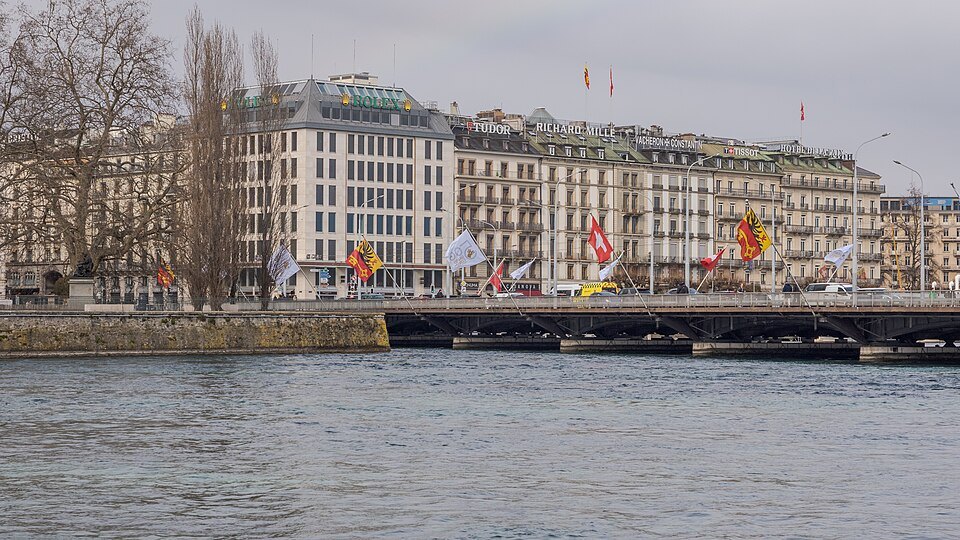
At the upstream end, the Pont du Mont-Blanc crosses the mouth of the Rhône. The first bridge here was built in 1862; the present one has been widened several times. Flags stand along both sides, usually alternating those of Switzerland and Geneva; on the Swiss national day the flags of all twenty-six cantons fly.
Empress Elisabeth
In September 1898 Empress Elisabeth of Austria traveled incognito to Geneva and stayed at the Hôtel Beau-Rivage. Someone at the hotel let it be known that she was there. On 10 September, she and her lady-in-waiting left the hotel on foot to catch a steamer on the lake, and as they walked along the promenade the Italian anarchist Luigi Lucheni approached and stabbed her in the heart.
She managed to walk on and board the boat before collapsing, and she died shortly afterward. A memorial to her stands on the quay, near the place where the attack happened.
How to visit
The quay and the monument are public and outdoors, and the walk from the Pont du Mont-Blanc to the Pâquis jetty takes about a quarter of an hour at a stroll. The quay joins Île Rousseau and the Pont des Bergues upstream, the Bains des Pâquis at its far end, and the parks of the right bank, including the botanical garden, farther along the lake.
The Mont-Blanc landing stage is the place to board the large lake steamers, and the yellow Mouettes water buses leave from the Pâquis stop close by for the short crossing to the left bank.
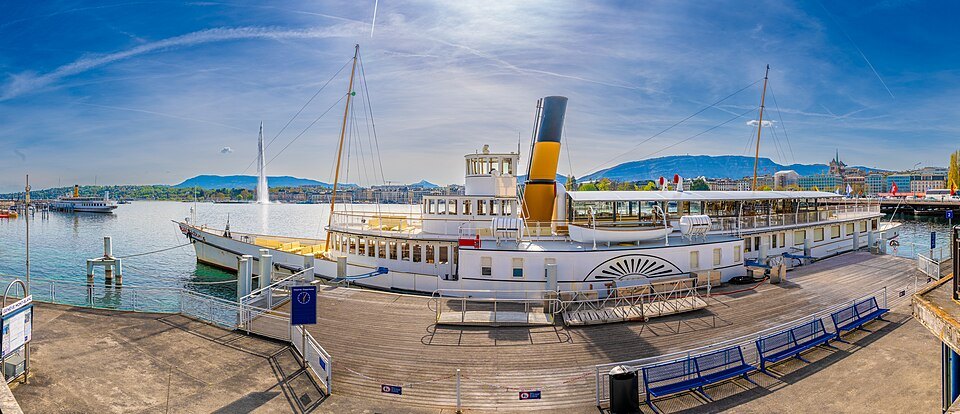
For the Mont Blanc view, choose a clear day and look southeast, over the roofs of the left bank, from the bridge or the quay.
Nearby
- A few steps awayThe Bains des PâquisPublic lake baths of 1932 on the right-bank jetty, saved by a popular vote in 1988 and run by their users ever since: swimming in summer, sauna and fondue in winter, and the Jet d'Eau across the water all year.Read the page
- A few steps awayÎle Rousseau and the Pont de la MachineThe first stretch of the Rhône after it leaves Lake Geneva: an old bastion turned island garden with Rousseau's statue, a suspension-bridge site of 1834, and the city's oldest bridge over a vanished water machine.Read the page
- A few steps awayThe Jardin Anglais and the Flower ClockGeneva's first English-style park, created in the 1850s on land won from the lake, with the flower clock of 1955, the National Monument, a cast-iron fountain and the harbor's two glacial boulders offshore.Read the page