Home · Sights · The Jardin Anglais and the Flower Clock
The Jardin Anglais and the Flower Clock
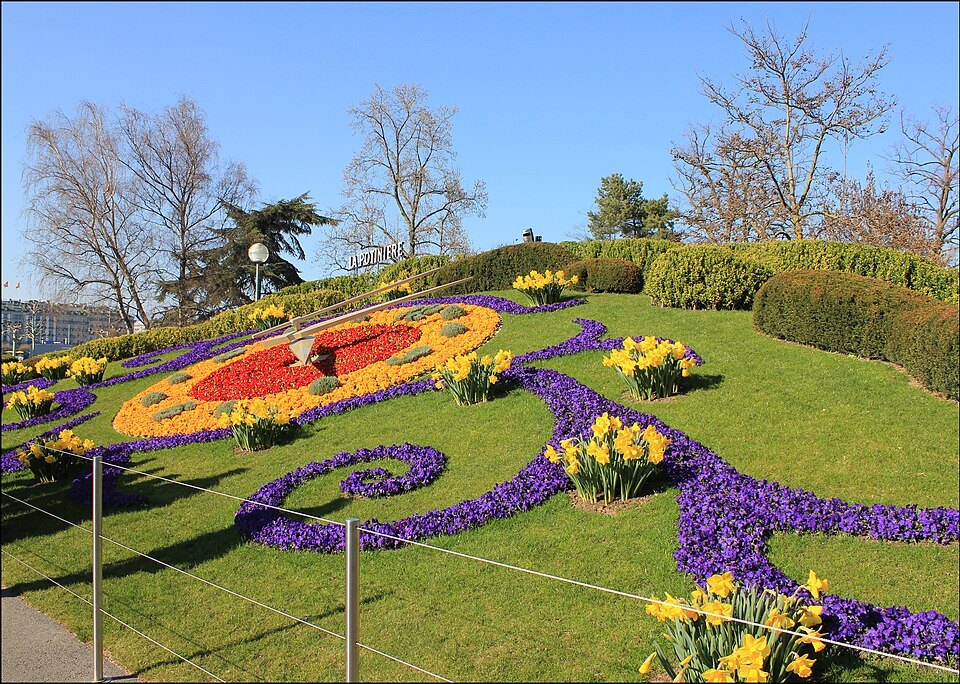
- IThe flower clockA working clock face planted in flowers, created in 1955, its second hand about two and a half meters long
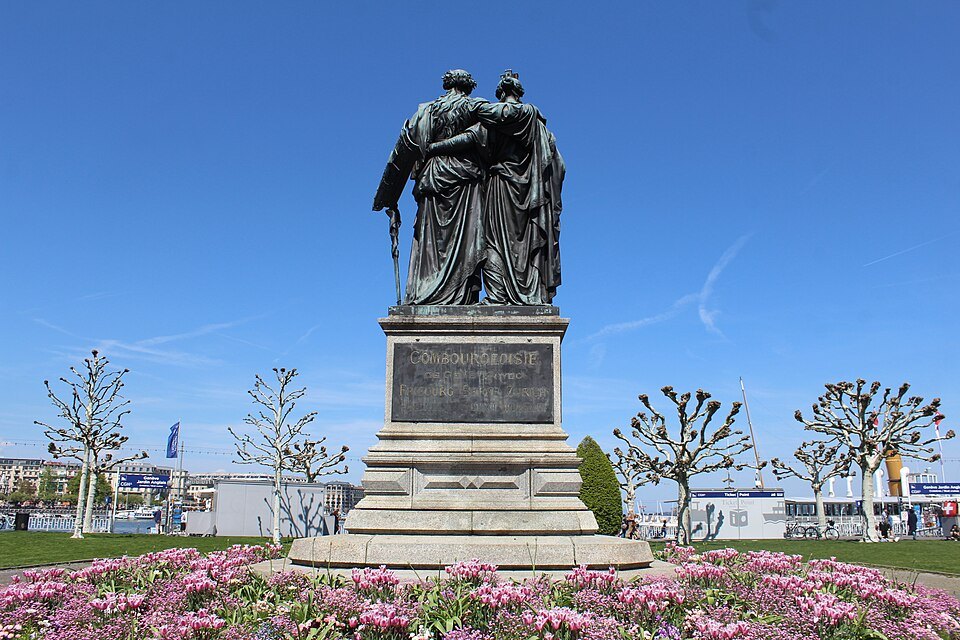
- IIThe National MonumentBronze figures of 1869 celebrating Geneva's union with the Swiss Confederation
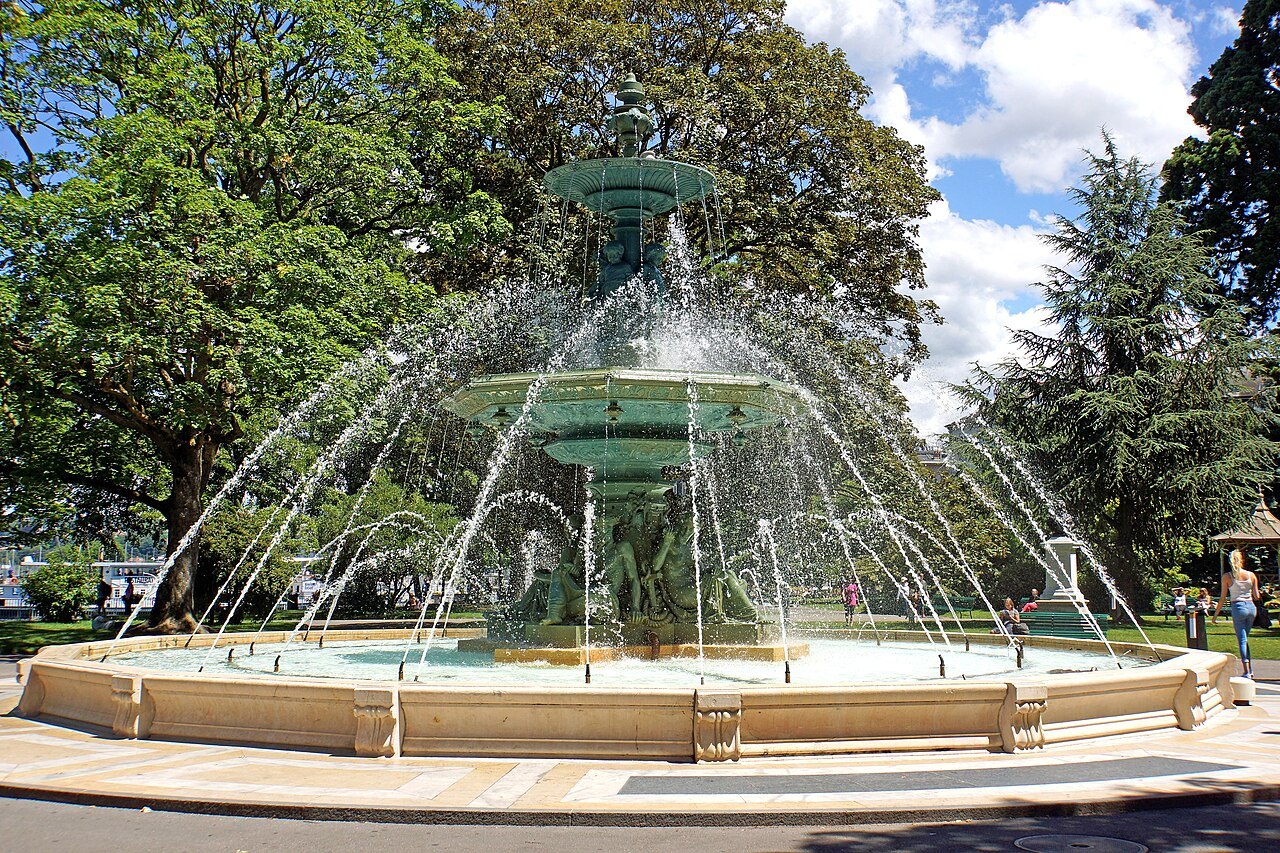
- IIIThe cast-iron fountainA monumental fountain of 1862 from the Val d'Osne foundry, at the center of the winding paths
- IVThe Pierres du NitonTwo granite boulders left in the harbor by the Rhône glacier, the reference for Swiss altitudes
- VThe busts of paintersAlexandre Calame and François Diday, the painters of the Alps, among the trees
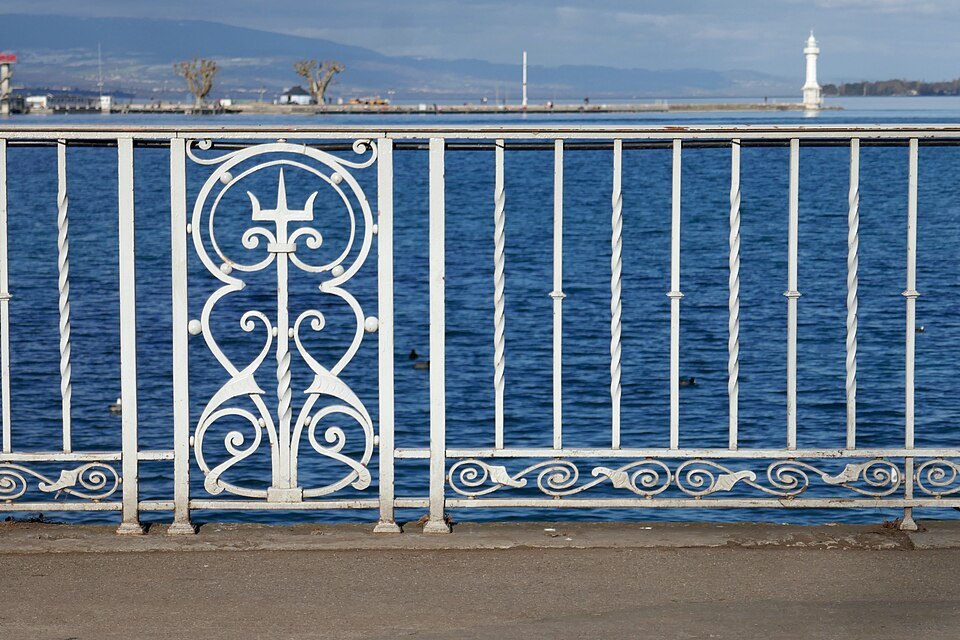
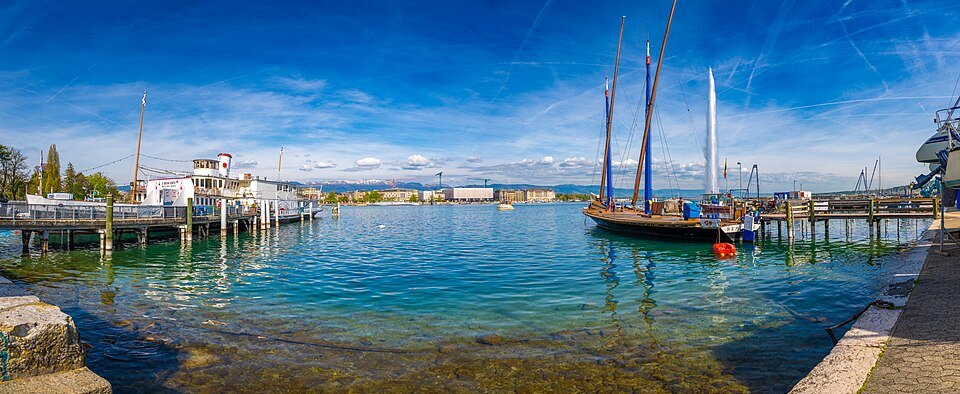
- VIThe lakefrontThe Promenade du Lac and the start of the Quai Gustave-Ador, looking out to the Jet d'Eau
From darkness to light
Why it matters
The Jardin Anglais sits at the hinge of the city, where the old town comes down to the water, the Pont du Mont-Blanc crosses the mouth of the Rhône, and the left-bank quay sets off along the lake toward the Jet d'Eau. Almost any walk along the waterfront passes through it, and the flower clock at its western corner is one of the best-known sights of the city.
It is also a piece of nineteenth-century city-making. The whole garden stands on land won from the lake, on the site of an old timber harbor and the city's former fortifications. It was the first park in Geneva laid out on the model of the English landscape garden, with winding paths and groves instead of straight avenues, which is where its name comes from.
For a visitor it is the easiest green space in the center: a place to sit on a bench with the lake in front of you, the Salève on the far side and the fountain rising on the right.
How the garden was made
The site was first a timber harbor, the Port au Bois, a working yard for builders and not a pretty one. In 1854 the city voted the money to turn the shore here into a lake promenade, just as a new luxury district was going up along the Grand Quai and the Hôtel Métropole was being built opposite. The hotel soon treated the new garden as its own front lawn, much as the Hôtel des Bergues had adopted Île Rousseau.
The garden was made by filling in the old harbor, entirely on land taken from the lake, following the rule that works in the water were not demolished but the spaces between them filled. When the Pont du Mont-Blanc was built in 1862 the garden was remodeled and enlarged into its final shape, and it was extended again in 1870 and 1871 when the Eaux-Vives quay, today the Quai Gustave-Ador, was prolonged along the lake.
A first fountain bought in Paris in 1857 turned out to be too small and was moved to another garden. It was replaced by the present monumental fountain in cast iron, dating from 1862 and bought from the great art foundry of the Val d'Osne, and the paths radiate from it through the trees and shrubs.
The flower clock
At the western edge of the garden, facing the street, lies the Horloge Fleurie. It was created in 1955 by the landscape architect Armand Auberson for the city, as a tribute to the importance of watchmaking in Geneva, and its design was modernized in 2002 by the painter Josée Pitteloud and the sculptor Jean Stern.
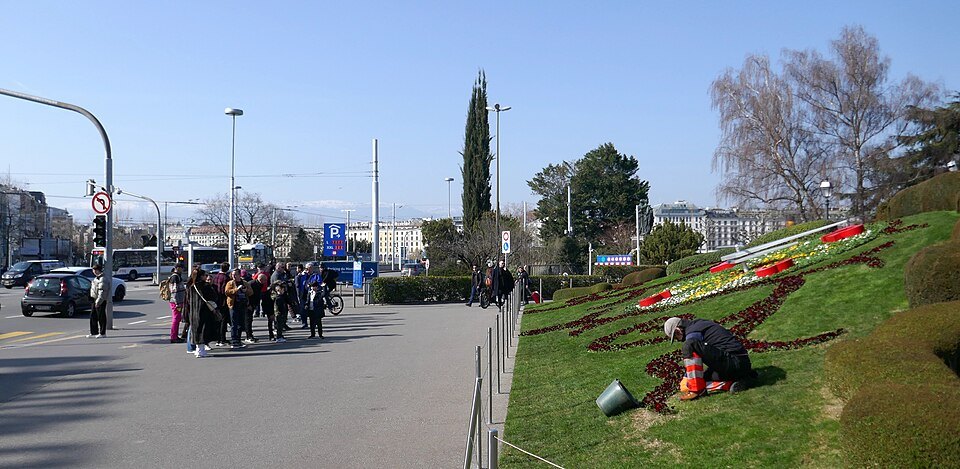
It is a real clock. The dial, about four meters across, is made of living plants, replanted regularly so that its colors change through the year, and the hands move over it. The time is set by satellite. Its second hand, about two and a half meters long, is claimed as the longest in the world.
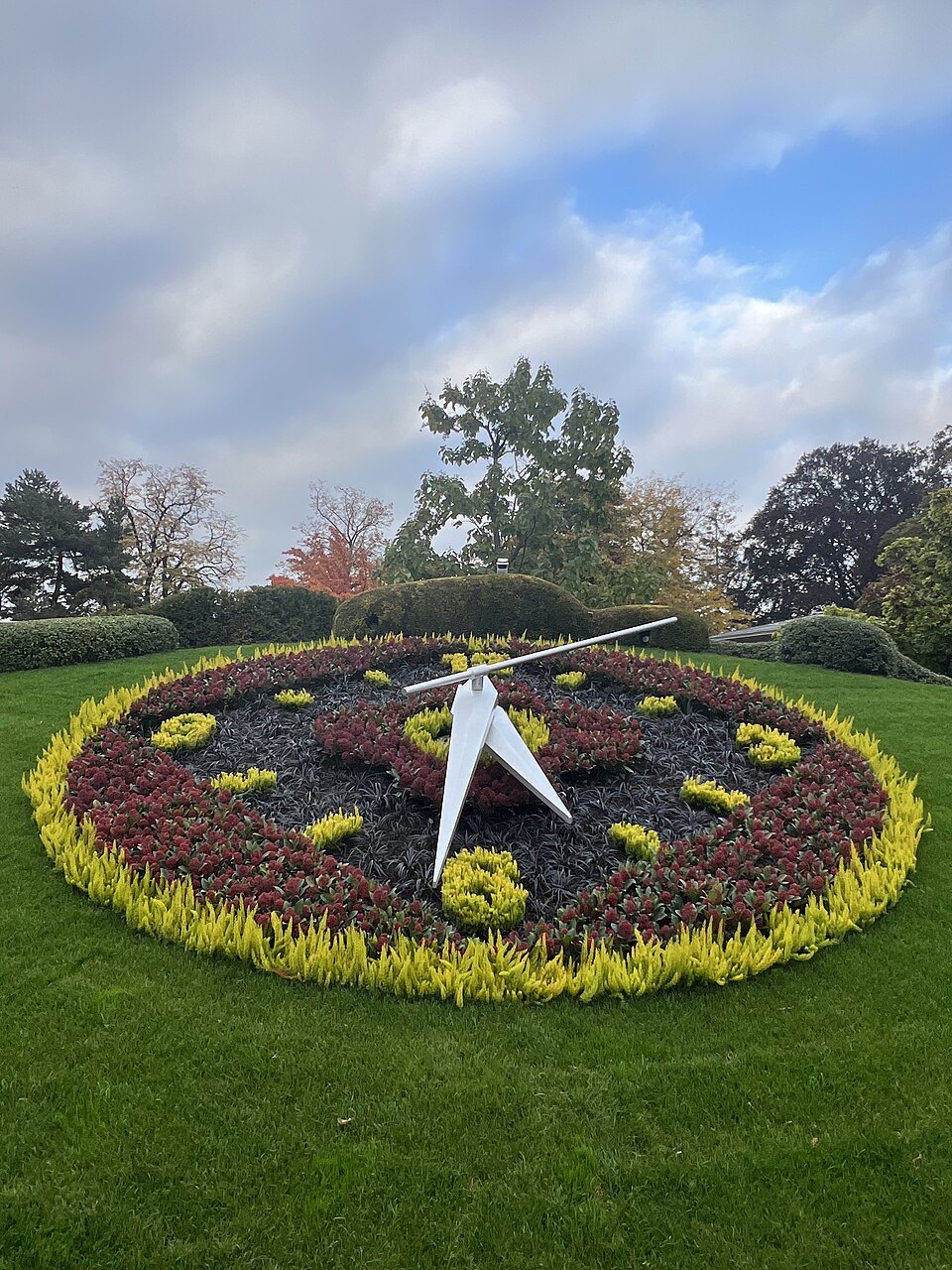
Because it faces a busy street corner, the best place to see it is from the sidewalk in front of it; the planting is renewed through the year, so the clock looks different in every season.
What else to see
Near the clock stands the Monument National, inaugurated on 7 September 1869. Its bronze figures commemorate the union of Geneva with the Swiss Confederation; the city dates its arrival in Switzerland to 1814, and its formal entry followed in 1815.
Around the garden are a romantic-style pavilion, a fountain set in rockwork, a bandstand used for concerts in summer, a listed building that now holds a restaurant, and busts of the painters Alexandre Calame and François Diday, who made the Alps a Genevan subject, and of the artist Rodo de Niederhausern.
Just offshore, facing the Quai Gustave-Ador, two granite boulders break the surface of the water. These are the Pierres du Niton, erratic blocks left behind by the Rhône glacier at the end of the last ice age, with a granite matching that of the Mont Blanc massif. The larger one has a special role: in 1820 General Dufour, then the canton's engineer, fixed a graduated gauge to it to follow the level of the lake, and in the nineteenth century surveyors calculated its altitude as the reference for measuring heights across Switzerland. The rocks can only be reached by boat.
How to visit
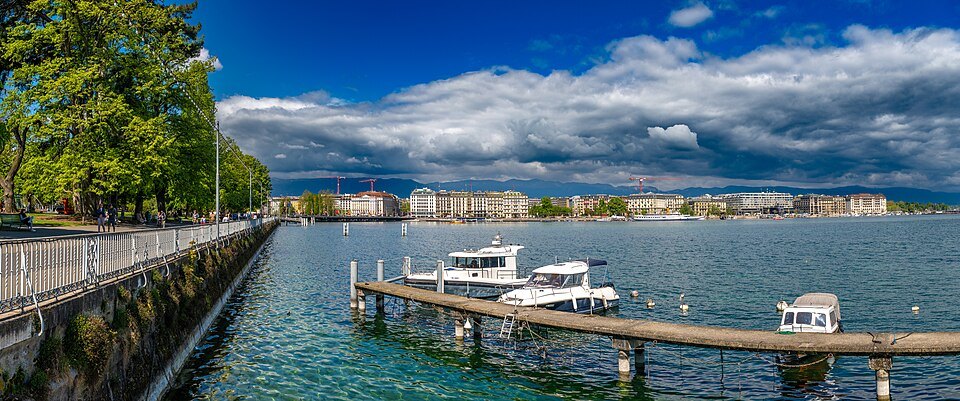
The garden is public and there is nothing to book. Twenty minutes covers the clock, the monument and the fountain; longer if you sit by the water. It is the natural start of a walk along the Quai Gustave-Ador to the Jet d'Eau and on to Parc La Grange, and a short walk from Île Rousseau across the Pont du Mont-Blanc.
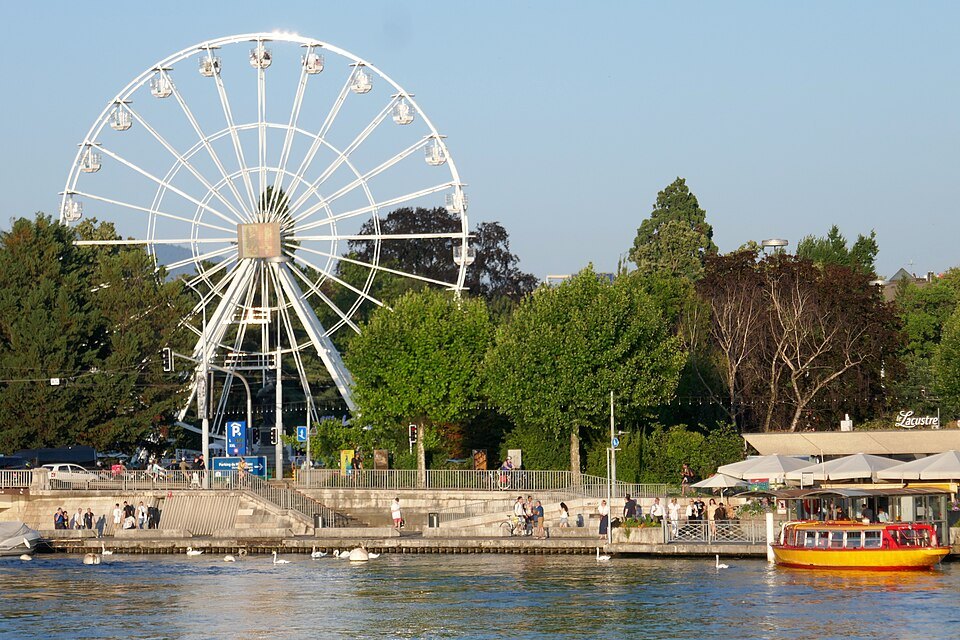
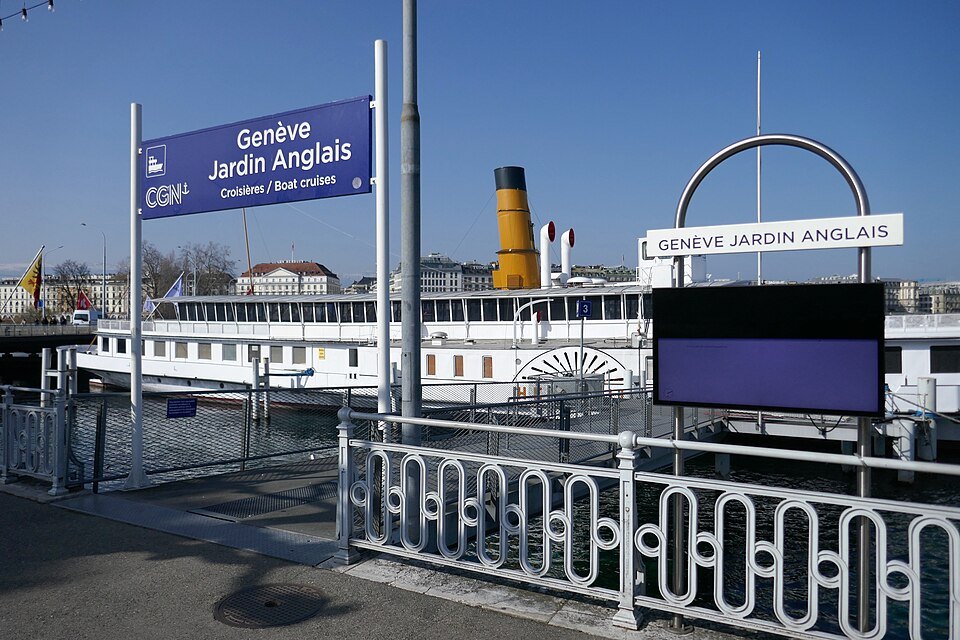
The large lake steamers call at the Jardin Anglais landing, and the yellow Mouettes water buses stop a little farther along the quay at Eaux-Vives, near the Pierres du Niton, which makes the garden a good starting point for a trip on the water.
In December the garden hosts the Geneva Christmas market, when the paths fill with stalls and the garden is at its busiest.
Nearby
- A few steps awayThe Jet d'EauA column of lake water thrown about 140 meters into the air off the Eaux-Vives jetty, visible from almost everywhere in Geneva and walkable right up to its foot.Read the page
- A few steps awayÎle Rousseau and the Pont de la MachineThe first stretch of the Rhône after it leaves Lake Geneva: an old bastion turned island garden with Rousseau's statue, a suspension-bridge site of 1834, and the city's oldest bridge over a vanished water machine.Read the page
- A few steps awayThe Quai du Mont-Blanc and the Brunswick MonumentThe right-bank lakefront of the grand hotels, from the Pont du Mont-Blanc to the Pâquis jetty, with a Duke of Brunswick's extravagant Gothic tomb, the spot where Empress Elisabeth was stabbed, and a view to Mont Blanc on clear days.Read the page