Home · Sights · The Bains des Pâquis
The Bains des Pâquis
- IThe jettyThe stone breakwater that shelters the harbor on the right bank, with the baths built along it
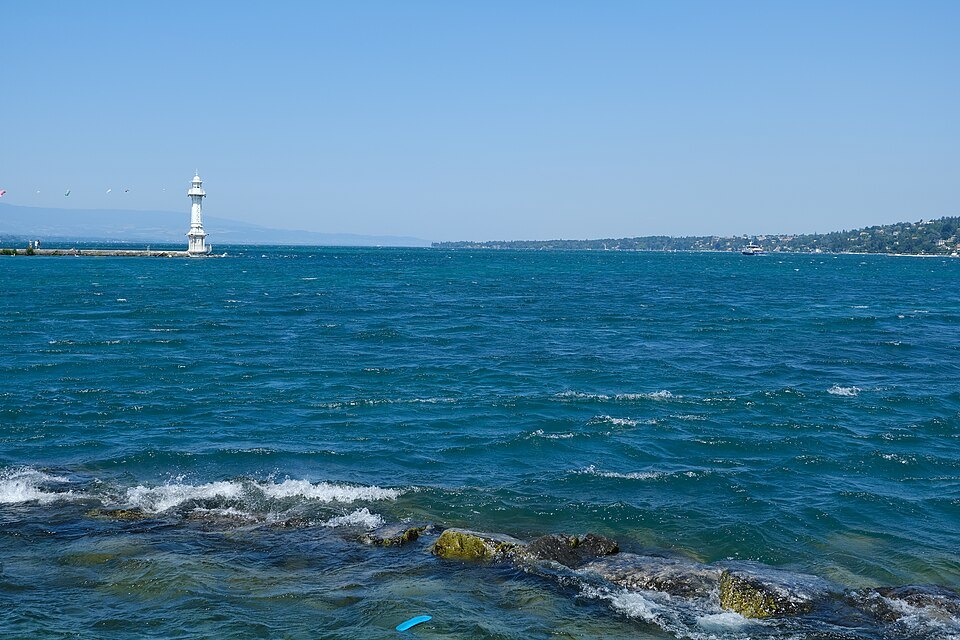
- IIThe lighthouseThe Pâquis light of 1894 at the end of the jetty, on the stone base of a lantern of 1857
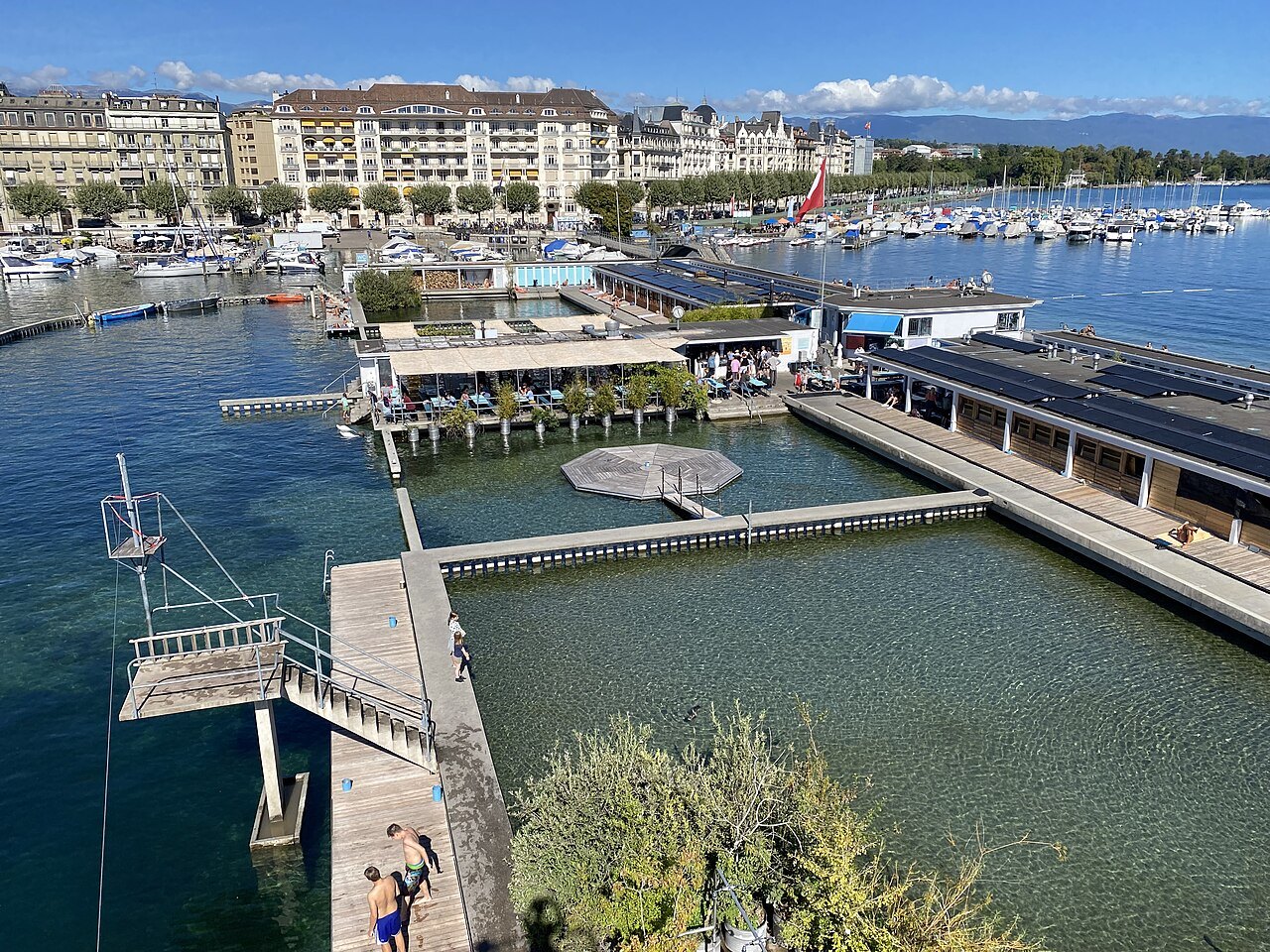
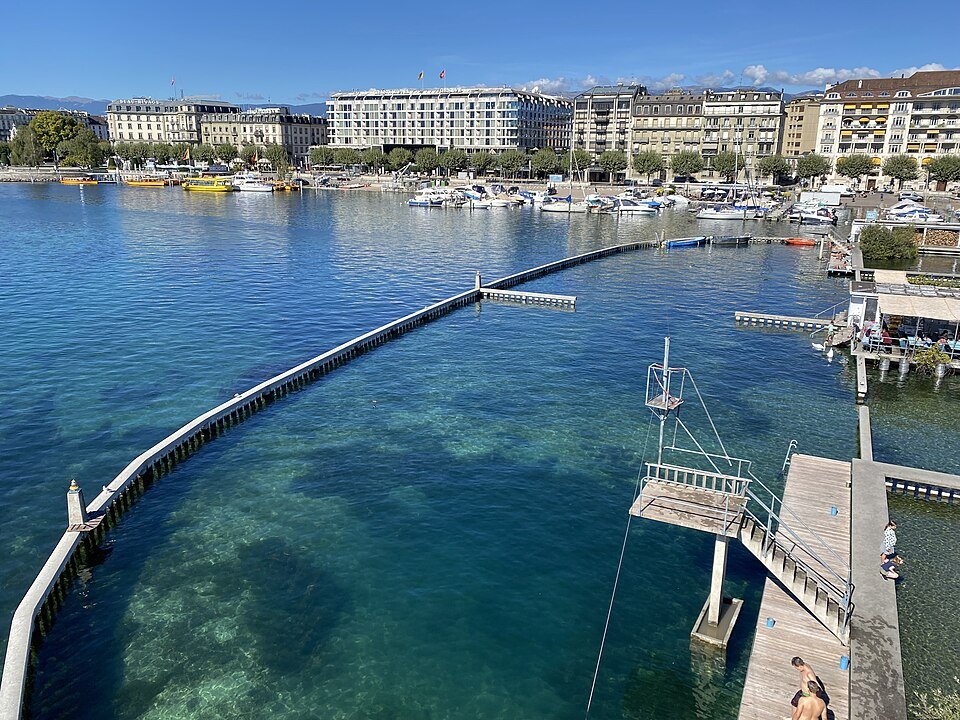
- IIIThe pools and the beachSwimming in the lake itself, from the decks, the diving tower and a small beach
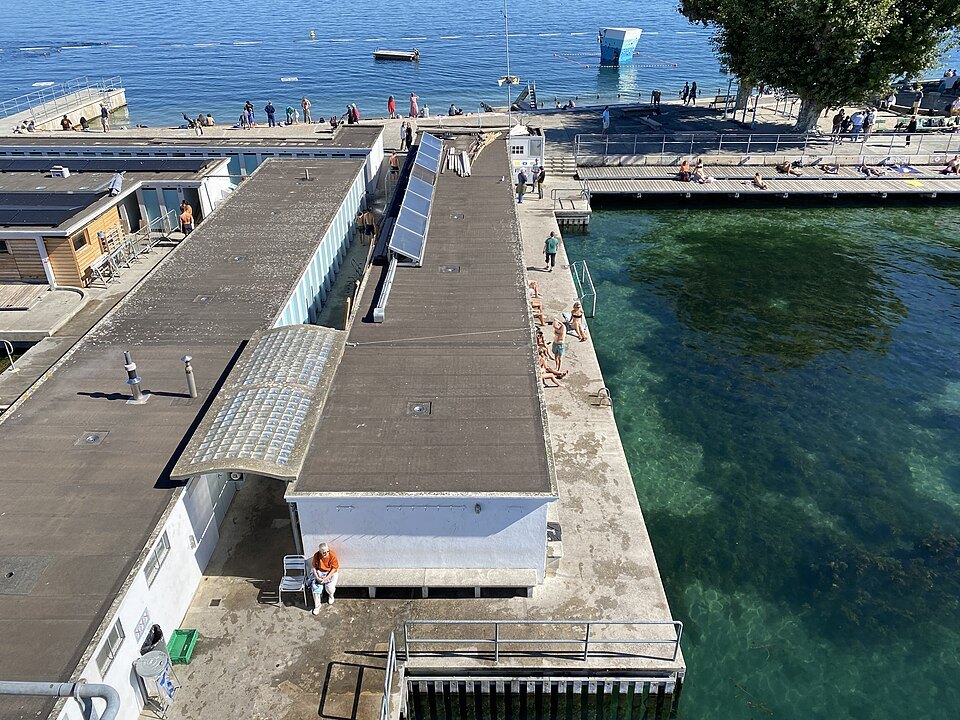
- IVThe 1932 buildingsConcrete-and-glass bathing pavilions built under the influence of the Bauhaus
- VThe buvetteThe café of the baths, serving breakfast after the sunrise concerts and fondue in winter
- VIThe viewThe Jet d'Eau, the old town and the Salève straight across the harbor
From darkness to light
Why it matters
Plenty of lake cities have beaches. Few have a public bath built right into the middle of the harbor, a few minutes' walk from the main station, where the whole city meets. The Bains des Pâquis stand on the jetty that shelters the harbor on the right bank, at the level of the Pâquis district, and they welcome bathers all year round.
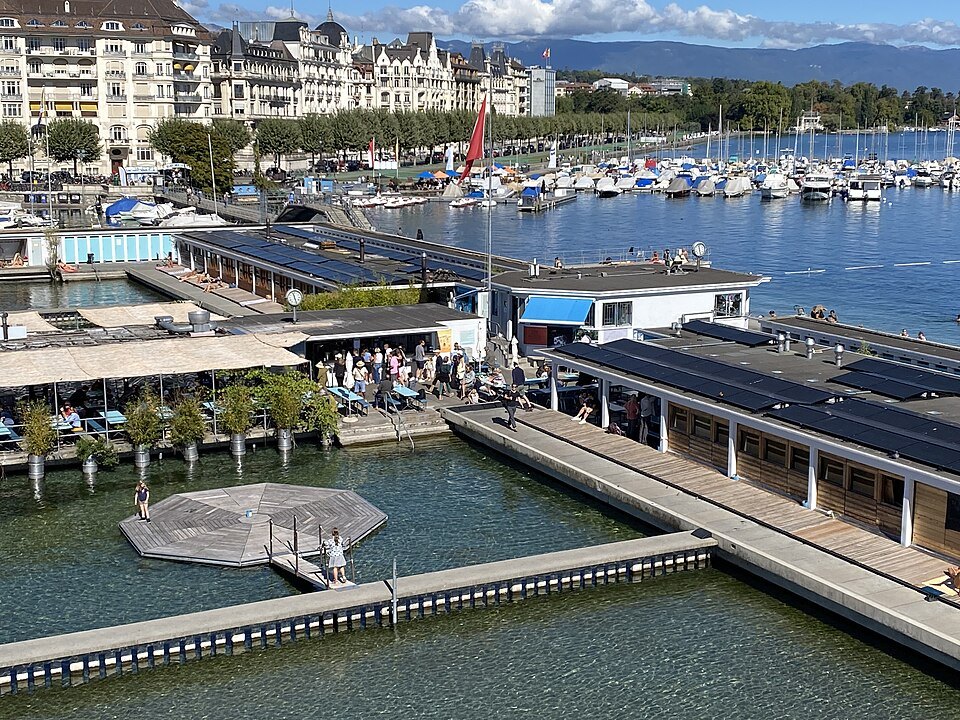
Genevans treat them as a common room. In summer people come to swim in the lake and lie on the decks; in winter they come for the sauna and the Turkish bath, for a plunge in the cold water, and for fondue at the buvette. Year round it is a place to walk out along the jetty, eat, and look at the city from the water.
It is also a story of a place saved by its users. Without a popular vote in 1988 the baths you see would have been demolished, and the association that won that vote still runs them.
From wooden baths to the Bauhaus
The first Bains des Pâquis, built of wood, opened in 1872 on the inner side of the right-bank jetty. In 1890 they became municipal baths; the jetty was extended on piles, and the present lighthouse was put up in 1894 on the stone base of the first harbor light, dating from 1857. For many years some hours were reserved for women only.
In 1931 the old baths were demolished, and in 1932 they were rebuilt entirely in reinforced concrete and glass, in the spirit of the Bauhaus, to plans by the engineer Louis Arnichard and the architect Henry Roche. The new design gave men and women exactly equal areas.
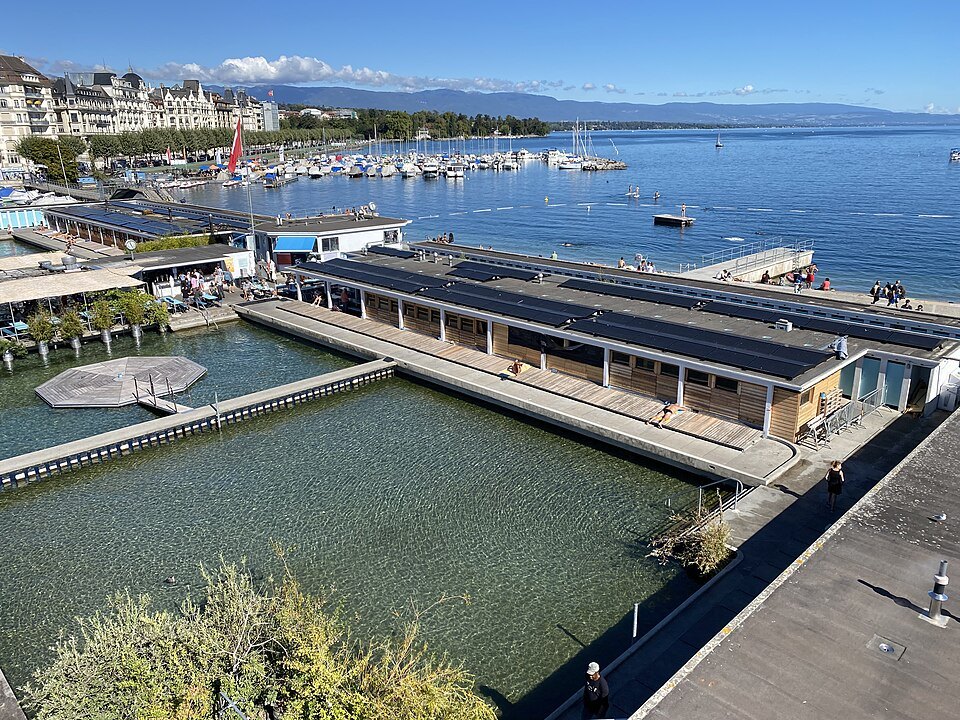
By the late 1980s the concrete appeared to be decaying, and the city planned to rebuild the baths in a modern style. Users and neighbors formed an association in February 1987, collected nine thousand signatures, and in a referendum on 25 September 1988, 72 percent of voters rejected the project. The association commissioned its own study, which found the damaged pillars could be repaired, and the baths were renovated instead, with the work partly financed by shows and parties held at the baths.
Run by the people who use them
After the vote the authorities handed the management of the baths to the users' association, which took part in the restoration of 1991 to 1995. Until then the baths had opened only five months a year; the association decided to open them all year round.
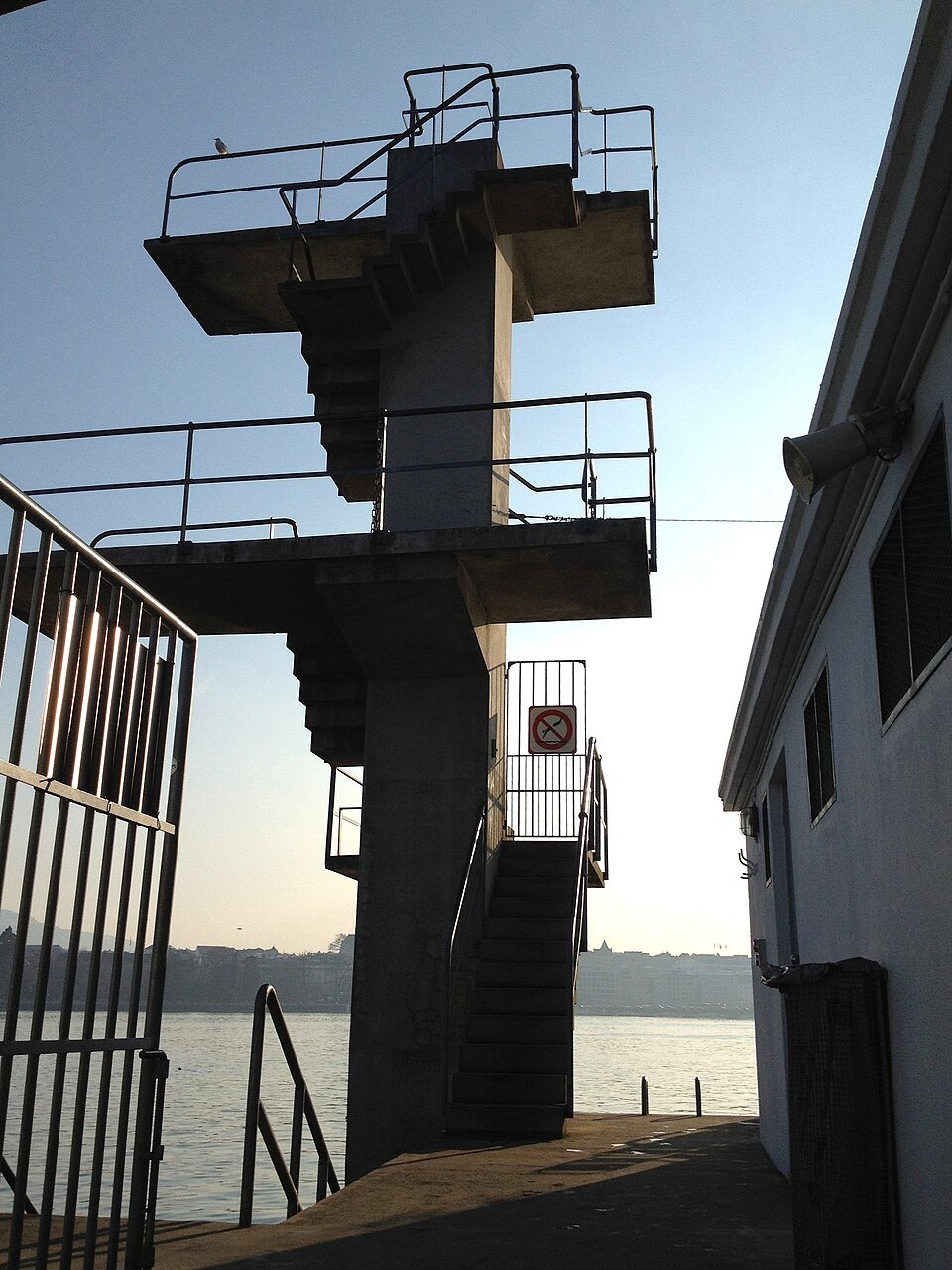
It added a sauna, a Turkish bath, a hammam and massage rooms, and with the managers of the buvette, a fondue hut. It also organizes concerts, festivals and exhibitions, and publishes its own newspaper twice a year. Among its traditions is a swimming race around the Pâquis lighthouse.
The buvette belongs to the city and is leased to the company that runs it, and since 1994 a group of independent masseurs has worked at the baths. The jetty is also home to the Sauvetage de Genève, the lake rescue society, which has its headquarters here.
The users' association celebrated its twentieth anniversary in 2008, and in September 2012 the baths marked a quadruple jubilee: eighty years since the rebuilding of 1932, twenty-five years of the association, and fifteen years of the swimming race around the lighthouse.
Since 2007 the baths have also held Les Aubes, summer concerts and performances at sunrise on the jetty, followed by breakfast at the buvette. It is one of the more unusual ways to start a day in Geneva.
What you actually see
From the Quai du Mont-Blanc, a walkway leads out along the jetty to the entrance of the baths. Inside, the long white pavilions of 1932 frame the bathing areas: wooden decks and steps down into the lake, a diving tower, a small beach, and changing rooms along the breakwater.
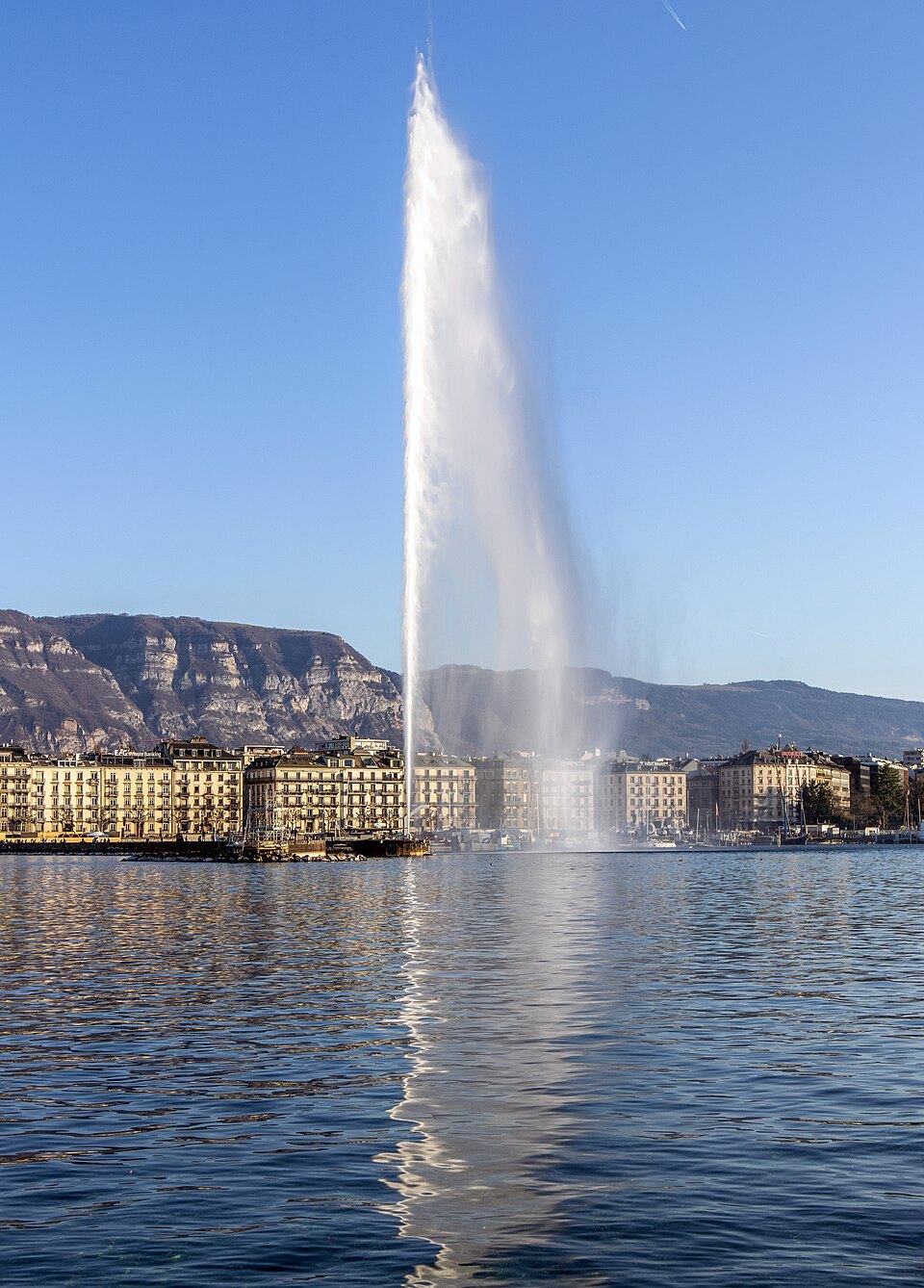
The water is the lake itself, clear and cold for much of the year. Across the harbor, directly in front of you, the Jet d'Eau rises off the Eaux-Vives jetty, with the old town and the cathedral on the hill behind it and the Salève beyond.
At the end of the jetty the Pâquis lighthouse marks the entrance to the harbor, the partner of the small light at the end of the Eaux-Vives jetty. Walking out to it is part of any visit, and the view back to the city is one of the best in Geneva.
How to visit
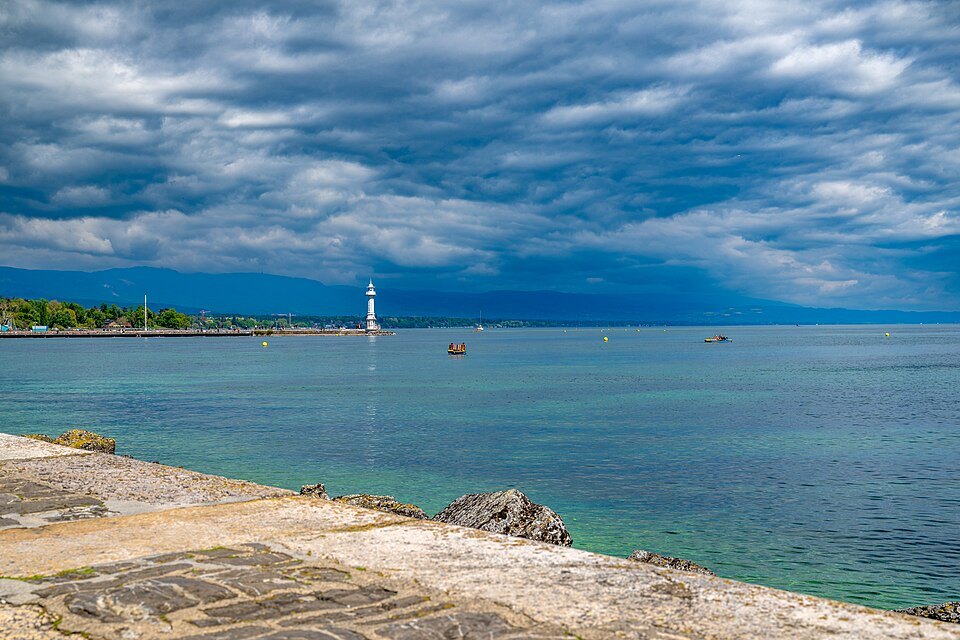
The walk along the jetty is public; the bathing areas and the sauna have their own entry arrangements, which change between the summer and winter seasons. The association's own site is the place to check them.
The baths are a short walk from Cornavin station through the Pâquis district, or along the Quai du Mont-Blanc. The yellow Mouettes water buses stop at Pâquis nearby, which makes it easy to combine the baths with a crossing to the left bank and a walk out to the Jet d'Eau.
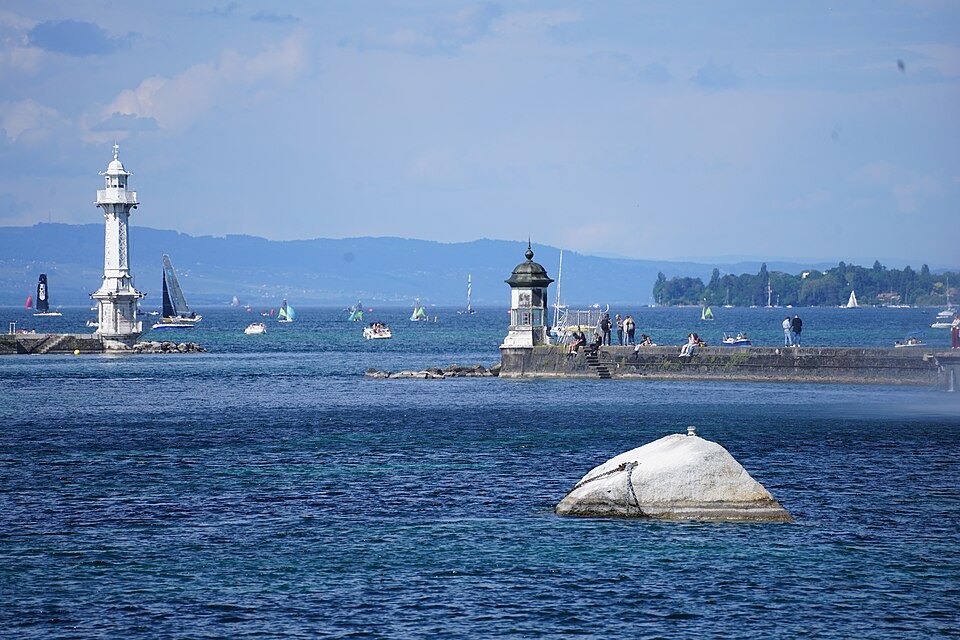
Bring swimwear and a towel if you plan to swim, and treat the lake with respect: it is deep and cold, and the swimming areas are the place to do it.
Nearby
- A few steps awayThe Quai du Mont-Blanc and the Brunswick MonumentThe right-bank lakefront of the grand hotels, from the Pont du Mont-Blanc to the Pâquis jetty, with a Duke of Brunswick's extravagant Gothic tomb, the spot where Empress Elisabeth was stabbed, and a view to Mont Blanc on clear days.Read the page
- A few steps awayThe Jet d'EauA column of lake water thrown about 140 meters into the air off the Eaux-Vives jetty, visible from almost everywhere in Geneva and walkable right up to its foot.Read the page
- A few steps awayThe Botanical Garden and the Lakeside ParksTwenty-eight hectares of gardens, glasshouses and rock gardens between the lake and the UN park, founded in 1817 and among the great botanical institutions of the world, with a chain of lakeside parks running back toward the city.Read the page