Home · Sights · Parc La Grange and Its Rose Garden
Parc La Grange and the Rose Garden
- IThe rose gardenThe largest public rose garden in the canton, laid out below a nineteenth-century pergola
- IIVilla La GrangeA French-style country house of 1768–1773 at the top of the park
- IIIThe Favre libraryAbout twelve thousand old volumes in the wing added to the villa in 1821
- IVThe cedar of LebanonA cedar more than twenty-five meters tall, grown from Geneva seed
- VThe lions at the gateTwo lions by the sculptor Frédéric Dufaux guarding the main entrance
- VIThe Parc des Eaux-VivesThe neighboring park to the east, with its pond, grotto and rhododendrons
From darkness to light
Why it matters
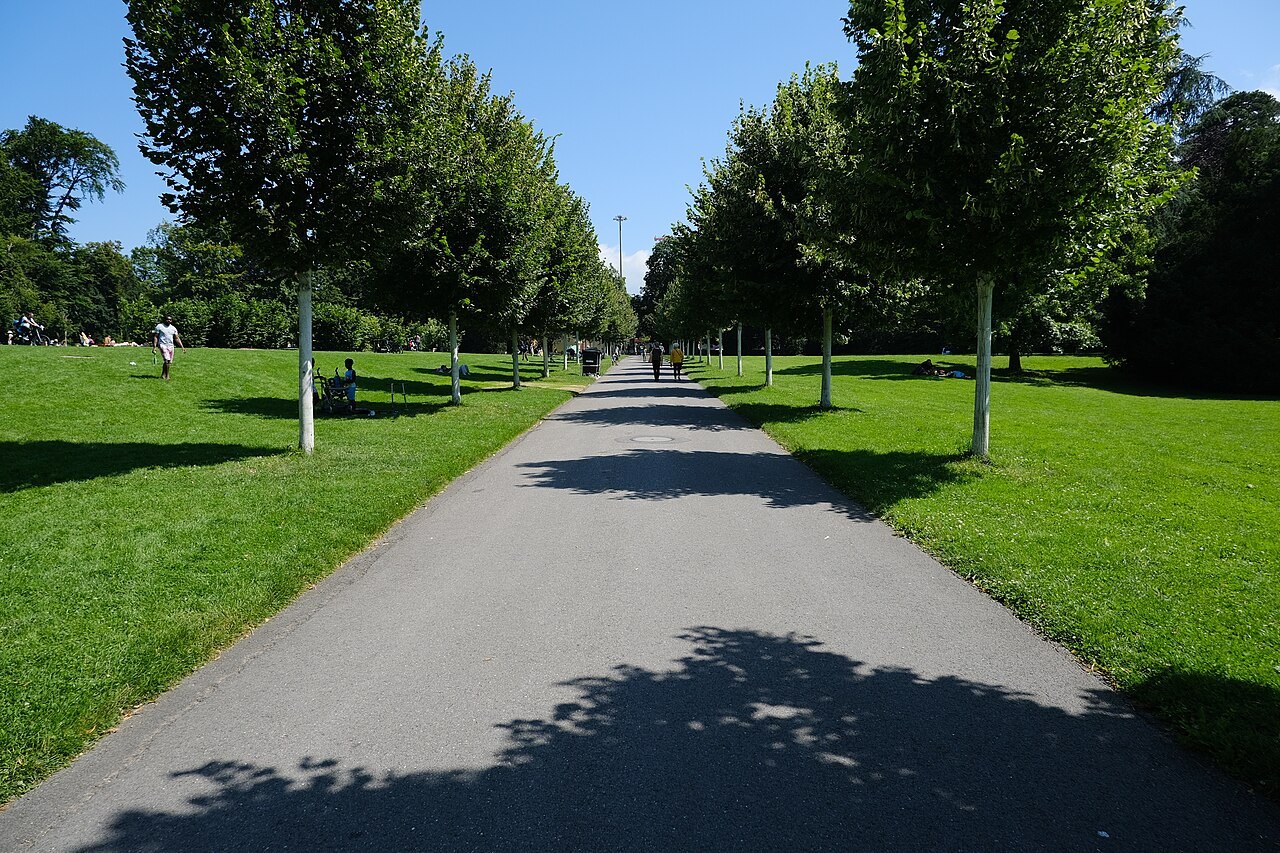
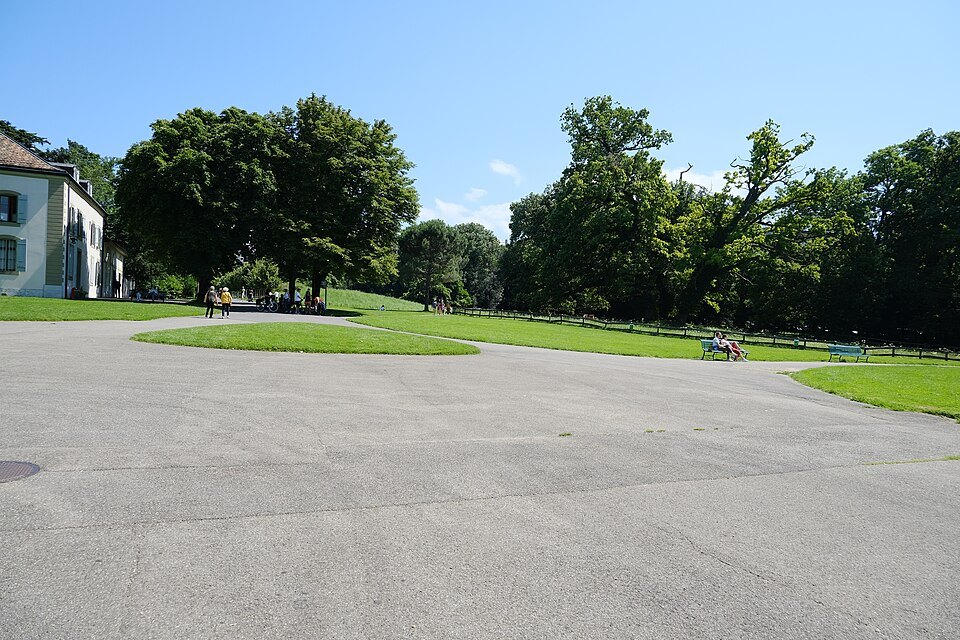
Parc La Grange is the great park of the left bank. It covers some twenty hectares on the slope between the Quai Gustave-Ador and the plateau above, a short walk along the lake from the Jet d'Eau, and it is where Genevans come to lie under old trees, walk among the roses and look out over the water.
It is also a place with a very long memory. Archaeologists have found traces of people living here around 4500 BC, a Bronze Age building and a Gallo-Roman villa of the first century, and the villa at its top has hosted meetings that made the news around the world, from an early Red Cross conference to a presidential summit.
Together with the Parc des Eaux-Vives next door, it forms the largest stretch of green on the left-bank lakefront, and one of the pleasantest walks in the city.
From Roman villa to city park
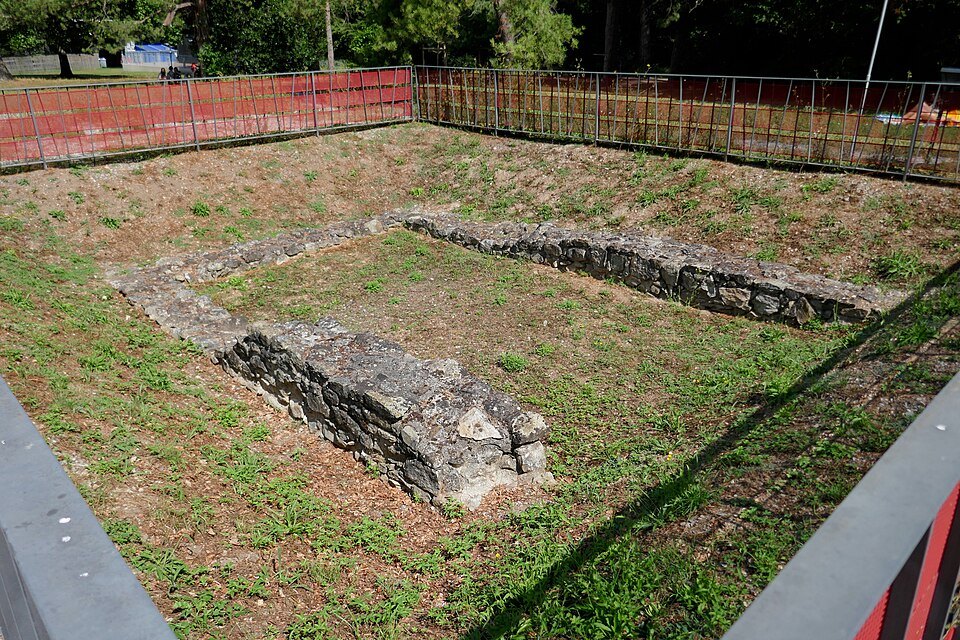
In Roman times terraces stepped down from a large residence on the upper slope to the lakeshore. A fence enclosed an area of about 450 by 200 meters between a Roman road, on the line of today's Route de Frontenex, and the water, protecting the villa, its outbuildings and its pools.
The estate of La Grange was created in the 1660s by Jacques Franconis. The banker Marc Lullin bought it in 1706, and between 1768 and 1773 three of his sons built the present French-style country house and its outbuildings. In 1800 François Favre, a Geneva shipowner who had made his fortune in Marseille in trade with the East, bought the estate from Jean Lullin, ruined by the Revolution.
The Favre family held it for more than a century. The last private owner, William Favre, remodeled the grounds, moving earth, planting new trees, making a small lake fed by a nearby spring and building an alpine garden, and he left the park to the city of Geneva at the end of the First World War.
The garden's style changed with the times. A plan of 1789 shows a house among meadows, rows of trees set at right angles and geometric parterres in the French manner; by 1848 the parterres had given way to curving paths and scattered plantings in the English style, and the growth of botany in Geneva brought exotic species and new kinds of trees.
The villa and its guests
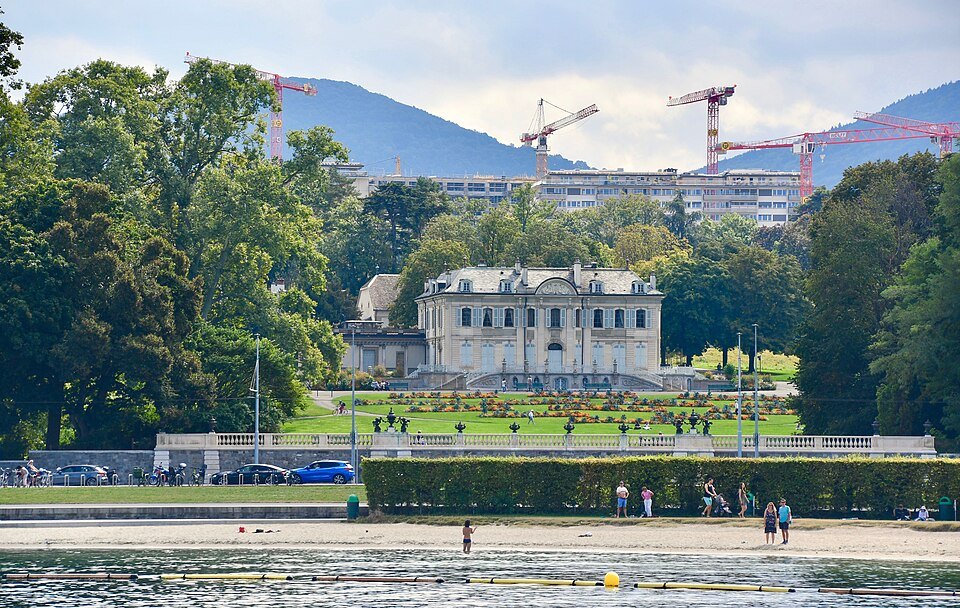
Villa La Grange stands at the top of the park. In 1814 the scholar Guillaume Favre-Bertrand inherited it from his father, redecorated two small Empire-style salons, and in 1821 added a rectangular wing to hold a library of some twelve thousand volumes of history, languages and literature. It has been kept as it was since the villa passed to the city and is looked after by the Bibliothèque de Genève.
In 1864, on the invitation of its owner Edmond Favre, the villa hosted a meeting of the first conference of the International Committee of the Red Cross. On 10 June 1969 Pope Paul VI celebrated a mass in the park before some seventy thousand people.
On 16 June 2021 the library of the villa was the setting for the summit between Joe Biden and Vladimir Putin. The city opens the house for guided visits of the library, bedrooms and reception rooms once a year, with registration required because places are limited.
What you actually see
The rose garden is the heart of the park. It was built between 1945 and 1947 by demobilized soldiers at the foot of the nineteenth-century pergola, in a spot sheltered from the wind and full in the sun, and for decades it hosted Geneva's International Competition for New Roses. After an ecological conversion that brought in natural methods and some two hundred varieties of roses, it reopened in the autumn of 2021.
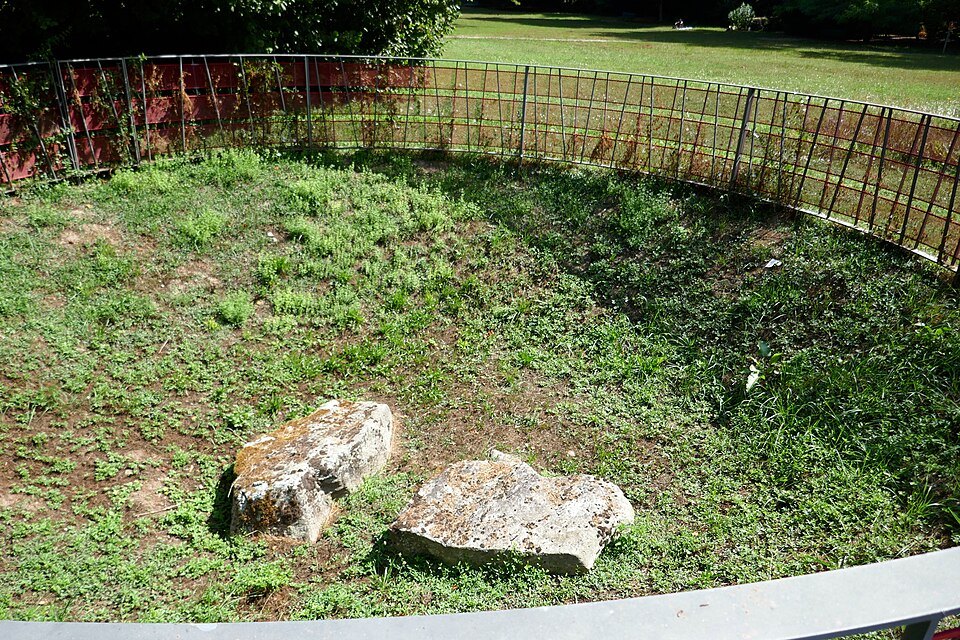
Around it, the lawns and trees run down toward the lake. Many trees carry small red labels on their trunks naming the species, and a cedar of Lebanon more than twenty-five meters tall, grown from the seed of cedars in another Geneva park, is one of the most striking. Two menhirs from the site's prehistoric past lie on their sides in the grass.
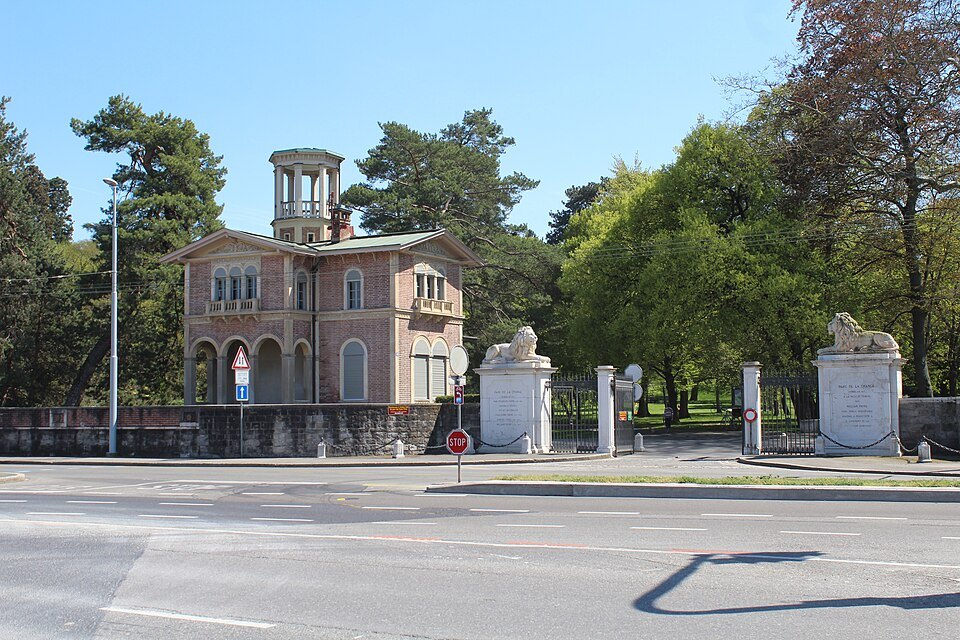
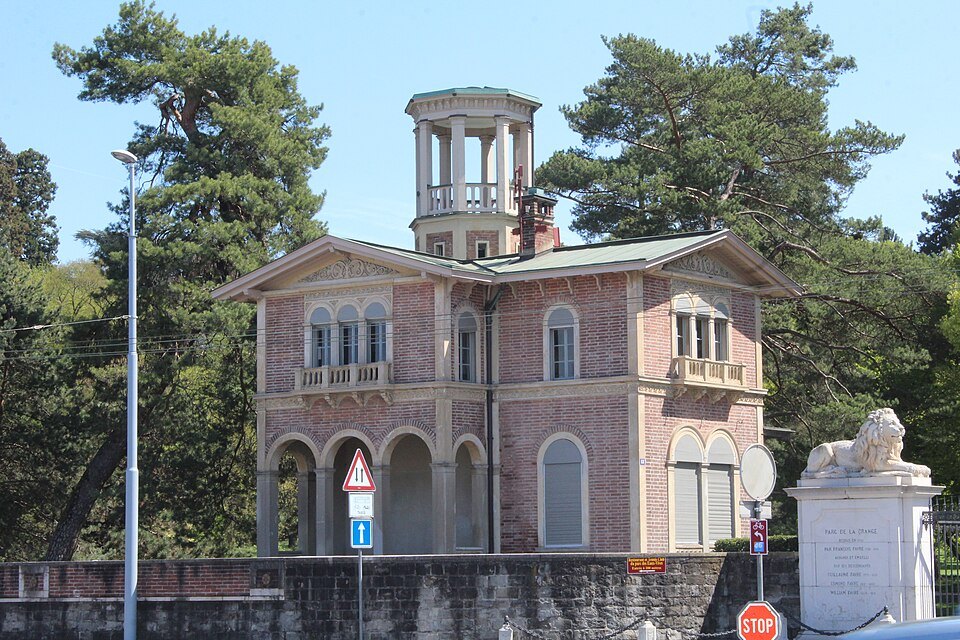
The main gate is guarded by two lions by the sculptor Frédéric Dufaux. The park also has orangeries, the remains of the alpine garden, two open-air theaters, a playground and a paddling pool.
The Parc des Eaux-Vives
To the east, the Parc des Eaux-Vives continues the green slope down to the Quai Gustave-Ador. Its country house of 1750 became a luxury restaurant around 1900, and in 1907 the landscape architect Jules Allemand redesigned the grounds. Bought by the commune of the Eaux-Vives in 1913 to save it from being divided up, it passed to the city when the communes merged in 1931.
Beside the restaurant there is a pond fed by a trickle of water from a grotto, and a fine collection of rhododendrons given by the Netherlands to thank Geneva for its humanitarian help during the Second World War. The upper part of the park has been home since 1898 to the city's first tennis club.
How to visit
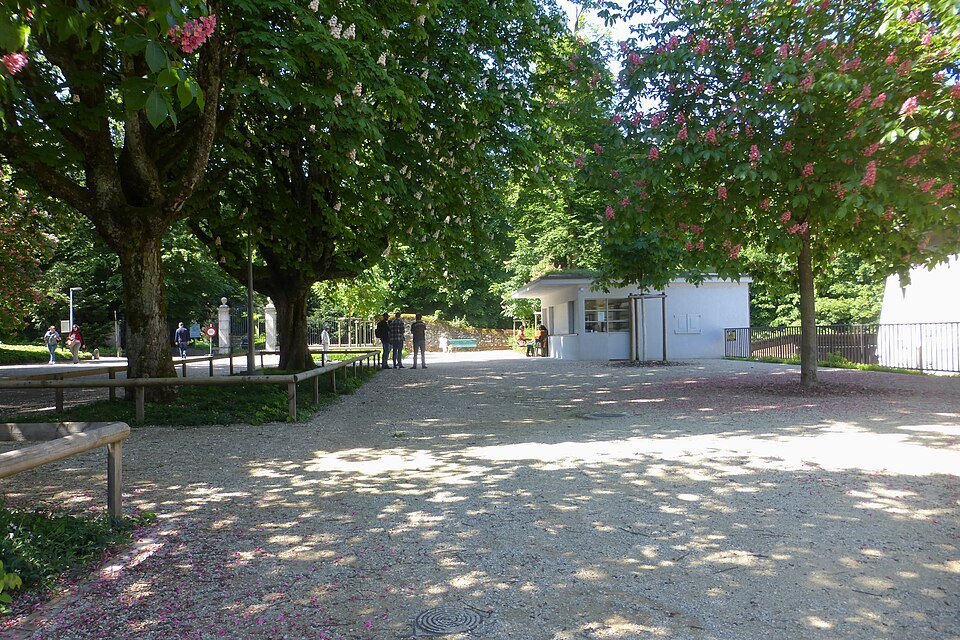
The parks are public and free to walk in. Give La Grange an hour, more in rose season in early summer, and add half an hour for the Parc des Eaux-Vives. The rose garden is at its best from late spring into summer.
The main entrance is on the Quai Gustave-Ador, about a quarter of an hour's walk along the lake from the Jardin Anglais and the Jet d'Eau. Coming from the right bank, the yellow Mouettes water buses of line M2 cross the harbor from the Pâquis to the Quai Gustave-Ador.
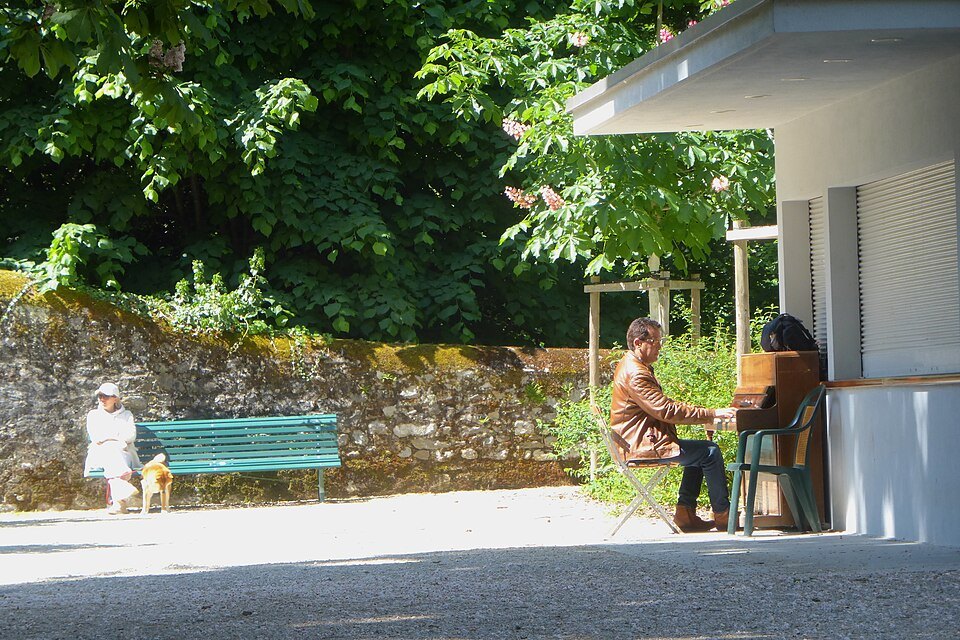
Combine the park with a walk out along the Eaux-Vives jetty to the Jet d'Eau and back through the Jardin Anglais to the old town.
Nearby
- A few steps awayThe Jet d'EauA column of lake water thrown about 140 meters into the air off the Eaux-Vives jetty, visible from almost everywhere in Geneva and walkable right up to its foot.Read the page
- A few steps awayThe Jardin Anglais and the Flower ClockGeneva's first English-style park, created in the 1850s on land won from the lake, with the flower clock of 1955, the National Monument, a cast-iron fountain and the harbor's two glacial boulders offshore.Read the page
- A few steps awaySaint-Pierre CathedralGeneva's cathedral, begun around 1160, stripped bare by the Reformation in 1535, given a classical front in the 1750s, and standing on the ruins of every church that came before it.Read the page